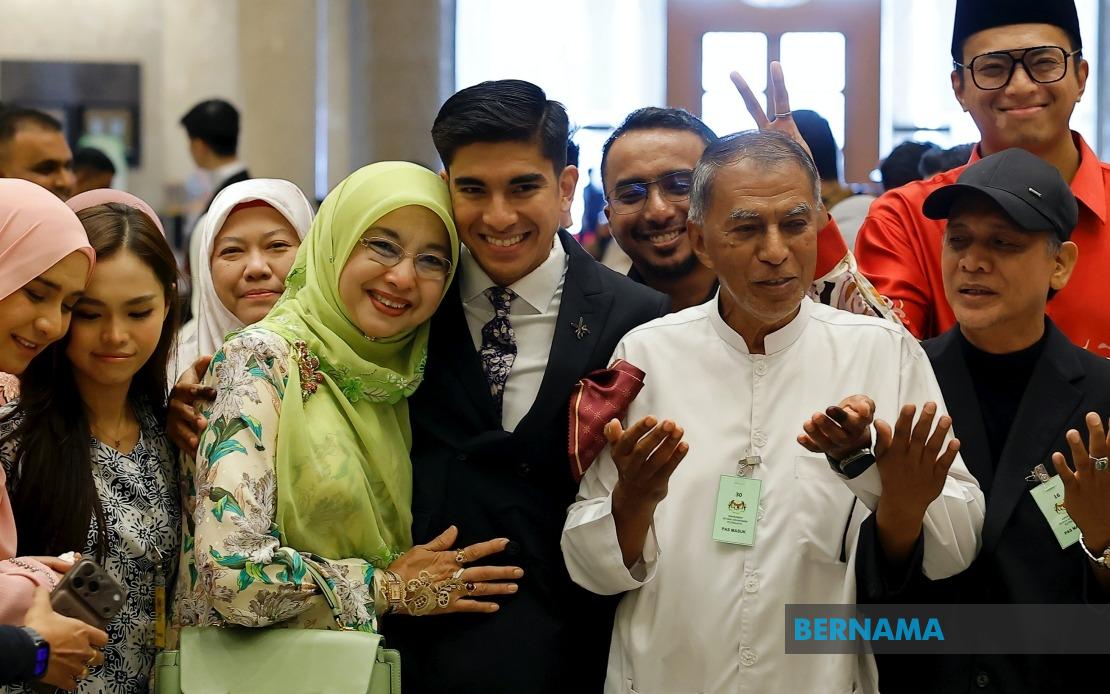
The Federal Court has upheld the acquittal of Syed Saddiq Syed Abdul Rahman, Muar Member of Parliament, bringing to a close a protracted legal dispute that has dominated much of his political career. The 33-year-old politician, who performed a sujud syukur with his family following the court's judgment, described the resolution as vindication of his steadfast commitment to principle and integrity throughout the ordeal.
The charges stemmed from allegations involving funds belonging to Angkatan Bersatu Anak Muda, the youth wing of his political party. Over the course of six years, Syed Saddiq faced four charges of abetting criminal breach of trust, misappropriation of property, and money laundering. The lengthy judicial process subjected not only the politician himself but also his immediate family, supporters, and the broader political landscape to considerable strain. His acquittal represents a significant moment for his political trajectory and raises questions about the trajectory of similar cases navigating Malaysia's legal system.
Addressing reporters at the Palace of Justice, Syed Saddiq struck a reflective tone, emphasizing that his conviction in the righteousness of his position sustained him through the uncertainty and stress of prolonged legal proceedings. He articulated a philosophy that courage derives from maintaining ethical standards even when circumstances appear insurmountable, and that institutional trust ultimately yields justice. For observers of Malaysia's political ecosystem, the case had taken on broader significance as questions about the independence and impartiality of judicial processes have featured prominently in recent public discourse.
The former youth and sports minister used the occasion to underscore his belief that Malaysia's strength fundamentally rests upon robust and independent justice institutions. This emphasis reflects ongoing debates within Malaysian political circles regarding judicial autonomy, particularly following high-profile cases in preceding years that generated discussion about potential political interference or bias. Syed Saddiq's vindication, from his perspective, validates faith in the system's capacity to ultimately deliver fair outcomes regardless of the time required.
Regarding his immediate future, Syed Saddiq indicated an intention to step back temporarily from active political engagement to prioritize personal matters. While confirming his continuing association with MUDA, the political party he co-founded, he emphasized the need to focus on family relationships and address outstanding personal affairs that have necessarily taken secondary priority during the extended court proceedings. This decision reflects the substantial personal toll that prolonged litigation exerts, even upon those ultimately exonerated.
The politician acknowledged his parliamentary responsibilities and indicated plans to attend subsequent parliamentary sittings while simultaneously organizing a gathering for constituents in Muar to reconnect with his electoral base following the conclusion of his legal proceedings. Additionally, Syed Saddiq revealed that his parents have consented to him proceeding with planned marriage arrangements, suggesting a desire to stabilize his personal life after years of legal uncertainty.
Hisyam Teh Poh Teik, the legal counsel representing Syed Saddiq throughout the proceedings, expressed gratitude to the judicial panel and acknowledged the trust placed by his client and the client's family in the legal team's representation. The statement highlighted the collaborative relationship maintained between lawyer and client during a demanding six-year engagement with Malaysia's court system. Such acknowledgments underscore the importance of legal representation in navigating complex criminal proceedings.
The prosecution's response, conveyed through Deputy Public Prosecutor Datuk Wan Shaharuddin Wan Ladin, indicated acceptance of the court's determination while leaving open the possibility of seeking judicial review. The prosecutor noted that a decision regarding potential review application remains pending consultation with the Attorney General's office, suggesting that while the prosecution respects the judgment, it has not entirely foreclosed the option of renewed legal challenge. This position underscores how even final-appearing court decisions may not necessarily represent the absolute conclusion of legal proceedings in Malaysia's system.
The case itself carried implications extending beyond the individual defendant, touching upon broader questions regarding political accountability, the treatment of youth political movements, and the capacity of Malaysia's courts to deliver timely justice. The six-year duration itself invites scrutiny regarding court efficiency and the management of criminal case loads, matters of ongoing public concern within Malaysian governance discourse. Syed Saddiq's acquittal thus functions simultaneously as personal vindication and as a data point within wider conversations about judicial performance and institutional reform.
From a regional perspective, the case attracted interest as observers assessed how Malaysia's legal system managed allegations involving political organizations and questions of financial stewardship. Southeast Asian democracies frequently grapple with similar issues regarding party financing, youth wing accountability, and the intersection of political movements with criminal law. The resolution of Syed Saddiq's case potentially provides instructive observations for regional actors evaluating institutional strengths and weaknesses within established democracies.
Looking forward, Syed Saddiq's reintegration into active politics following vindication and personal recalibration could reshape MUDA's trajectory and positioning within Malaysia's political landscape. His absence from the headlines during the extensive legal proceedings meant reduced public visibility for the party, and his eventual return to more prominent engagement could energize organizational efforts or alternatively reshape internal dynamics depending upon the manner of his re-engagement. The timing and extent of his political reactivation will merit monitoring by observers of Malaysian electoral trends.

