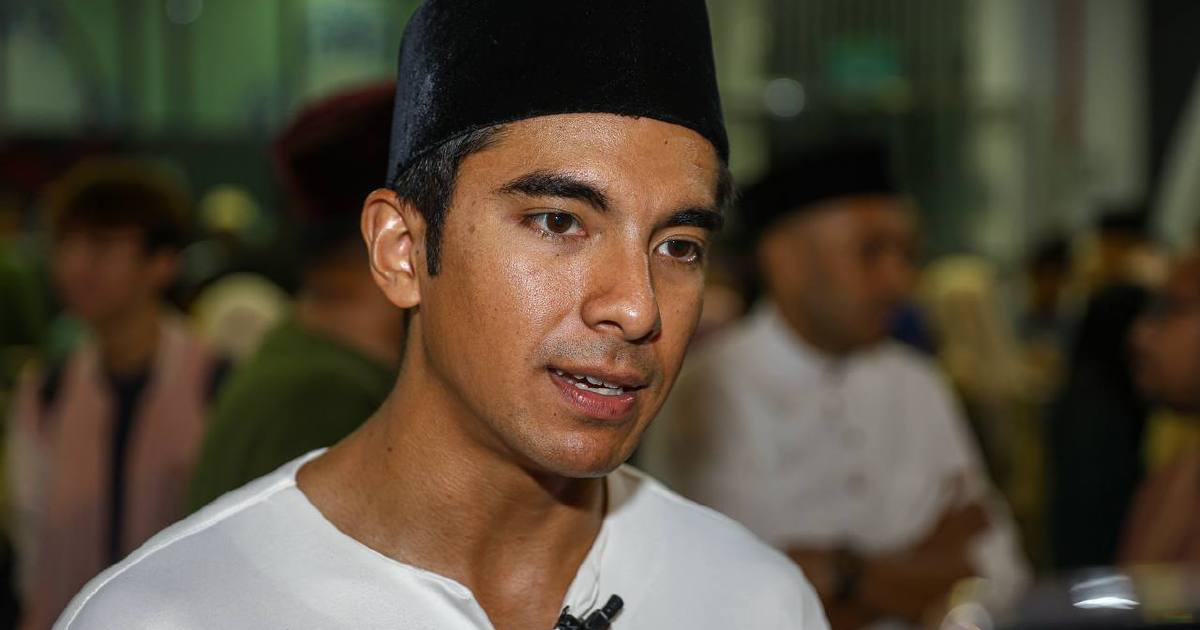
The political future of Muar Member of Parliament Syed Saddiq Syed Abdul Halim hangs in the balance as Malaysia's highest court prepares to render a consequential decision that could fundamentally alter the trajectory of one of the country's most prominent young politicians. With a Federal Court ruling approaching, Syed Saddiq has opted to take a philosophical approach to the uncertainty, expressing faith that the judicial process will unfold as intended.
Syed Saddiq's predicament reflects the complex intersection of law and politics that has become increasingly visible within Malaysia's parliamentary landscape. The young Muar MP has maintained a measured demeanor throughout the legal proceedings, suggesting an acceptance of whatever determination emerges from the apex court. This measured response stands in contrast to the intense speculation surrounding the case within political and media circles, where observers continue to dissect potential outcomes and their ramifications for multiple constituencies within Malaysian politics.
The significance of this forthcoming ruling extends beyond Syed Saddiq's individual circumstances. As a prominent figure within younger political cohorts who have attempted to reshape Malaysia's political discourse, his situation represents a broader examination of how the judiciary engages with contemporary political figures. The Federal Court's decision will inevitably influence perceptions of judicial independence and fairness among younger voters and emerging political movements seeking to establish themselves within Malaysia's competitive electoral environment.
Syed Saddiq's positioning himself to accept the court's judgment reflects a strategic calculation as much as a spiritual or philosophical stance. By publicly relinquishing control over outcomes and delegating responsibility to the judicial system, he maintains moral authority regardless of the eventual verdict. This approach insulates him from accusations of defiance while simultaneously demonstrating confidence in his legal position. Whether calculated or genuine, this demeanor has proven effective in maintaining his public standing during an otherwise turbulent period.
Within the broader context of Malaysian politics, the timing of this decision assumes additional weight. The country continues navigating a complex political landscape shaped by coalition dynamics, factional rivalries, and evolving voter preferences. Syed Saddiq's status as a bridge figure between traditional and progressive political constituencies means that any significant change in his circumstances could reverberate through multiple networks and groupings vying for influence and direction within parliament.
The Muar MP has cultivated a distinctive political profile characterised by his efforts to connect with younger demographics and articulate alternative visions for Malaysia's development. His legal challenges, whatever their specific details, have not fundamentally diminished his capacity to maintain parliamentary duties or engage with constituents. However, an unfavourable Federal Court decision could impose constraints on his political mobility, particularly if it involves restrictions on holding elected office or managing political functions.
Observers have noted that Syed Saddiq's restraint throughout these proceedings contrasts markedly with reactive approaches sometimes adopted by other politicians facing legal scrutiny. His apparent confidence in institutional processes, whether warranted or not, positions him favourably with constituencies that value stability and respect for judicial authority. Conversely, this stance may frustrate those within his political ecosystem who anticipate more combative positioning or explicit challenges to the system.
The Federal Court's decision will also carry implications for how Malaysia's judicial apparatus navigates the intersection of political accountability and individual rights. The court must balance concerns about upholding legal standards and institutional integrity against considerations of proportionality and the broader impact of its determinations on political participation and democratic processes. Observers across the political spectrum will scrutinise the reasoning behind the decision, seeking signals about how the judiciary intends to approach comparable cases involving political figures.
For Malaysian voters and political analysts, Syed Saddiq's situation underscores the precarious nature of political careers in the contemporary Malaysian context. Despite legislative experience and demonstrated organisational capability, individual politicians remain vulnerable to legal complications that can substantially alter trajectories. The Federal Court's imminent decision will test whether institutional processes can operate with sufficient credibility to command acceptance from diverse constituencies, particularly younger segments of the electorate who have grown increasingly sceptical of established institutions.
As the ruling approaches, Syed Saddiq's invocation of faith and acceptance of judicial outcomes reflects a calculated positioning that preserves his political viability across multiple scenarios. Whether the court determines matters in his favour or otherwise, his demonstrated commitment to respecting institutional processes may ultimately prove more consequential than the specific legal determination itself. The decision will inevitably reshape certain dimensions of his political landscape, but his adaptive responses throughout this period suggest a politician capable of navigating considerable institutional and political turbulence while maintaining relevance within Malaysia's dynamic and increasingly fractious political environment.

