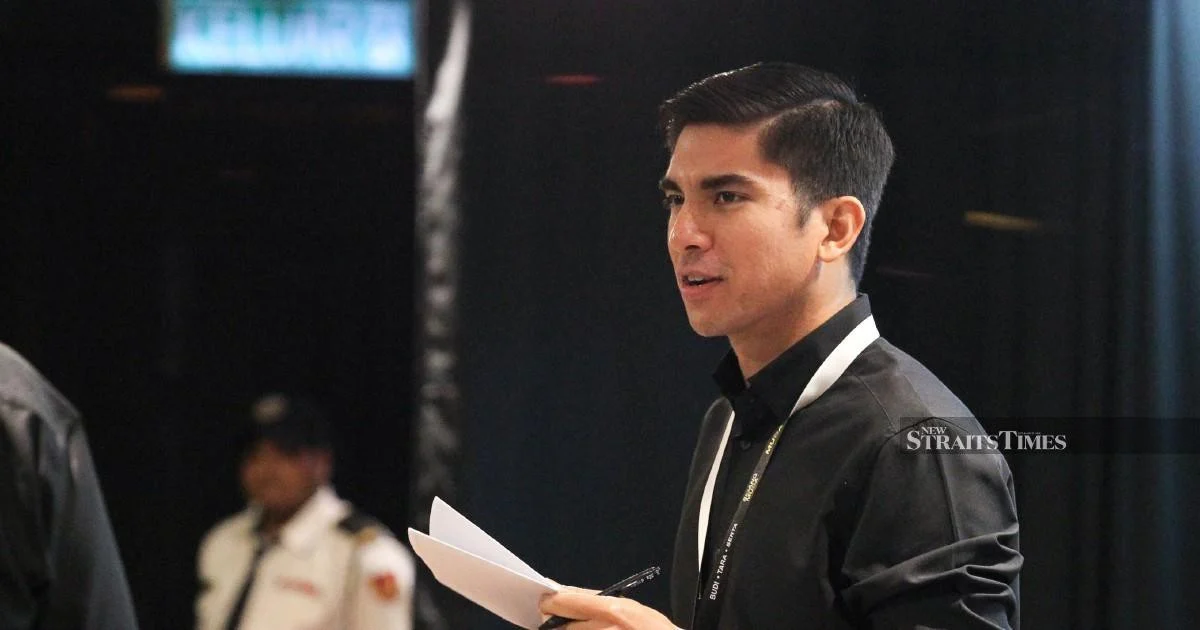
Muar's Member of Parliament Syed Saddiq Syed Abdul Rahman has announced plans to dedicate RM115,000 from fresh part-time employment to support his constituency's development needs. The commitment underscores an approach whereby supplementary income generated outside parliamentary duties is channelled directly towards community welfare and infrastructure projects in the Johor seat he represents.
The decision reflects broader conversations within Malaysian politics regarding how elected representatives balance multiple income streams while maintaining commitment to constituent services. As an MP, Syed Saddiq participates in parliamentary responsibilities and legislative work, yet the generation of additional income through external positions has become increasingly common among members of the Dewan Rakyat seeking to augment their parliamentary compensation.
Muar, a district in Johor with a diverse demographic composition encompassing urban and rural populations, faces varied development priorities ranging from infrastructure improvements to social services enhancement. The allocation of RM115,000 represents a tangible commitment to addressing some of these constituency requirements, particularly in areas where government budgetary allocations may prove insufficient for immediate needs.
The transparency demonstrated through publicly announcing the allocation serves a dual purpose within contemporary Malaysian political discourse. It signals to constituents that their representative is actively generating resources for local benefit while simultaneously demonstrating accountability for how supplementary income streams are utilised. This approach contrasts with instances where additional earnings by elected officials remain undisclosed or directed entirely towards personal use.
Syed Saddiq's background encompasses youth leadership and progressive political positioning within Malaysian politics. His tenure as a youthful MP has been marked by attempts to engage younger voter demographics and address contemporary policy concerns. The channelling of external earnings towards constituency work aligns with efforts to build public confidence in his representation and responsiveness to local priorities.
Muar's socio-economic profile encompasses manufacturing centres, agricultural zones, and developing urban areas, creating multifaceted demands on parliamentary representation. Infrastructure deficits, educational facility requirements, and community service gaps represent ongoing challenges. The RM115,000 injection, whilst modest relative to comprehensive constituency needs, potentially addresses specific projects such as educational programmes, health facility support, or small-scale infrastructure improvements that fall outside regular government allocations.
The part-time position itself remains newly initiated, suggesting Syed Saddiq has recently undertaken this additional role alongside his parliamentary commitments. The timing of this announcement, coupled with the specific amount dedicated, indicates careful consideration regarding how external work is incorporated without compromising primary parliamentary responsibilities. Malaysian MPs operate under disclosure requirements and conflict-of-interest regulations that govern secondary employment, making such announcements significant within the framework of parliamentary ethics.
From a broader Southeast Asian perspective, Malaysia's elected officials increasingly demonstrate sophistication in managing multiple professional identities. The region has witnessed evolving standards regarding financial transparency and accountability, with constituents expecting greater disclosure regarding their representatives' financial arrangements. Syed Saddiq's commitment aligns with these emerging expectations, positioning Muar's representation within contemporary standards of political conduct.
The constituency approach adopted here contrasts with alternative models where supplementary income might be retained privately or invested in personal assets. By directing substantial resources towards constituent benefit, Syed Saddiq establishes a framework wherein his professional expansion directly translates into tangible community advantage. This methodology potentially strengthens voter confidence whilst creating measurable outcomes traceable to his decision-making.
Future implementation of this commitment will likely determine its political resonance within Muar. The effectiveness with which RM115,000 is deployed across identified priorities—whether through educational sponsorships, infrastructure projects, or welfare programmes—will influence constituent perception of the MP's reliability and effectiveness. Transparent accounting of how these funds are distributed becomes essential for substantiating the commitment beyond initial announcement.
Younger Malaysian politicians like Syed Saddiq face particular scrutiny regarding financial propriety and constituency service, given generational expectations around transparency and accountability. His decision to publicly commit external earnings to constituent benefit reflects awareness of these expectations and attempts to preempt potential criticism regarding divided loyalties or financial conflicts of interest. The announcement positions him within the emerging cohort of Malaysian MPs endeavouring to reconcile professional diversity with effective representation.

