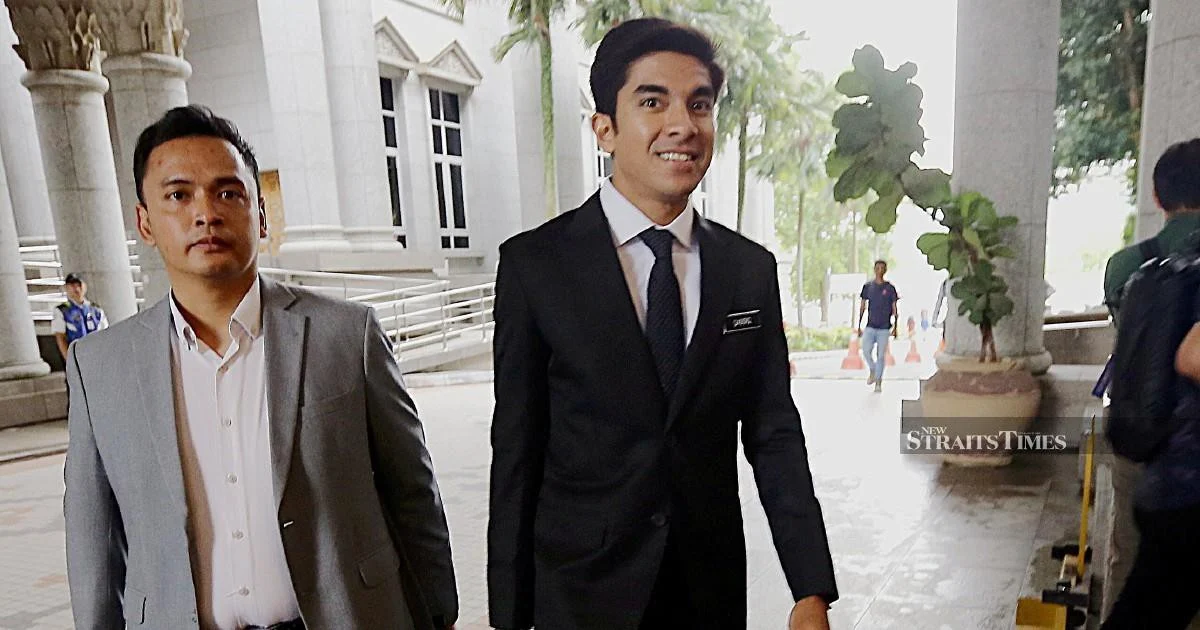
Amir Fiqri, popularly known as Amir Jack, brings his political machinery to the Johor state election campaign as the newly announced Muda candidate for the Maharani constituency. The move marks another strategic positioning by the youth-focused party as it seeks to expand its footprint in Malaysia's southern state, where competition for legislative seats remains intensely contested among a fragmented opposition landscape.
In his current role as a special officer to Muar member of parliament Syed Saddiq Syed Abdul Rahman, Amir Jack has worked closely within the political establishment that Muda is attempting to reshape and challenge. His candidacy represents the party's broader effort to identify emerging political talent from within existing parliamentary networks, blending insider knowledge with fresh electoral momentum. The appointment signals Muda's confidence in field-tested operatives who understand both grassroots mechanics and higher-level political strategy.
The Maharani constituency, situated within Johor's competitive political landscape, presents both opportunity and challenge for the younger generation of candidates stepping forward. As one of four candidates fielded by Muda across the state election, Amir Jack's candidacy reflects the party's calculated approach to resource allocation and seat selection. Muda's strategic deployment of candidates suggests careful deliberation over which constituencies offer genuine pathways to legislative representation versus those serving as political testing grounds or consolidation exercises.
Muda has positioned itself as an alternative to both the governing coalition and traditional opposition blocs, appealing particularly to younger voters and those seeking political renewal. By recruiting candidates like Amir Jack who carry institutional experience from sitting parliamentarians, the party demonstrates sophisticated understanding of electoral dynamics. Such appointments help bridge the apparent divide between outsider status and practical governance knowledge, reassuring voters that Muda's candidates possess more than ideological credentials.
Syed Saddiq's position as Muar MP remains significant within Muda's broader political architecture. As one of the party's founding figures and a nationally recognised voice among younger politicians, Syed Saddiq's parliamentary operations naturally generate talent and political apprentices. The elevation of his special officer to state-level candidacy suggests a deliberate knowledge transfer mechanism, where experience accumulated at federal level informs state-level political competition. This cross-pollination of personnel between parliamentary and state electoral tiers strengthens institutional continuity within younger political movements.
Johor's political environment has undergone considerable transformation over recent electoral cycles, with shifting voter preferences creating openings for candidates and parties willing to engage fresh constituencies and policy approaches. The state has traditionally been competitive ground where multiple political forces vie for dominance, yet recent years have witnessed increasing volatility in voting patterns and coalition dynamics. Muda's presence with four candidates demonstrates commitment to contesting seriously across the state rather than merely making symbolic gestures.
The selection of Amir Jack and his three party colleagues indicates Muda's intention to present comprehensive state-level platforms addressing local concerns and development priorities. Rather than concentrating resources on a handful of winnable seats, Muda's broader candidate slate suggests the party believes it can compete across multiple constituencies simultaneously. This approach carries inherent risks—spreading resources thinly risks underperformance across the board—yet potentially maximises exposure and establishes the party's organisational presence even in constituencies where victory remains uncertain.
For Amir Jack personally, the Maharani candidacy represents a significant professional transition from advisory roles to direct electoral accountability. Special officers and political staffers often operate behind the scenes, shaping strategy and managing day-to-day operations without facing public scrutiny that candidates encounter. Moving from this supporting function into frontline electoral competition demands different skill sets, including personal communication abilities, local constituency knowledge, and capacity to sustain political momentum throughout campaign periods. Success or failure in Maharani will substantially shape both his political future and Muda's trajectory within Johor politics.
The broader implications extend beyond individual candidacy. Muda's recruitment strategy reveals assumptions about which types of political experience and networks remain valuable assets in contemporary Malaysian electoral competition. By elevating figures working within existing parliamentary machinery rather than relying solely on grassroots activists or external professionals, Muda signals belief that institutional experience coupled with youth and reform credentials creates compelling political combinations. This approach contrasts with movements that emphasise complete breaks from established political structures.
As the Johor state election campaign develops, Amir Jack's performance in Maharani will offer early indicators regarding Muda's electoral competitiveness and ground-level organisation. Voters will assess whether his background translating into effective campaign performance and whether Muda's wider candidate slate generates sufficient momentum to translate into legislative representation. The election ultimately tests whether experience within parliamentary structures combined with commitment to political renewal successfully resonates with Johor electorates.

