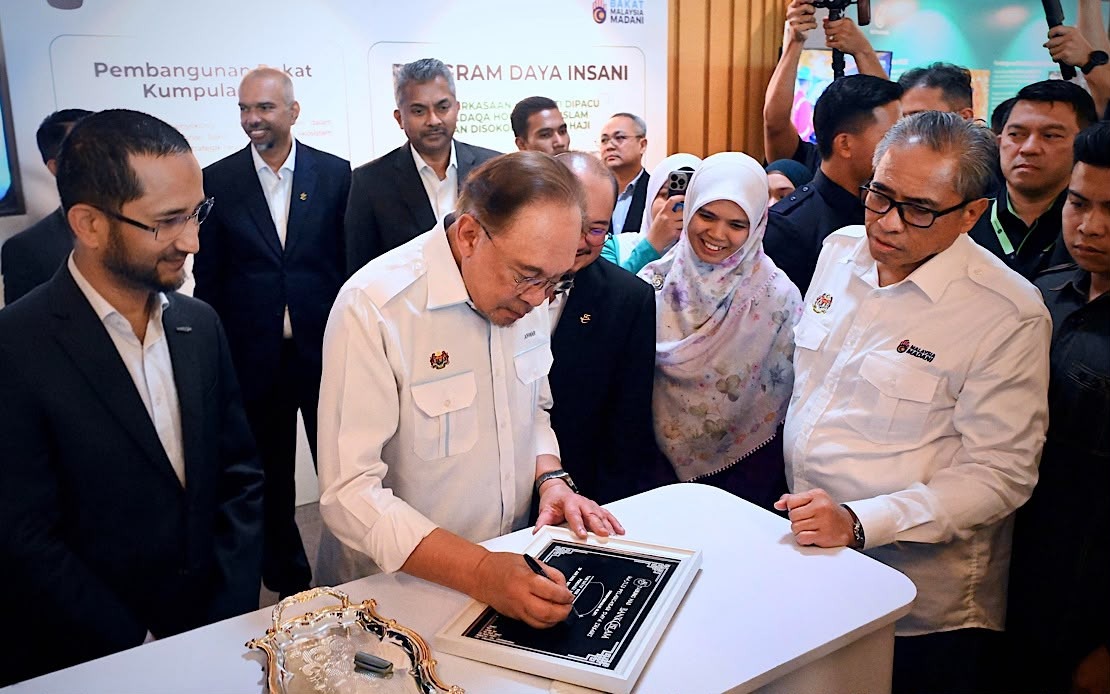
Malaysia's largest pilgrimage fund manager, Tabung Haji (TH), has partnered with Bank Islam Malaysia Berhad to introduce DAYA INSANI, an ambitious youth empowerment initiative backed by an initial RM1 million investment. Unveiled during Prime Minister Datuk Seri Anwar Ibrahim's MADANI Talent initiative launch in Sendayan, Negeri Sembilan, the programme represents a strategic move to channel resources toward skills development for asnaf youth and orphans who face structural barriers to economic mobility. The collaboration signals growing recognition among Malaysia's Islamic financial institutions that targeted intervention in human capital development delivers measurable social returns and strengthens the foundation for inclusive national progress.
The DAYA INSANI initiative operates on a integrated model combining three complementary pillars: specialised skills training, structured industry exposure, and guaranteed job placement pathways. Rather than offering generic education, the programme has established partnerships with sector-specific leaders to ensure curriculum relevance and employment outcomes. This approach acknowledges a persistent mismatch in Malaysia's labour market where skills gaps prevent talented individuals from disadvantaged backgrounds from accessing quality employment, while employers struggle to source trained workers. By aligning training directly with industry demand, DAYA INSANI addresses both sides of this equation simultaneously.
The programme's reach extends across multiple high-growth sectors critical to Malaysia's economic trajectory. Through collaboration with the Kulim Hi-Tech Park Skills Centre, participants receive technical training in advanced manufacturing and digital technologies—fields offering competitive wages and career progression. Simultaneously, partnerships with Kolej Universiti Bestari and Kumpulan Medic Iman Sdn Bhd expand pathways into nursing and healthcare, sectors where Malaysia faces acute talent shortages as demand from an ageing population intensifies. The involvement of the Malaysian Professional Accountancy Centre establishes a pipeline toward certified accounting qualifications, while Showme Education extends training into therapeutic professions, recognising the growing mental health and wellness sector.
Evidence of programme viability already exists within TH's existing initiatives. The Diploma in Nursing programme, launched in 2024 through partnerships with Kolej Universiti Bestari and KMI Healthcare, currently supports 19 students, with one graduate already successfully employed. Simultaneously, the technical training cohort at Kulim Hi-Tech Park, which began operations in June, has enrolled 13 participants with ambitions to scale participation to 100 in the near term. These trajectories demonstrate that when structured support combines quality instruction with industry validation, asnaf youth respond with commitment and deliver measurable labour market outcomes. Scaling these models across additional sectors and geographic regions addresses a persistent development challenge.
The financing structure of DAYA INSANI reflects Malaysia's evolving approach to social finance. Rather than treating the RM1 million as a fixed allocation, TH and Bank Islam have opened contributions to corporate entities, institutional investors, and individual philanthropists. This mechanism leverages private sector engagement while maintaining Islamic financial principles central to both organisations' missions. Corporate participation creates accountability loops where businesses investing in workforce development gain visibility into training quality and employment outcomes, incentivizing continued investment. The model also distributes funding risk across multiple stakeholders, reducing dependency on public budgets while mobilizing capital otherwise directed toward conventional corporate social responsibility initiatives.
For asnaf youth and orphans specifically, DAYA INSANI removes traditional barriers constraining economic advancement. Many qualified individuals from disadvantaged backgrounds lack access to quality vocational training due to cost, geographic distance, or information asymmetries about career pathways. The programme provides training at no cost to participants, covers industry exposure through structured placements, and facilitates job matching with vetted employers committed to hiring graduates. This comprehensive support acknowledges that skills alone remain insufficient without deliberate intervention addressing transportation, certification, interview preparation, and workplace integration—factors that frequently determine whether training translates into sustainable employment.
The initiative aligns strategically with Malaysia's broader MADANI framework, which emphasises inclusive development and shared prosperity. Rather than concentrating opportunity within established middle-class networks, DAYA INSANI deliberately targets populations facing systemic disadvantage. This approach recognises that unused talent represents an economic inefficiency with ripple effects: unemployed or underemployed youth experience reduced lifetime earnings, diminished tax contributions, and increased social service demands. By contrast, successful skills training and employment generate positive multiplier effects as newly employed individuals increase spending, support family dependents, and establish foundations for intergenerational mobility. The programme thus represents preventive social investment rather than remedial intervention.
Tabung Haji Group Managing Director Mustakim Mohamad framed the initiative as reflecting the organisation's philosophy that human capital investment delivers superior long-term returns compared to alternative uses of capital. This positioning reflects broader shifts within Islamic finance, where contemporary practitioners increasingly interpret social responsibility through measurable employment outcomes and income generation rather than purely charitable distributions. Bank Islam Group Chief Executive Officer Raja Datin Paduka Teh Maimunah Raja Abdul Aziz similarly emphasised the bank's commitment to direct community impact, language suggesting institutional recognition that sustainable development requires addressing structural barriers rather than managing symptoms through temporary assistance.
The programme's ambition to benefit over 100 participants in initial phases, expandable through additional funding, positions DAYA INSANI as a meaningful intervention at national scale. However, success depends on programme implementation quality, sustained industry partner commitment, and graduate employment tracking. Early metrics suggest capacity for expansion: nursing and technical training cohorts demonstrate strong enrolment demand, suggesting significant unmet appetite for quality skills development. The accounting and therapy sectors potentially offer additional growth vectors as corporate demand intensifies across both traditional and emerging industries. Maintaining quality standards while scaling represents the primary operational challenge facing programme administrators.
For Malaysia's broader development agenda, DAYA INSANI demonstrates that Islamic financial institutions possess both capital and organisational capacity to advance inclusive growth objectives beyond traditional banking functions. The collaborative model involving educational institutions, industry partners, and financial entities creates ecosystem conditions where marginalised populations gain genuine access to competitive skills and employment networks. As similar programmes develop across Malaysia's Islamic finance sector, cumulative impact on asnaf youth employability and economic participation could become substantial, supporting the MADANI framework's equity objectives while addressing persistent talent shortages constraining sectoral growth. The initiative thus serves both social equity and economic efficiency imperatives simultaneously.

