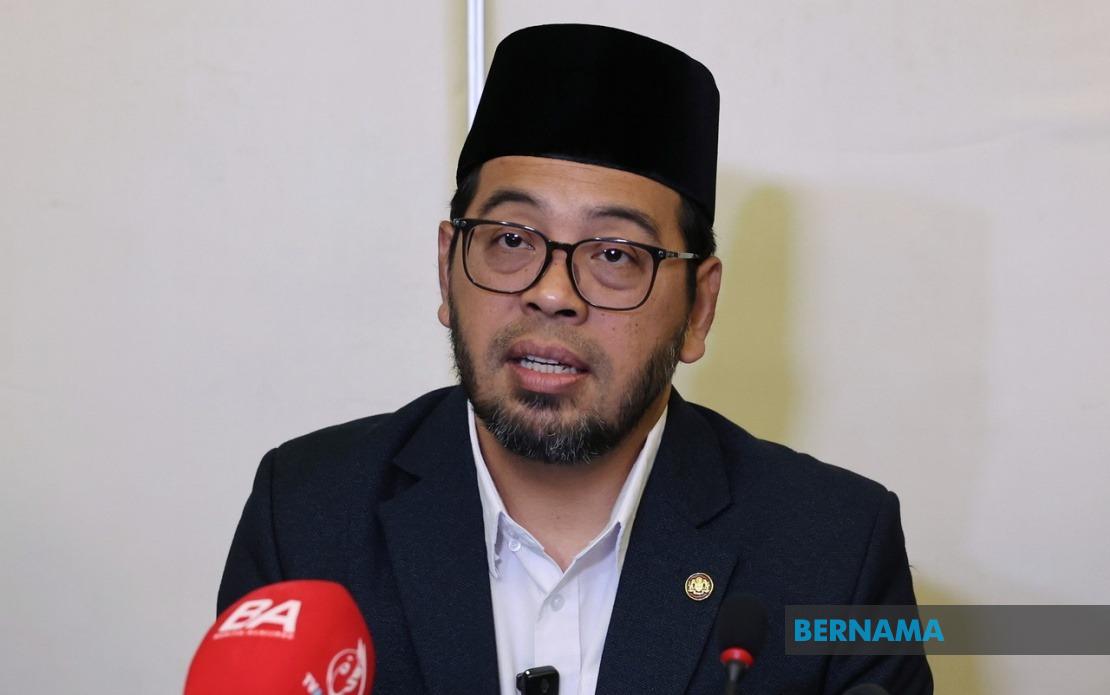
Lembaga Tabung Haji has substantially improved its position after intensive restructuring efforts, according to Religious Affairs Minister Dr Zulkifli Hasan, who briefed Parliament on the institution's recovery trajectory and the public release of a damaging Royal Commission of Inquiry report. The minister's comments, delivered during a special sitting of the Dewan Rakyat, signal the MADANI Government's determination to demonstrate both accountability and confidence in the haj institution's future viability following years of documented governance lapses.
When the current administration assumed office in late 2022, Tabung Haji was grappling with decades-old structural problems rooted in the pre-2018 era. The institution carried a substantial burden of underperforming and problematic assets that had accumulated over years, constraining its operational efficiency and financial health. Rather than implement immediate, superficial remedies, the government opted to grant Tabung Haji operational space to execute comprehensive institutional renewal. This patient approach reflected confidence in the newly appointed management team and recognition that sustainable recovery demanded fundamental rather than cosmetic reforms.
The government's decision to release the 211-page RCI report, after it was presented to His Majesty in August 2022, came only following Cabinet approval on July 29. The report, chaired by former Chief Justice Tun Mohamed Raus Sharif and comprising five specialists in public administration, banking, finance, syariah law and accounting, documents governance weaknesses spanning 2014 to 2020. The document contains 25 specific recommendations for organisational improvement, with 75 percent already implemented by the time of public disclosure, demonstrating that institutional reforms were substantially underway before formal accountability was established.
The timing of the report's release carries particular significance for Malaysian Muslim depositors and hajj aspirants. Tabung Haji functions as a repository of sacred trust, holding money meticulously accumulated by teachers, traders, retirees, farmers, fishermen, rubber tappers, taxi drivers and parents saving for their children's pilgrimage. These are not speculative investments but expressions of spiritual commitment and accumulated sacrifice. The institution's compromised integrity therefore touches not merely financial interests but the foundational trust within Malaysia's Muslim community. Dr Zulkifli emphasised that such a breach of confidence cannot be concealed behind statistical adjustments or relegated to historical inevitability.
Following public release of the RCI findings, the Malaysian Anti-Corruption Commission and police initiated formal investigations and detained several key individuals implicated in the alleged misappropriation of pilgrims' funds. This enforcement action represents the government's commitment to comprehensive accountability without exemption based on status or position. The minister framed these investigations as aligned with His Majesty Sultan Ibrahim's explicit directive that all RCI findings be pursued thoroughly, transparently and without compromise, with investigations conducted comprehensively to uncover the complete extent of any breaches.
Tabung Haji's recovery narrative has included international recognition of improved management standards. The institution has received five World's Best Haj Management Awards across four consecutive years, indicating that the new leadership's emphasis on competence, integrity and accountability has translated into tangible operational improvements. These accolades carry weight beyond public relations value, reflecting assessments by independent international bodies overseeing hajj logistics across multiple countries. The awards suggest that restoration efforts have moved beyond institutional housekeeping to achieve substantive gains in service delivery and financial stewardship.
The institutional recovery process carries broader implications for how Malaysian public institutions rebuild credibility following governance failures. Tabung Haji's trajectory demonstrates that transparent acknowledgment of past failures, coupled with decisive enforcement action against wrongdoers and sustained operational improvement, can restore institutional standing. However, the minister's insistence that recovery be guided by depositor confidence rather than political convenience suggests awareness that quick fixes risk merely displacing rather than resolving underlying culture and accountability deficits. The emphasis on principal-agent alignment—ensuring leadership decisions reflect depositors' interests in reaching the holy city rather than external political imperatives—represents institutional thinking refined through previous failures.
The release of the RCI report through Parliament rather than media leaks or selective disclosure reflects democratic norms that Dr Zulkifli explicitly defended. He rejected what he termed narratives driven by political interest that might override genuine depositor welfare. This framing positions the government's accountability measures as defensive against politicisation rather than as opportunistic revelation. Whether this characterisation resonates with depositors and the broader Muslim community will partly determine whether the recovery effort achieves its strategic objective of restoring Tabung Haji's standing as a trusted national institution.
For Malaysian and Southeast Asian observers, Tabung Haji's recovery process offers lessons in institutional reform under political constraints. The government faced pressure to either suppress the RCI findings as historically inevitable or weaponise them for political advantage against predecessors. Instead, the chosen path emphasises implementable reforms, enforcement accountability and sustained operational improvement. The decision to present detailed recovery metrics—including the 75 percent implementation rate of RCI recommendations—suggests confidence that institutional performance improvements can validate the recovery narrative independent of partisan framing.
Looking forward, the critical test of Tabung Haji's restoration involves sustaining depositor confidence through both enforcement outcomes against alleged wrongdoers and continued operational excellence. The minister's emphasis on the depositors' spiritual motivations rather than financial returns reveals understanding that Tabung Haji occupies a unique position in Malaysian institutional life, functioning simultaneously as financial entity, religious institution and national symbol of commitment to Islamic practices. Recovering trust in such an institution demands more than accounting adjustments or management restructuring; it requires demonstrable alignment between institutional operations and the values that depositors invest in the institution.

