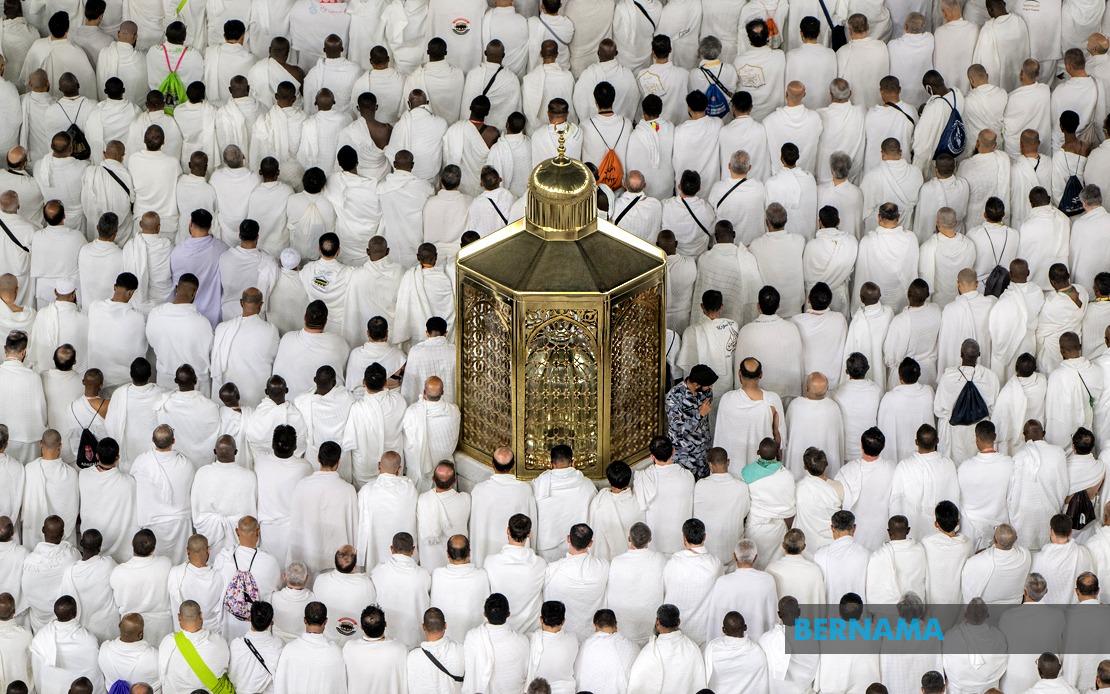
Tabung Haji has reaffirmed its commitment to the "first-registered, first-served" allocation system for Haj pilgrimage slots, rejecting proposals to create special priority categories that would bypass the existing queue structure. Deputy Minister in the Prime Minister's Department (Religious Affairs) Marhamah Rosli made the declaration during parliamentary proceedings, emphasising that the institution's foundational approach remains grounded in principles of fairness, transparency and equity that have underpinned its management of the Haj waiting list for decades.
The statement came in response to a parliamentary query from Abdul Latiff Abdul Rahman, the Member for Kuala Krai representing Perikatan Nasional, who had suggested the government consider establishing a dedicated fast-track category for compulsory retirees who receive gratuity payments. The proposal hinged on the reasoning that such individuals possess enhanced financial capacity to fund the pilgrimage, yet often find themselves trapped in extended waiting periods that may span years before their turn arrives. However, authorities determined that introducing such preferential mechanisms would fundamentally undermine the integrity of the existing queue system and create inequitable disadvantages for depositors who have already invested considerable time and patience awaiting their opportunity.
Marhamah explained that the rationale for maintaining the uniform queue system extends beyond administrative convenience. Opening special pathways would effectively penalise those individuals who had registered early in the scheme's history and have been waiting patiently for their turn, potentially creating resentment and erosion of public confidence in the institution's management practices. The rigorous adherence to chronological registration order serves as the most transparent mechanism available, providing all participants with clear visibility of where they stand and approximately when they might expect to receive their Haj offer. This predictability, while testing depositors' patience, operates as a stabilising force within a system managing hundreds of thousands of accumulated registrations.
Critically, Tabung Haji has introduced new financial safeguards designed to ensure that offered pilgrims are adequately prepared before undertaking the sacred journey. Beginning with the current Haj season, prospective pilgrims must maintain a minimum savings balance of RM15,000 before the institution issues an official Haj offer letter, despite the actual comprehensive cost of the pilgrimage standing at RM33,300. This threshold requirement functions as a preliminary gating mechanism, filtering out individuals whose financial circumstances may not yet support the demands of the journey and reducing the likelihood of withdrawals or cancellations that disrupt carefully coordinated scheduling. The requirement reflects pragmatic recognition that financial readiness represents a critical component of successful pilgrimage preparation.
Beyond the financial prerequisite, Tabung Haji ensures that every depositor receives transparent information regarding their estimated Haj year, enabling long-range financial and logistical planning. The institution actively encourages prospective pilgrims to prepare comprehensively across three interrelated dimensions: securing adequate financial resources, addressing health screening and preparation requirements, and building substantive knowledge about Haj rituals, protocols and expectations. This holistic preparation approach acknowledges that successful pilgrimage requires multidimensional readiness extending far beyond mere cash availability. Depositors not yet scheduled for their Haj offer retain the option to submit formal appeals that will receive individual consideration based on established criteria and priority factors, preserving a limited avenue for exceptional circumstances.
The quota allocation challenge remains a persistent constraint on Malaysia's ability to accommodate its growing pilgrim population. The Kingdom of Saudi Arabia granted Malaysia an official allocation of 31,600 pilgrims for the current Haj season, a figure representing the maximum number of Malaysian nationals the Saudi authorities will permit to participate. Any expansion of this quota remains entirely within Saudi Arabia's sovereign prerogative, a reality that necessarily limits Malaysia's capacity to accelerate processing of its accumulated waiting list. Marhamah indicated that Tabung Haji will persist in submitting applications annually requesting supplementary quota allocations, acknowledging the substantial backlog of qualified depositors awaiting their turn. However, she candidly recognised that meeting escalating demand from Malaysia's 1.8 million Tabung Haji depositors will require continued negotiation with Saudi authorities willing only to expand allocations selectively.
On the enforcement front, Marhamah reported that no cases of Haj package fraud were documented during the 1447 Hijrah Haj season, a positive outcome she attributed to intensified enforcement protocols and widespread uptake of the "No Visa, No Haj" awareness initiative. This campaign operates in complementary alignment with Saudi Arabia's own "No Haj Without Permit" policy, creating a dual-layer verification system that substantially reduces opportunities for unauthorised travel or fraudulent pilgrimage arrangements. The Haj Fraud Task Force, comprising Tabung Haji, the Royal Malaysia Police and the Ministry of Tourism, Arts and Culture, has clearly demonstrated its effectiveness in preventing the deceptive schemes that have historically victimised credulous pilgrims seeking alternative pathways to the sacred sites.
For Malaysian pilgrims contemplating the journey ahead, the practical implications are clear: the Haj queue will not privilege any demographic category, regardless of retirement status or financial circumstances. Those seeking to accelerate their pilgrimage participation must either wait for their chronological turn or pursue alternative private arrangements outside the Tabung Haji system. This transparent approach, while occasionally frustrating for those facing extended delays, ultimately protects the institution's integrity and ensures that no subset of depositors receives favourable treatment at the expense of others. As Malaysia's Muslim population continues growing and awareness of the Haj's spiritual significance deepens, maintaining this equitable framework becomes increasingly essential to preserving public confidence in one of the nation's most culturally significant institutions.

