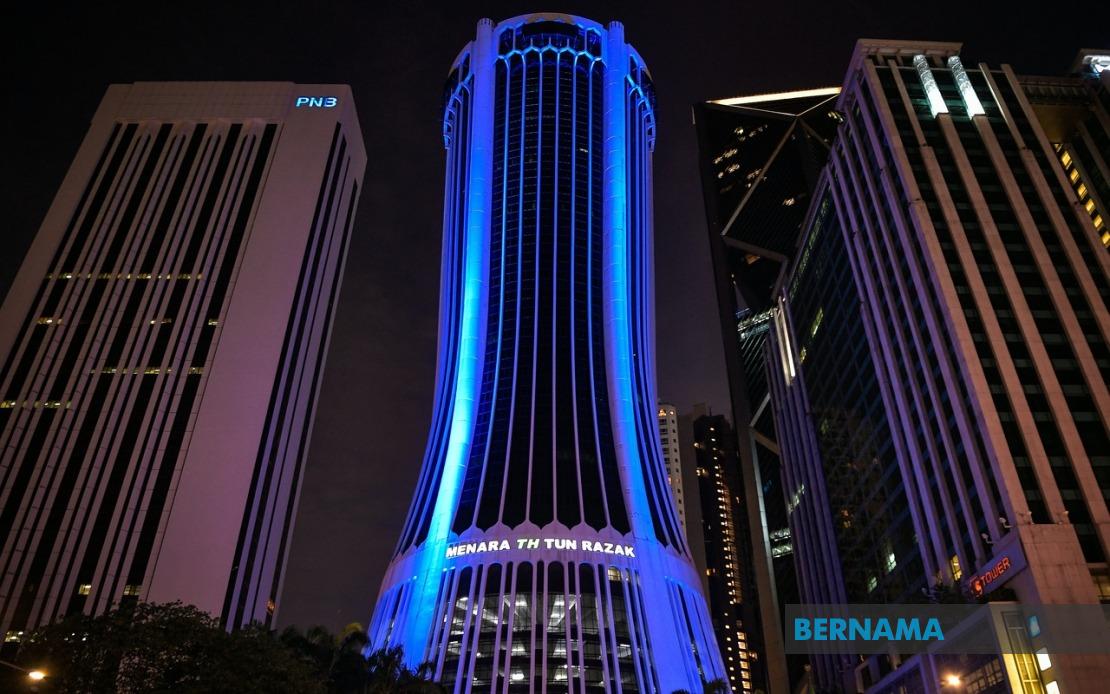
The credibility crisis at Lembaga Tabung Haji demands an urgent and multifaceted communications strategy that goes beyond traditional announcements, according to leading governance and economics experts who have assessed the institution's path forward following the damaging revelations in the Royal Commission of Inquiry report. With millions of Malaysian depositors—many of them young, digitally native savers—now questioning the safety of their funds, TH faces a pivotal moment where strategic transparency could either restore public trust or allow corrosive doubt to deepen.
Dr Mohd Kamarul Amree Mohd Sarkam, a Senior Lecturer at the Academy of Islamic Defence Studies at Universiti Pertahanan Nasional Malaysia, emphasizes that TH cannot afford to remain passive during its recovery phase. He points out that the majority of TH's depositor base comprises millennials and Generation Z individuals who conduct their daily lives and gather information through social media platforms. This demographic reality means that conventional media channels and formal press releases, while necessary, are insufficient to reach and persuade the constituency that TH depends upon. The institution must meet depositors where they actually are—on Facebook, Instagram, TikTok, and other digital spaces—with consistent, accessible messaging about governance reforms and financial stability.
The communications challenge is particularly acute because the reform process itself will necessarily be gradual. TH cannot promise overnight solutions to structural problems that accumulated over years, yet it must demonstrate tangible progress and genuine commitment to change. This requires a sustained narrative strategy rather than a one-off explanation. Digital platforms offer the advantage of allowing TH to document its reform journey in real time, showing incremental improvements, highlighting milestones achieved, and addressing emerging questions from the public. Such transparency, paradoxically, can build confidence more effectively than claims of perfection.
Dr Mohd Kamarul Amree also advocates for a fundamental restructuring of TH's leadership and governance framework. He contends that the appointment of technical experts and seasoned business professionals to senior management positions—replacing what he characterizes as political appointments—would signal to the public that TH is serious about professional stewardship. Non-partisan leadership insulated from shifting political considerations would help depositors believe that decisions are made on merit and fiduciary duty rather than factional interests. This governance reform must be paired with implementation of the 25 recommendations contained in the RCI report, particularly amendments to the TH Act that would clarify oversight responsibilities and place financial management under the Ministry of Finance.
TH also possesses a significant but underutilized asset: Malaysia's reputation in hajj management. The Saudi Arabian government has formally recognized the quality of TH's pilgrimage operations and logistical coordination. Building a stronger public narrative around this international validation could reinforce the message that TH, despite its governance missteps, possesses genuine institutional strengths. By connecting the dots between operational excellence in hajj services and the broader institutional capacity to reform and recover, TH can offer depositors a more complete and balanced picture.
Dr Mohd Afzanizam Abdul Rashid, chief economist at Bank Muamalat Malaysia, brings the perspective of financial sector expertise to the conversation. He stresses that public confusion and misinformation about TH's financial position poses an active threat to depositor confidence and must be treated with corresponding urgency. Some depositors and observers may harbor misconceptions about the timeline of the RCI report, the scope of financial vulnerabilities, or the current state of TH's asset position. Each of these misunderstandings, left unaddressed, becomes a vector for further erosion of trust.
Rashid proposes that TH implement a structured outreach programme combining transparency with direct engagement. Town hall sessions held at the district level would allow depositors to ask questions, voice concerns, and receive clarifications from TH leadership in person. Such forums create accountability—TH executives cannot deflect difficult questions or hide behind prepared statements—and they generate local news coverage that reaches populations not necessarily engaged with national media or social platforms. The cumulative effect of multiple, geographically distributed town halls would demonstrate that TH regards this communication challenge as serious enough to warrant substantial institutional investment.
The timing of this communications push is critical. The RCI report, released publicly on July 29 and subsequently debated in a special parliamentary sitting, has already saturated the media environment with discussion of TH's failures. This window of public attention—while painful for TH—represents an opportunity to shape the narrative toward solutions rather than allow it to calcify around problems. Depositors are currently attuned to TH news; they are asking questions and seeking reassurance. TH has perhaps weeks, not months, to seize this moment with coherent, credible messaging before public attention drifts elsewhere and the institution becomes burdened by accumulated negative perceptions that are harder to shift.
The RCI documented substantial governance and management weaknesses spanning 2014 to 2020, a six-year period during which institutional controls failed to prevent various forms of misconduct and mismanagement. The very scope of these documented failures means that TH cannot simply declare reform and expect depositors to believe in transformation. The evidence of past dysfunction is too fresh and too detailed. Instead, TH must demonstrate reform through observable action, measurable outcomes, and independent verification where possible. This is why Dr Mohd Kamarul Amree's emphasis on appointing credible external experts to management ranks is strategically important—such appointments themselves become evidence that serious change is underway.
The broader national context amplifies the stakes of TH's recovery effort. The government has made institutional integrity and anti-corruption a policy priority, and TH's missteps, aired publicly, have become emblematic of the governance challenges that the administration seeks to address. TH's successful rebuilding would demonstrate that institutions can acknowledge failures, implement reforms, and regain public confidence. Conversely, if TH's communications efforts ring hollow or if the pace of reform appears sluggish, it would reinforce public cynicism about whether institutional change is genuinely possible in Malaysia.
For Malaysian depositors, particularly those who have saved with TH for the Islamic intention of performing hajj, the emotional and religious dimensions of this trust matter deeply. TH is not simply a financial institution but a vehicle for fulfilling one of the five pillars of Islam. When that institution falters, it strikes at something more profound than economic confidence—it touches on faith in Malaysia's capacity to serve Muslim citizens' spiritual aspirations. This explains why governance and financial reassurance alone, while necessary, may prove insufficient. TH must also reconstruct the narrative of itself as a trustworthy steward of both depositors' money and their religious obligations.
Moving forward, TH would be wise to establish a dedicated communications department staffed with experts in both Islamic finance and public relations, capable of crafting messaging that resonates with diverse depositor segments. The institution should commit to quarterly financial transparency reports, monthly updates on reform implementation, and regular dialogue with depositor representatives. It should also consider appointing an external ombudsman or oversight figure with credibility independent of TH, whose public assessments of the institution's progress would carry weight with skeptical depositors. Such measures may seem costly and burdensome, but they are the price of institutional rehabilitation after the degree of public trust erosion that TH has suffered.
Ultimately, the experts quoted here agree that TH's future depends less on what it says than on what it does, yet what it says determines whether depositors will believe in what it does. The communications strategy and governance reforms must advance in tandem, each reinforcing the other. TH has the opportunity to emerge from this crisis as a reformed, professionally managed institution worthy of renewed public confidence. Whether it seizes that opportunity will become clear in the months ahead.

