Tabung Haji is stepping up collection efforts against Saudi Arabia-based Al-Rawda Real Estates Development & Project Management Co Ltd, the pilgrimage fund's troubled partner in a hotel investment that unravelled nearly five years ago. The religious affairs ministry confirmed on August 11 that despite an arbitration award requiring the company to pay 899 million Saudi riyal, Al-Rawda has remitted just 14.9 million Saudi riyal—leaving a shortfall of approximately 884 million riyal, or roughly RM963 million at current exchange rates. The fund has now terminated a November 2024 settlement agreement after the developer proved unable or unwilling to meet its obligations, signalling the exhaustion of negotiated approaches and a shift toward more aggressive recovery tactics.
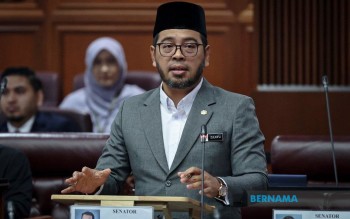
Minister in the Prime Minister's Department (Religious Affairs) Dr Zulkifli Hasan revealed that Tabung Haji has engaged specialist asset-tracing consultants to locate and pursue Al-Rawda's financial holdings across jurisdictions. This move underscores the complexity of cross-border debt recovery and suggests that conventional enforcement methods within Saudi Arabia have proven insufficient. The decision to bring in external expertise reflects the scale of the financial exposure and the strategic challenge of pursuing a debtor whose assets may be dispersed across multiple countries or deliberately concealed.
The roots of this dispute trace back to an unusual and aggressive expansion strategy pursued by Tabung Haji between 2015 and 2017. The fund leased four hotels in Islam's holiest cities—Makkah and Madinah—paying approximately RM1.55 billion upfront to Al-Rawda for lease agreements spanning ten to eighteen years. This structure was highly unconventional, concentrating enormous capital in a single developer with limited diversification. Rather than retaining direct operational control, Tabung Haji further delegated hotel management to the same company through a Management and Operation Agreement, creating dependencies that would later prove catastrophic when Al-Rawda failed to generate promised returns.
The arrangement's financial terms were deeply skewed in Al-Rawda's favour. Under the agreement, Tabung Haji was entitled to lease rental income totalling 2.49 billion Saudi riyal over the contract period. However, in a gesture of remarkable faith, the fund accepted only a personal promissory note guaranteed by Al-Rawda's owner, Dr Mashhoor Ali Omar Almadoodi, rather than insisting on more robust security or performance bonds. This decision proved catastrophic when Al-Rawda ceased remitting rental payments in March 2019, abruptly halting income flows that Tabung Haji had factored into its financial planning and distribution obligations to pilgrims.
The enforcement response that followed was necessarily protracted and complex. Tabung Haji initiated legal proceedings in Saudi Arabia, attempting to recover outstanding payments through the local courts. The dispute evolved into formal arbitration when Al-Rawda countersued, but the final award—delivered on April 16, 2023—vindicated Tabung Haji's position entirely. The arbitrator ordered Al-Rawda to pay 899 million Saudi riyal, a judgment that theoretically should have resolved the matter. Yet possession of an arbitration award and actual recovery of funds are vastly different propositions, particularly when dealing with a debtor claiming financial distress.
Al-Rawda's stated inability to satisfy the award highlights a broader pattern of investment mismanagement that the Royal Commission of Inquiry documented extensively. The RCI's 211-page report, released publicly on July 29, identified Al-Rawda among fourteen troubled Tabung Haji investments that collectively generated losses in the billions of ringgit. These were not isolated bad bets but symptoms of systemic weaknesses in due diligence, governance, and risk management that characterized Tabung Haji's operations between 2014 and 2020—a period during which the fund's leadership pursued expansion with insufficient safeguards.
The implications of this case extend beyond Tabung Haji itself to affect the roughly nine million Malaysians who contribute to and depend upon the fund for pilgrimage financing and savings vehicles. Every ringgit lost to Al-Rawda represents capital diverted from prospective pilgrims' allocations, from dividend distributions, or from strengthening the fund's financial reserves. The publicity surrounding the arbitration failure also raises uncomfortable questions about the fund's capacity to vet international counterparties and to protect depositors' interests when negotiating complex cross-border transactions in foreign jurisdictions where enforcement mechanisms are less predictable.
The November 2024 settlement agreement represented an attempt at pragmatic resolution—a recognition that protracted legal battles across Saudi Arabia would consume resources and time while remaining uncertain. By negotiating a structured repayment plan, Tabung Haji sought to recover at least a portion of the debt while maintaining a working relationship. Al-Rawda's subsequent default on even this more lenient arrangement suggests either genuine financial collapse or deliberate evasion, both scenarios that complicate recovery.
The deployment of asset-tracing specialists signals recognition that standard mechanisms have reached their limits. These firms employ investigative techniques to identify hidden or transferred assets, pursue claims through multiple jurisdictions, and apply pressure through reputational and financial channels. However, the effectiveness of such measures depends heavily on the transparency of financial systems where assets may be located and the willingness of third-party nations to cooperate in enforcement. For Malaysian policymakers and the millions of Tabung Haji participants, this case illustrates the substantial risks inherent in concentrating large capital commitments with single international counterparties, particularly in jurisdictions where contract enforcement may prove elusive.
Among the RCI's 25 recommendations for institutional reform, 75 percent had reportedly been implemented by Tabung Haji as of late July. These improvements presumably address the governance lapses and due-diligence failures that enabled the Al-Rawda debacle and similar investments to proceed. The fund's management has acknowledged the need for stronger controls, more rigorous partner vetting, and clearer risk parameters. Yet the Al-Rawda case itself—where an arbitration award remains substantially uncollected more than eighteen months after issuance—demonstrates that structural reforms alone cannot recover funds already lost or currently inaccessible due to foreign enforcement challenges.
Moving forward, Tabung Haji's pursuit of the remaining 884 million riyal will likely prove a marathon rather than a sprint. Asset tracing may yield leads, but converting these into actual recoveries requires navigating international law, coordinating with Saudi authorities, and potentially litigating in multiple forums. The episode serves as a cautionary tale for Malaysian institutional investors and policymakers about the perils of overseas concentration, the importance of robust security mechanisms, and the hard limits of legal remedies when dealing with allegedly insolvent counterparties across borders.

