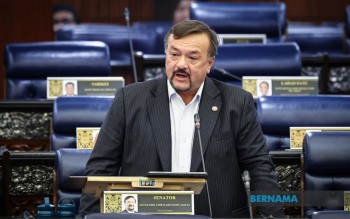
The hajj pilgrimage fund has become embroiled in a massive financial crisis, with losses totalling nearly RM13 billion spread across 14 separate investment deals, according to Finance Minister II Datuk Seri Amir Hamzah Azizan. The scale of the disaster is underscored by the fact that seven of these investments resulted in complete financial obliteration—not merely partial setbacks but absolute total losses from which no recovery is anticipated. The revelations emerged during parliamentary proceedings debating findings from a Royal Commission of Inquiry into the troubled institution's operations.
The breakdown of this colossal burden reveals how the losses have been distributed across different accounting mechanisms. The government has absorbed RM10.2 billion through a rescue package implemented via Urusharta Jamaah Sdn Bhd in 2018, essentially using taxpayers' money to stanch the bleeding. Beyond this direct bailout, Tabung Haji itself has recorded an additional RM2.6 billion in impairment write-downs between 2018 and 2025, representing further deterioration of its asset base as investments previously carried on the books have been progressively written down to zero or near-zero values.
Among the laundry list of failed ventures, the Al-Rawda Real Estates Development & Project Management Co Ltd emerges as the single largest loss-maker. This Saudi Arabia-incorporated company was supposed to be the cornerstone of an ambitious strategy to secure accommodation for Malaysian pilgrims visiting the holy cities, a mission that sits at the very heart of Tabung Haji's original purpose. The transaction involved lease arrangements spanning 2015 to 2017 in which the fund paid 1.4 billion Saudi riyals—equivalent to approximately RM1.5 billion—to intermediaries as upfront capital to secure access to four hotels distributed between Makkah and Madinah.
The structural problems with this arrangement became apparent once the reality of operations unfolded. Al-Rawda was contractually obligated to operate these properties and remit rental payments back to Tabung Haji totalling 2.49 billion Saudi riyals. However, these payments never materialised. What made this situation particularly troubling was the absence of robust security for such a substantial commitment—the fund's claim rested primarily on personal promissory notes rather than formal liens or guarantees backed by the actual hotel assets themselves. This represents a fundamental failure of fiduciary prudence in structuring a transaction of this magnitude.
The default began almost immediately, with Al-Rawda ceasing rental payments starting in the first quarter of 2019, merely months after the lease arrangement commenced. The company effectively abandoned its obligations to the Malaysian fund, leaving Tabung Haji holding four hotels that it could neither operate itself nor recover through legal remedies. By 2024, more than five years after payments stopped, Tabung Haji finally acknowledged reality by recording a full impairment loss of RM1 billion connected to this single investment—a tacit admission that recovery was no longer possible. This delay in recognition suggests a prolonged period during which the true financial position was obscured from public view.
The implications for Malaysian pilgrims are significant and multifaceted. Tabung Haji exists primarily to enable ordinary Malaysians, many of modest means, to fulfil one of Islam's fundamental obligations. The misallocation of their contributions and savings toward speculative international real estate ventures—rather than the straightforward provision of accommodation and pilgrimage services—represents a profound betrayal of trust. The fact that these losses required a government bailout means that taxpayers across the entire Malaysian population, not merely the fund's participants, have borne the cost of these strategic failures.
From a broader governance perspective, the crisis highlights systemic weaknesses in institutional oversight and investment risk management. The concentration of capital in overseas ventures, particularly in emerging markets like Saudi Arabia, without commensurate legal protections or operational expertise raises questions about the decision-making frameworks that permitted such exposure to accumulate. The involvement of intermediaries in structuring these deals, coupled with reliance on personal guarantees rather than tangible collateral, suggests a lack of proper due diligence procedures.
The mention of seven investments suffering complete total losses deserves closer examination. Unlike the Al-Rawda situation where at least some underlying assets theoretically existed, these total wipeouts suggest scenarios where the capital was either lost to fraud, poor operational performance, or market collapse with no residual value. The lack of specific detail on these seven investments in the initial disclosure raises concerns about transparency and whether stakeholders fully understand the nature of these failures.
For regional observers, this episode underscores broader risks in cross-border investment by trust funds and governmental bodies in Southeast Asia and the Middle East. The combination of currency exposure, counterparty risk, and legal framework differences can amplify losses beyond what might be anticipated from a purely financial analysis. The reliance on intermediaries in international transactions frequently introduces additional layers of opacity and fee leakage.
The financial recovery plan remains unclear from available statements. With RM10.2 billion already expended and ongoing impairment charges continuing to mount, the path to full stabilisation will likely require years of careful asset management and operational restructuring. Whether Tabung Haji can restore public confidence in its stewardship remains an open question, particularly given that future pilgrims will be contributing toward an institution bearing the permanent scars of these investment misjudgements.
The Royal Commission of Inquiry's full findings, now being debated in parliament, are expected to provide more granular analysis of how these investments were approved and managed. The political and administrative accountability for these decisions will likely dominate discussions in coming weeks. For Malaysian citizens, particularly those dependent on Tabung Haji's services, the primary concern is ensuring that lessons are learned and governance structures are sufficiently reformed to prevent recurrence of such catastrophic capital allocation errors.

