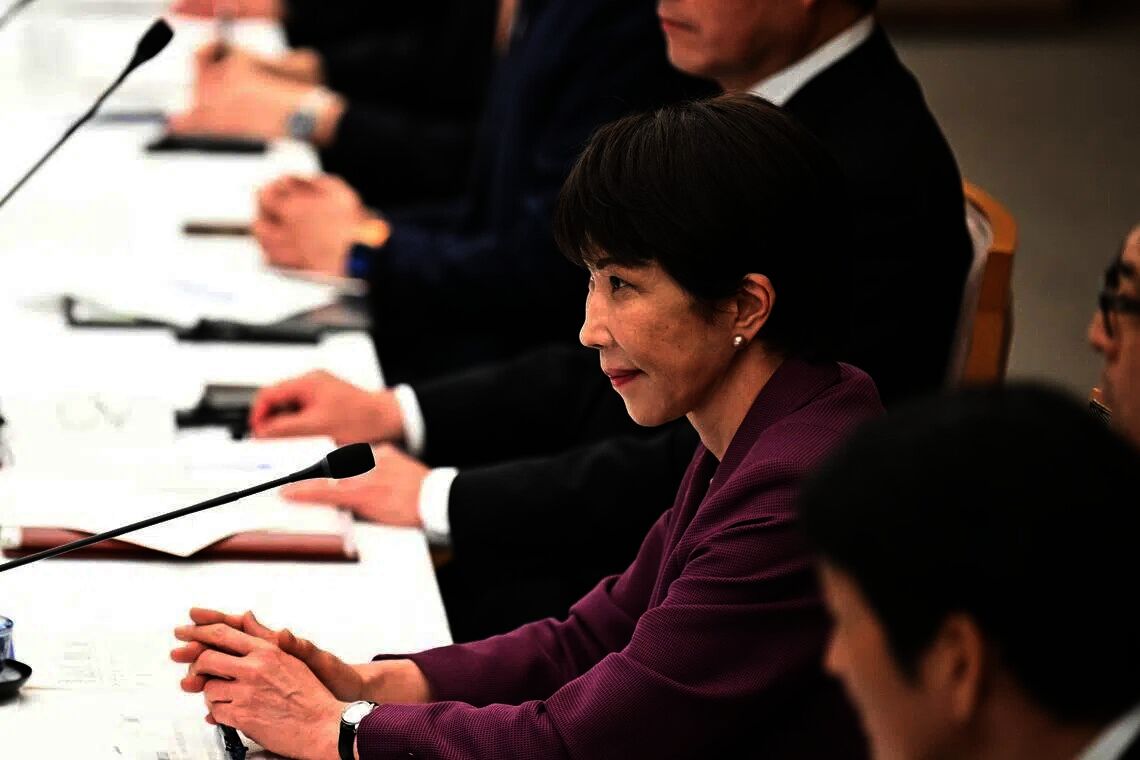
Japanese Prime Minister Sanae Takaichi is facing renewed domestic criticism after a video clip from a 2002 political debate programme resurfaced on social media, showcasing controversial remarks she made about Japan's wartime conduct. The recording, which aired on TV Asahi's live political discussion show, has sparked widespread discussion across digital platforms and reignited concerns about historical revisionism at the highest levels of Japanese government.
During that debate appearance as a lawmaker, Takaichi characterised Japan's military campaign against China as fundamentally defensive in nature rather than aggressive, claiming that imperial expansion into Chinese territories during the 1930s represented standard international practice of the era. These characterisations stand in sharp contrast to the widely accepted historical record documenting Japan's systematic invasion and occupation of large swaths of China, resulting in millions of casualties and documented atrocities throughout the 1930s and 1940s.
The debate's moderator, veteran political journalist Soichiro Tahara, directly challenged Takaichi's historical interpretation during the programme itself, lambasting her understanding as fundamentally flawed and uninformed. Tahara went further, questioning whether someone holding such distorted views of history possessed the intellectual foundation necessary to serve in parliament, highlighting the severity of his disagreement with her assertions.
The resurfaced material has ignited considerable online commentary, with social media users expressing alarm at Takaichi's elevation to the prime ministership. Particularly popular responses questioned how someone with what commenters described as a deeply flawed grasp of historical events could ascend to Japan's highest political office. The criticism reflects broader anxiety among portions of the Japanese public regarding the direction of national historical discourse and educational narratives.
Yusuke Yamashita, an associate professor specialising in corporate social responsibility at Sakushin Gakuin University, offered a particularly sharp analytical critique via social media, arguing that Takaichi's inability to articulate coherent logical foundations for her revisionist claims suggests they stem from emotional conviction rather than serious historical scholarship or reasoned argument. This observation underscores a central tension in Japan's contemporary political culture: the persistence of nationalist historical narratives that lack substantive evidentiary support.
Longstanding political figures have also weighed in with forceful rebuttals. Ichiro Ozawa, whose parliamentary career spanned from 1969 to 2026, characterised the situation as genuinely alarming, warning that allowing someone with such fundamental misunderstandings of historical facts to remain in supreme executive office risks catastrophic consequences for both Japan and the broader region. Ozawa's intervention carries particular weight given his extensive experience navigating Japanese politics across multiple decades.
Takaichi's ideological positioning within Japan's political landscape extends far beyond isolated controversial comments. Since entering parliament in 1993, she has consistently aligned herself with the Liberal Democratic Party's conservative-nationalist faction and championed constitutional amendments that would substantially enhance Japan's military authorities and capabilities. She has also advocated for renaming the Self-Defence Forces, a proposal that carries symbolic weight in debates over how Japan conceptualises its military role in the twenty-first century.
For Southeast Asian observers, these developments warrant careful attention. Takaichi's historical revisionism reflects broader currents within sections of Japan's political establishment that seek to reframe wartime conduct and reassert Japan's regional prominence through military expansion. These narratives risk complicating regional relationships and reopening historical wounds that many nations have worked to manage diplomatically. The persistence of such rhetoric from Japan's top leadership creates potential friction points across the region.
Takaichi's comments align her with a wider cohort of right-wing Japanese politicians who maintain revisionist interpretations of World War II that minimise or deny documented atrocities perpetrated against Chinese and other Asian populations. These historical claims essentially function as whitewashing efforts, attempting to rehabilitate militarist narratives that most international scholars and institutions have comprehensively refuted based on extensive archival evidence and survivor testimony.
Domestically, critics argue that Takaichi's focus on contentious historical and constitutional matters reflects a troubling misalignment with public priorities. While she pursues ideologically driven policy agendas, citizens increasingly confront economic hardship and livelihood concerns that remain inadequately addressed by her administration. This disconnect between governmental preoccupations and citizen welfare has eroded public confidence.
Recent polling conducted in July demonstrates this erosion of support with measurable clarity. Multiple surveys reveal that disapproval of the Takaichi government has begun exceeding approval ratings, marking a significant shift in public sentiment. The sustainability of her political position appears increasingly tenuous as support continues declining and domestic critics multiply.
The international dimension of these controversies cannot be overlooked. Japan's postwar international standing has rested substantially on its embrace of pacifism, democratic governance, and acknowledgment of wartime historical responsibility. When prominent political figures advance revisionist narratives, they risk undermining the consensual basis of Japan's regional relationships and its carefully constructed international image as a reliable democratic partner committed to historical accountability.
Looking forward, the trajectory of Japan's historical reckoning and regional diplomacy may well hinge on whether such revisionist voices can be constrained within the political mainstream or whether they gradually reshape national discourse. For Malaysia and other Southeast Asian nations, Japan's internal political dynamics regarding historical memory carry implications extending far beyond Tokyo.

