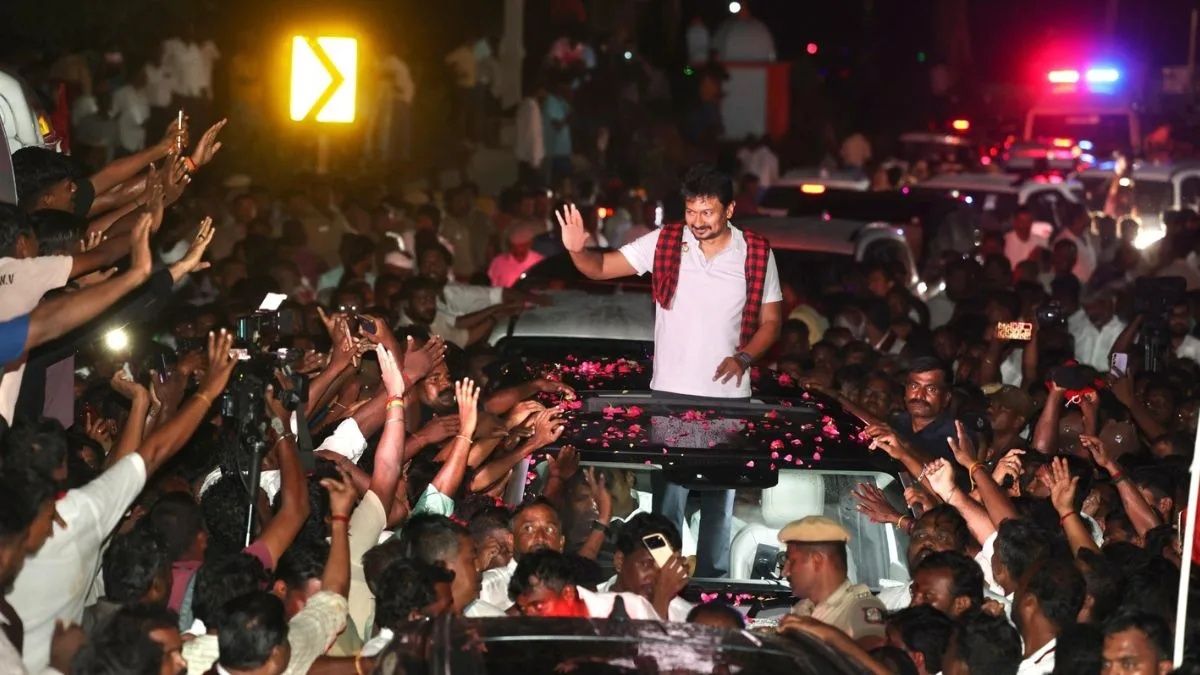
Tamil Nadu's Leader of Opposition Udhayanidhi Stalin regained his freedom late Tuesday night after interrogation by police in connection with alleged offensive comments directed at actress Trisha Krishnan. The former deputy chief minister spent several hours at Sengipatti police station undergoing questioning, having been arrested from his Chennai residence earlier in the day on charges related to remarks he made during a recent political gathering in Thanjavur district.
The controversy originated during a DMK-organised protest in Thanjavur where Stalin addressed supporters while criticising Chief Minister Vijay's administration over the contentious Cauvery water dispute and Karnataka's proposed Mekedatu dam project. The political rally took an unexpected turn when an audience member chanted the name of Trisha, a well-known Tamil cinema actor widely perceived to have connections with the current chief minister. In response, Stalin paused momentarily, smiled, and replied with a remark in Tamil that observers interpreted as containing sexual innuendo, stating: "Wherever water comes, whether it comes or not, water should come there."
The statement immediately drew intense backlash from the ruling TVK government, which characterised the remarks as constituting verbal harassment and the objectification of a woman. Party officials escalated the matter by filing a formal police complaint and separately lodging a petition with the National Commission for Women, framing Stalin's words as inappropriate and disrespectful towards Trisha. This multi-pronged approach suggested the ruling coalition intended to prosecute the matter with rigour, signalling a willingness to use legal mechanisms against opposition figures.
Outside the police station where Stalin was detained, supporters of the DMK party assembled in substantial numbers to demonstrate solidarity with their leader. The gathering transformed into an impromptu political rally, with party workers chanting slogans critical of Chief Minister Vijay and his relatively young TVK administration. The scene reflected the intensity of factional tensions in Tamil Nadu's political landscape, where the recent electoral shift towards Vijay's ADMK successor organisation has rattled the previously dominant DMK.
Speaking to journalists immediately following his release, Stalin categorically denied any intention to demean or disrespect women through his remarks. He framed his arrest as a deliberate tactic by the state administration to divert public attention from substantive governance failures and suppress legitimate political opposition. Stalin asserted that his Thanjavur comments were delivered in the context of advocating for agricultural communities affected by water allocation disputes, and that certain political opponents were wilfully misrepresenting his words to manufacture controversy.
Staling elaborated that his statement possessed a singular, straightforward meaning entirely divorced from any salacious interpretation. He rejected suggestions that his words carried double or hidden meanings, insisting that critics were fabricating an innuendo narrative for partisan purposes. The DMK leader articulated a broader grievance against the current administration, characterising it as fundamentally illegitimate and comparing state governance to a circus rather than a serious government. He particularly highlighted what he described as a troubling pattern of targeting DMK legislators with arrests and legal harassment whenever they engage in opposition activity.
The incident illuminates the fractious political environment in Tamil Nadu following the recent electoral realignment that brought Vijay's fledgling TVK to power, displacing the DMK from its longstanding position as the principal opposition force. Political observers suggest that the government's aggressive response to Stalin's remarks reflects efforts to establish dominance over the reorganised opposition landscape and demonstrate zero tolerance for criticism perceived as crossing behavioural boundaries. Whether such tactics will ultimately strengthen or weaken the current administration's political standing remains an open question, particularly given that the DMK retains substantial grassroots organisation and electoral support.
The Trisha controversy also illustrates the intersection of cinema and politics in Tamil Nadu, where film personalities frequently become implicated in political narratives and factional conflicts. The actress's presumed proximity to Chief Minister Vijay elevated her from being merely a cultural figure to becoming a symbol deployed within political combat. This dynamic reflects broader patterns in Tamil cinema-politics relations, where entertainment celebrities often find themselves drawn into factional disputes despite attempts to maintain political neutrality or distance.
The case raises fundamental questions about the boundaries of permissible political speech and satire within Indian democracy. Legal experts and free speech advocates have begun examining whether police action against Stalin represents a proportionate response to problematic remarks or constitutes an overreach that chills legitimate political expression. The detention of an opposition leader following protests about his parliamentary criticism suggests that the threshold for state intervention may be expanding in ways that affect the quality of democratic discourse and the capacity of elected representatives to function as effective critics of government policy.
Looking forward, the Stalin case will likely reverberate through Tamil Nadu's political calculations as the DMK and TVK navigate their new relationship. How this particular episode resolves—whether charges proceed, are withdrawn, or result in conviction—will signal the contours of acceptable political behaviour under the new administration and may shape opposition strategies accordingly. Meanwhile, the underlying disputes over water rights, agricultural interests, and interstate resource sharing that originally prompted Stalin's Thanjavur address remain unresolved, suggesting that political tensions will continue simmering beneath surface-level controversies.

