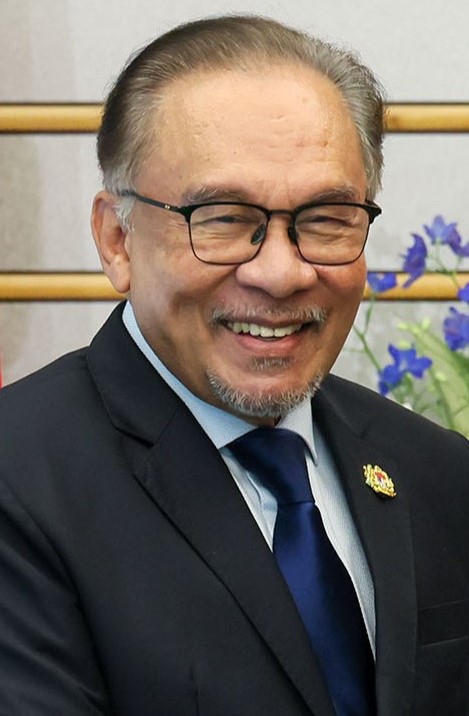
The death of Tan Sri Dr M. Mahadevan at his Ukay Heights residence in Ampang on the evening of June 15 marks the end of an extraordinary chapter in Malaysia's medical history. The renowned psychiatrist, who earned recognition as the architect of modern psychiatric practice in the country, was 96 years old. According to his carer Thenagaran, Dr Mahadevan died peacefully surrounded by family members at approximately 7.45 pm, following complications related to cardiac and pulmonary illness.
Dr Mahadevan's final illness reflected the physical toll of advancing age compounded by serious medical conditions. He had been undergoing treatment at a private medical facility in Ampang for the preceding month after suffering heart failure and a subsequent lung infection. His health trajectory took a decisive turn when his condition deteriorated significantly. Rather than remain in institutional care, he made the deliberate choice to return home, a decision that allowed him to spend his final weeks in familiar surroundings with loved ones. The decision to transition from medical facility care to home-based palliative support underscores his pragmatic approach to life that characterised much of his professional philosophy.
Well-wishers have been invited to pay respects at the family residence located at No. 32, Lorong Lee Hin Neo 1, Ukay Heights, during designated visiting hours spanning 10 am to 1 pm and 3 pm to 6 pm over two consecutive days. The funeral service scheduled for Thursday, June 18, commencing at 9.30 am at the same location, will be followed by a procession to the Sentul Hindu Crematorium at noon. The funeral arrangements reflect both the traditional observances important to his family and the public recognition befitting a figure of his stature in Malaysian society.
The legacy Dr Mahadevan leaves extends far beyond his personal achievements. Born on September 9, 1929, he dedicated more than six decades to advancing psychiatric knowledge and practice in Malaysia. His early intellectual formation came from his education at St John's Institution in Kuala Lumpur, followed by rigorous medical training completed in Bangalore, India, in 1961. Subsequent specialist training at University College Dublin provided him with exposure to international best practices in psychiatry during a formative period in the discipline's evolution.
Dr Mahadevan's strategic importance to Malaysia's national development became apparent when Tunku Abdul Rahman Putra Al-Haj, the country's first Prime Minister, specifically requested his return to Malaysia in 1967. This personal appeal reflected the government's recognition that building a modern mental health infrastructure required expertise of the highest calibre. Dr Mahadevan answered this call to nation-building, undertaking the foundational work of establishing systematic psychiatric services in a newly independent nation. His appointment as the inaugural director of what became Hospital Bahagia Ulu Kinta represented a pivotal institutional achievement, transforming mental health treatment from a fragmented, underfunded concern into a structured medical discipline within the national healthcare architecture.
Throughout the 1980s, Dr Mahadevan served as the government's chief psychiatrist, a position that allowed him to influence policy and resource allocation across the mental health sector during a critical developmental period. His stewardship during this decade laid groundwork that continues to benefit the system today. Beyond his government role, he founded and presided over the Malaysian Psychiatric Association, which became the professional home for psychiatric practitioners across the country and a coordinating body for advancing standards and knowledge within the discipline.
International recognition of his contributions validated the importance of his work and brought prestige to Malaysian psychiatry on the global stage. Harvard University's decision to establish a travel scholarship programme bearing his name particularly honoured his research and innovative thinking in hypnosis and psychosomatic medicine—fields where he made original contributions. His appointment as the first Malaysian to serve as president of the Asian Branch of the International College of Psychosomatic Medicine reflected the respect his peers accorded him and expanded Malaysia's influence in regional medical advancement.
Dr Mahadevan's designation as the "Father of Modern Psychiatry" in Malaysia encapsulates the transformative role he played in the discipline's development. He functioned not merely as a skilled clinician or researcher but as a visionary architect who conceived and built the institutional frameworks through which psychiatry could flourish in a developing nation. His work encompassed clinical innovation, professional organisation, policy formulation, and international engagement—a comprehensive approach that demonstrates the breadth of his intellectual contribution.
For Malaysian and Southeast Asian medical communities, Dr Mahadevan's passing represents a moment for reflection on the importance of institutional leadership in advancing healthcare. His career illustrates how individual vision, sustained commitment, and strategic positioning can reshape an entire medical discipline. The mental health system Malaysians benefit from today, with its hospitals, professional standards, training programmes, and international linkages, bears the unmistakable imprint of his foundational contributions. His willingness to return from international opportunities to serve Malaysia's development needs offers a model of professional patriotism that remains relevant for contemporary medical practitioners considering their roles in building regional health capacity.