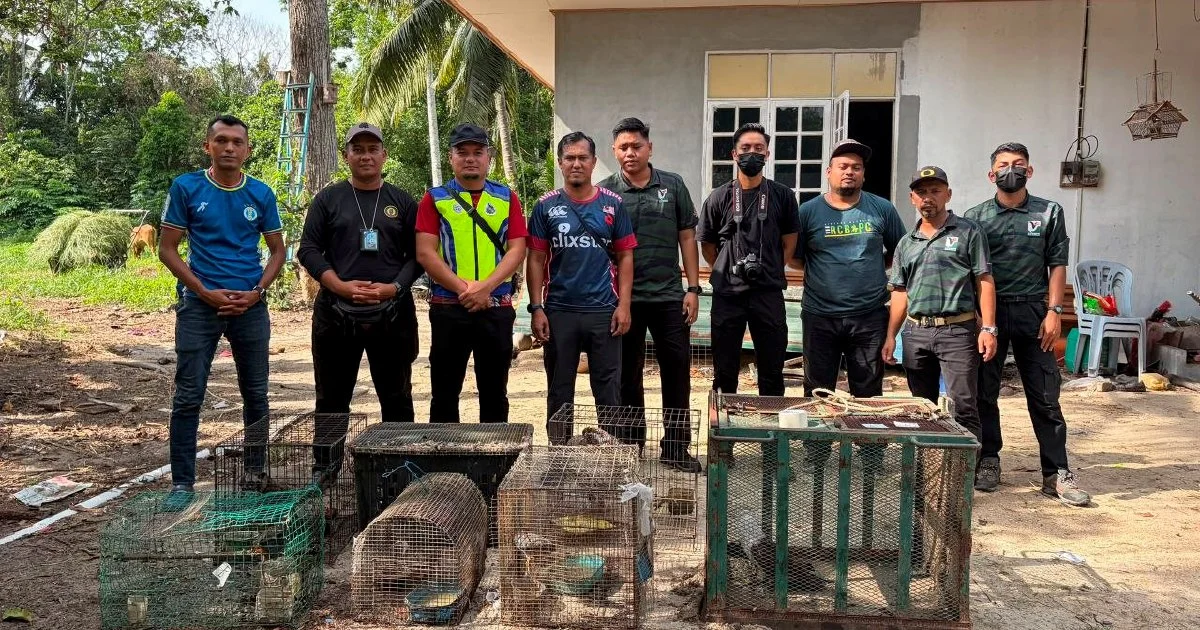
An 18-year-old suspect has been apprehended in Tumpat, Kelantan after authorities uncovered four species of protected wildlife during a raid conducted today, with the seized animals valued at RM48,500. The operation represents another effort by law enforcement agencies to curtail the illegal wildlife trade that continues to threaten Malaysia's rich biodiversity and endanger endemic species protected under national conservation laws.
The arrest highlights the persistent challenge of wildlife trafficking at the regional level, where young individuals are often drawn into the lucrative illegal animal trade. The four protected species discovered during the operation underscore how diverse networks operate to capture, transport, and sell endangered creatures destined for private collectors, traditional medicine markets, or international trafficking routes. Enforcement agencies have become increasingly vigilant in identifying and dismantling such operations before animals reach broader supply chains.
Protected wildlife species in Malaysia are safeguarded under the Wildlife Act 1972, which establishes strict penalties for unauthorised possession, sale, or trade. The severity of penalties reflects the government's commitment to conservation, with offences potentially resulting in substantial fines and imprisonment. This particular case follows a pattern of enforcement operations targeting individuals suspected of involvement in the illegal animal trade, whether as direct dealers, transporters, or end-users maintaining unauthorised collections.
The Kelantan region has been an area of concern for wildlife trafficking activities, given its proximity to natural habitats and forest reserves. Tumpat, situated in the northern part of the state, has occasionally featured in law enforcement operations related to environmental crimes. The location's geography and accessibility make it a potential transit point for illegally caught animals being moved between states or towards international borders, making it a strategic area for enforcement focus.
Police and wildlife authorities collaborate increasingly on such operations, combining intelligence gathering with field raids to dismantle trafficking networks. The valuation of the seized animals at RM48,500 reflects both their market value on illegal markets and their conservation significance. This monetary assessment also helps authorities understand the economic incentives driving the trade, which can inform prevention strategies targeting suppliers and demand reduction.
The involvement of a teenager in this case raises broader questions about how young individuals become entangled in wildlife trafficking. Social media platforms and online marketplaces have made it easier for buyers and sellers to connect, sometimes without full understanding of legal consequences. Educational campaigns targeting youth about conservation laws and the ethical implications of the illegal animal trade have become crucial components of prevention efforts across Southeast Asia.
Malaysia's biodiversity includes numerous species found nowhere else on earth, making illegal trafficking not merely a local enforcement matter but a global conservation concern. Endemic species found in Peninsular Malaysia, Sabah, and Sarawak attract international attention from collectors willing to pay premium prices. The illicit wildlife trade is estimated to generate billions annually across Asia, ranking it among the most profitable criminal activities alongside drug trafficking and human smuggling.
The investigation into this case will likely extend beyond the arrested teenager to identify potential suppliers, buyers, and other network members. Authorities frequently use detained individuals to trace upstream and downstream connections in trafficking operations. Information gathered may lead to additional arrests or disruption of facilities where protected animals are held illegally, multiplying the impact of the initial enforcement action.
For Malaysian readers, such cases serve as reminders that wildlife protection remains an active law enforcement priority despite challenges in resource allocation and the vast scale of trafficking operations. Supporting conservation organisations, reporting suspected illegal animal sales to authorities, and understanding which species are protected all contribute to reducing demand. Consumers across the region who avoid purchasing protected wildlife products, whether as pets or for traditional medicine, directly diminish incentives for poachers and traffickers.
The case also underscores that penalties, while important, must be coupled with effective detection systems and adequate resources for enforcement agencies. Investment in ranger patrols, surveillance technology at known trafficking hotspots, and intelligence networks helps close gaps that criminals exploit. Regional cooperation between Malaysia, Thailand, and other Southeast Asian nations has improved, yet wildlife trafficking continues to evolve as criminals adapt tactics to evade detection.
Looking forward, the outcome of this case—including charges filed and sentencing if conviction occurs—will send important signals about enforcement commitment. Malaysian authorities continue developing capacity in wildlife crime investigation and prosecution, recognising that legal consequences must be sufficiently severe to deter participation in trafficking networks. Education, enforcement, and community engagement together form the foundation for protecting endangered species and preserving Malaysia's natural heritage for future generations.

