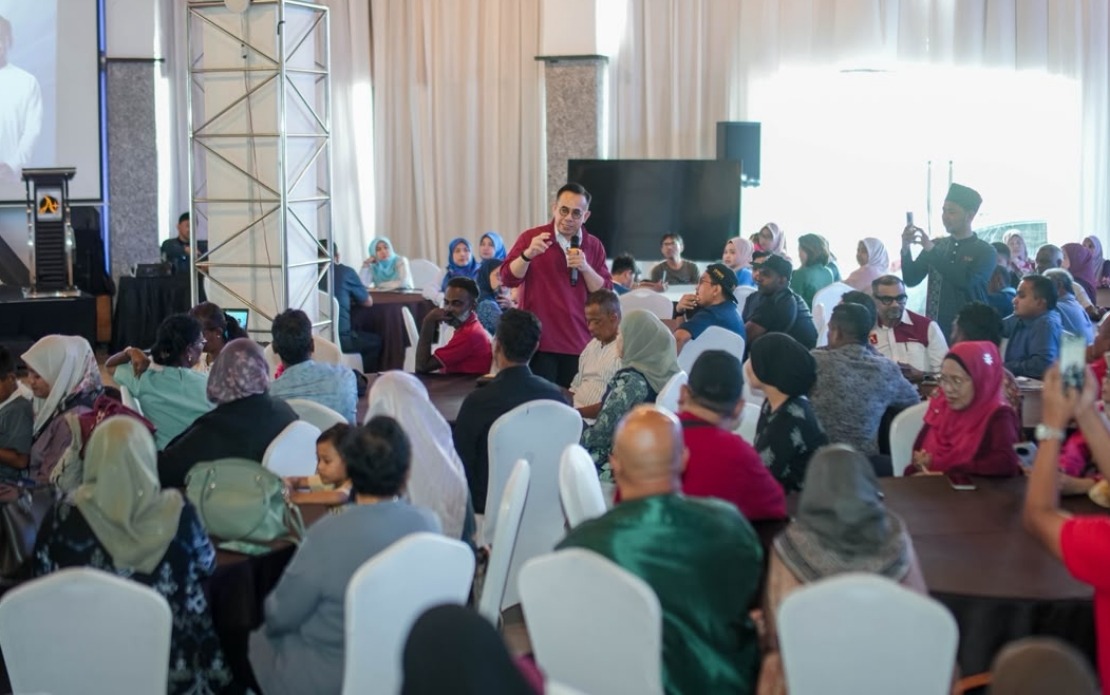
Entrepreneur Development and Cooperatives Minister Steven Sim Chee Keong announced that the government-backed TEKUN Nasional financing programme has distributed RM36 million across Negeri Sembilan to roughly 1,500 business owners as of the end of June this year. The disbursement represents a significant portion of the national allocation, which reached RM540 million spread among 25,600 entrepreneurs nationwide during the identical timeframe. The figures underscore the continuing importance of TEKUN in Malaysia's entrepreneurial ecosystem, particularly as it operates from its headquarters in Seremban.
Established three decades ago, TEKUN Nasional has evolved into a cornerstone institution for supporting small and medium-sized enterprises throughout the country. Minister Sim acknowledged the organisation's substantial contribution to fostering local business development, though he cautioned that performance gaps must be systematically addressed through genuine feedback from the entrepreneurs themselves. His comments came during a gathering with TEKUN beneficiaries in Seremban, where the minister engaged directly with business owners to understand their experiences navigating the application, disbursement, and repayment cycle.
Recognising delays as a critical barrier to entrepreneurial success, Sim introduced an ambitious modernisation agenda for TEKUN's operations. He has mandated that all financing decisions on applications requesting RM100,000 or less must be delivered within seven calendar days, whether positive or negative. This represents a sharp departure from historical processing timelines that have sometimes stretched months. For micro-financing facilities capped at RM20,000, the target becomes even more aggressive, with the Ministry of Entrepreneur Development and Cooperatives working towards 24-hour decision turnaround. These commitments reflect an understanding that entrepreneurs require swift access to capital to seize market opportunities.
Beyond accelerated approvals, Sim underscored the necessity of matching speed with efficiency in fund disbursement itself. The minister noted that approving a loan quickly proves meaningless if entrepreneurs then face protracted delays in accessing the actual money. His emphasis on synchronising both processes suggests frustration with bureaucratic inefficiencies that have historically plagued government credit schemes. By ensuring funds reach entrepreneurs' hands without extended waiting periods, the government aims to maximise the productive impact of each ringgit deployed through TEKUN.
A particularly significant dimension of Sim's remarks concerns depoliticisation of the financing process. He flatly stated that TEKUN applications require no backing from political figures, no endorsement from elected representatives, and no letters of support from any third party whatsoever. Instead, each application must undergo professional, transparent evaluation grounded solely in the applicant's objective eligibility against established criteria. This meritocratic stance explicitly rejects considerations of race, religious background, or political party affiliation. Sim's language proved unusually direct, declaring that entrepreneurs sporting blue, green, or red political colours should receive identical fair assessment provided they meet requirements.
The minister's denunciation of the support letter culture addresses a deeply entrenched practice in Malaysian business circles. For decades, entrepreneurs have routinely sought political patronage as though it were a prerequisite to accessing government financing, even though formal requirements contain no such demand. This parallel system has created a perception that well-connected applicants enjoy unfair advantages, while many genuinely capable business owners feel compelled to cultivate political relationships to compete. Sim's firm stance signals intent to dismantle this informal architecture, though implementing such cultural change within entrenched bureaucracies typically requires sustained effort and accountability mechanisms.
The government simultaneously expanded dedicated financing windows for specific communities, reflecting a different approach to broadening entrepreneurial access. The Indian Community Entrepreneur Development Scheme, known as SPUMI, received budget increases from RM30 million to RM50 million. Additionally, the Indian Community Entrepreneur Financing Package, branded as MUDRA, commands RM220 million in annual financing capacity. These targeted schemes acknowledge that certain communities may face additional structural barriers in accessing mainstream financing and thus benefit from dedicated support mechanisms alongside the universal TEKUN framework. The expansion signals commitment to inclusive entrepreneurship across Malaysia's diverse population.
Yet Sim cautioned against viewing enterprise development primarily through a racial or communal lens. He argued that all Malaysian businesses ultimately operate within a competitive international marketplace where success depends upon collective capability rather than separate advancement by individual groups. His framing positions local entrepreneurship as a national economic endeavour rather than a collection of parallel ethnic initiatives. This perspective reflects broader government thinking that business dynamism and innovation serve the entire country and that compartmentalised development ultimately weakens national competitiveness. The minister's point carries particular weight given Malaysia's aspirations toward knowledge-based and high-tech manufacturing.
The timing of these announcements carries significance for Southeast Asian entrepreneurship more broadly. Across the region, governments struggle with similar challenges around access to growth capital, processing delays, and the intermingling of political patronage with economic opportunity. Malaysia's experience with TEKUN offers lessons both positive and cautionary. The scheme has undoubtedly unleashed entrepreneurial activity among segments of the population that might otherwise lack financing access. However, the persistence of delays, the reliance on political intermediaries, and uneven implementation across states suggest that institutional design alone proves insufficient without complementary governance reforms and accountability mechanisms.
For Malaysian entrepreneurs and policymakers, Sim's reform commitments represent a test of political will. Seven-day and 24-hour approval targets sound ambitious but remain achievable through digitisation, streamlined criteria, and genuine institutional commitment. The depoliticisation agenda confronts more entrenched resistance, as local politicians have historically leveraged government financing as a patronage tool to consolidate electoral support. Successfully implementing merit-based assessment requires not only ministerial direction but also insulation of TEKUN from political pressure and transparent mechanisms for rejecting improper influence attempts.
Longer-term implications extend to Malaysia's position within Southeast Asia's entrepreneurial competition. Countries like Indonesia, Thailand, and Vietnam have implemented their own microcredit and SME financing initiatives with varying success rates. Malaysia's potential to lead regional best practices hinges upon whether it can deliver faster, fairer, more corruption-resistant financing while maintaining the scheme's financial sustainability. The RM36 million deployed in Negeri Sembilan and RM540 million nationally represent substantial public commitment that demands measurable returns in business formation, employment generation, and enterprise survival rates. Tracking these outcomes with rigour will prove essential for refining TEKUN's model and exporting its lessons throughout Southeast Asia as a development tool.

