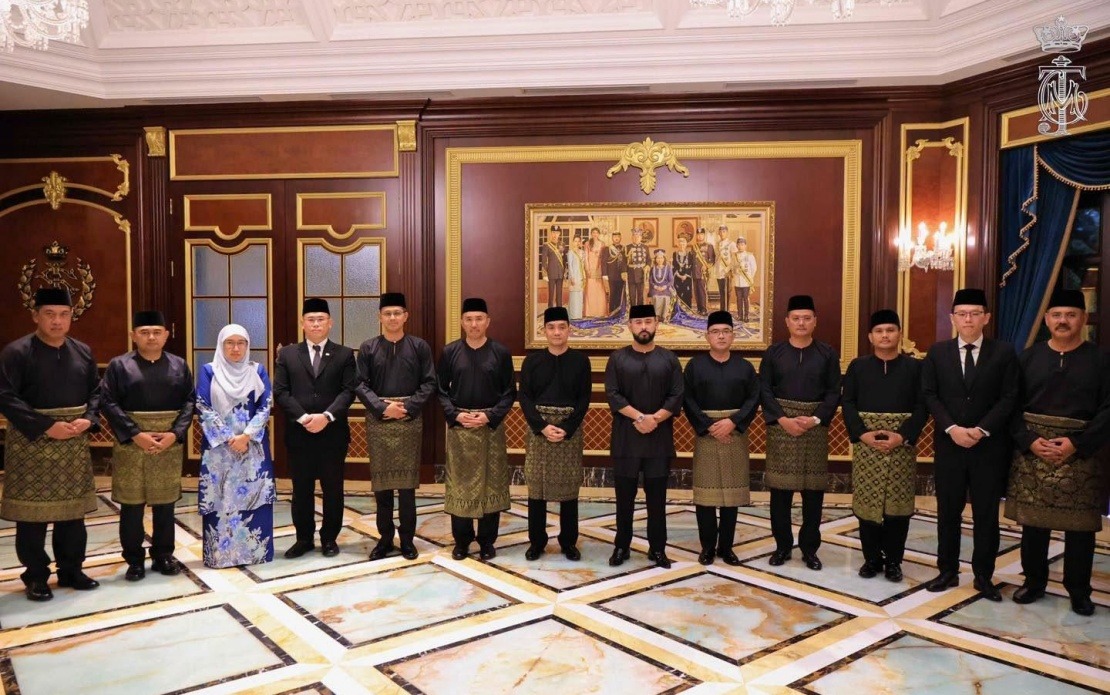
The Johor State Executive Council reached its full complement on July 18 when ten assemblymen took their oaths of office in the presence of Tunku Mahkota Ismail at Istana Bukit Serene. The ceremony formalised the composition of the new cabinet following Barisan Nasional's overwhelming success at the polls, completing the transition to a fresh administrative structure for Malaysia's southern state.
The swearing-in ceremony brought together a mix of experienced hands and newcomers to the executive council. Among those taking the oath were Mohd Hairi Mad Shah representing Larkin, Datuk Mohd Jafni Md Shukor from Bukit Permai, Mohd Fared Mohd Khalid of Semerah, Ling Tian Soon from Yong Peng, Lee Ting Han representing Paloh, and Mohamad Fazli Mohamad Salleh from Bukit Pasir. These six members bring prior experience to their respective portfolios, having navigated the complexities of state governance in previous terms or having demonstrated capability in legislative proceedings.
Four additional members made their debut as Exco members during the ceremony, signalling a generational shift within Johor's state leadership. Md Israk Abdullah from Kukup, P. Pannir Selvam of Perling, Hasrunizah Hassan representing Pulai Sebatang, and Muhammad Naqib Md Ghazali from Panti join the council with fresh perspectives and mandates from their respective constituencies. This infusion of new blood suggests the state government's intention to balance continuity with renewal as it charts its governance priorities over the coming term.
The formal proceedings were attended by key figures in Johor's political establishment, including newly installed Menteri Besar Datuk Onn Hafiz Ghazi, Royal Court Council Yang Dipertua Datuk Dr Abdul Rahim Ramli, and State Secretary Datuk Mohammed Ridha Abd Kadir. Their presence underscored the ceremonial significance of the moment and the continuity of institutional processes even as personnel changes occur within the administration. The participation of court officials highlighted the traditional protocols governing the formation of state executive councils in Malaysia's constitutional monarchy system.
These developments emerge from the dramatic outcome of the 16th Johor state election, which delivered an emphatic mandate to Barisan Nasional. The coalition captured 48 of the 56 available state assembly seats, granting it unambiguous authority to pursue its legislative agenda without the complications often presented by tight majorities or fractious coalitions. Such a decisive outcome provides the incoming administration with considerable room to implement policy initiatives and govern with minimal internal dissent from its own members.
Menteri Besar Onn Hafiz Ghazi, who represents the Machap constituency, secured his position for a second consecutive term following his sworn-in ceremony just days before the Exco members took their oaths. His retention of the top state office reflects confidence in his leadership among Johor BN representatives, particularly given the magnitude of the electoral victory. Ghazi himself demonstrated personal electoral strength by capturing the Machap seat with a substantial majority of 15,375 votes, indicating strong constituent support for his continued representation and leadership.
The scale of Barisan Nasional's victory in Johor carries broader implications for Malaysian politics beyond the state's borders. The coalition's performance in this significant state—home to over four million residents and economically important as a manufacturing and logistics hub—provides momentum for the federal government and suggests the effectiveness of the government's political messaging in major population centres. Johor has historically served as a bellwether for national political trends, making its decisive swing toward BN noteworthy for federal political calculations.
The composition of the new Exco itself reflects deliberate demographic and geographic considerations. The inclusion of representatives from diverse constituencies spanning urban areas like Larkin and Bukit Permai alongside more rural districts such as Kukup and Panti suggests efforts to ensure that state cabinet decision-making incorporates perspectives from varied socioeconomic contexts. The representation of assemblymen from constituencies with different voter demographics may influence how the administration balances developmental priorities between urban modernisation and rural service provision.
For Johor's citizens and the broader Southeast Asian region observing Malaysian state governance, the significance of this moment extends beyond ceremony. The executive council members sworn in on July 18 assume responsibility for translating Barisan Nasional's electoral mandate into concrete policies affecting education, economic development, infrastructure, and public services across the state. The relative youth and experience mix within the new cabinet will influence the tone and direction of state administration as Malaysia's devolved system permits substantial policy autonomy at the state level.
The timing of the Exco swearing-in ceremony, occurring swiftly following the Menteri Besar's installation, reflects institutional efficiency in forming a functioning state government. Rapid cabinet formation allows administrations to commence policy work and departmental oversight without prolonged periods of governance uncertainty. For Johor's civil service and business community, the clarity provided by a fully constituted Exco offers predictability regarding decision-making authority and responsibility as they interact with state government agencies.
Looking forward, the ten Exco members now face the practical challenges of translating electoral success into effective governance. Their performance over the coming years will determine whether Barisan Nasional's substantial parliamentary majority translates into tangible improvements in state services and economic performance. The balance between maintaining the coalition's political cohesion and pursuing potentially contentious policy reforms will test the leadership capabilities of the Menteri Besar and his executive council in coming months.

