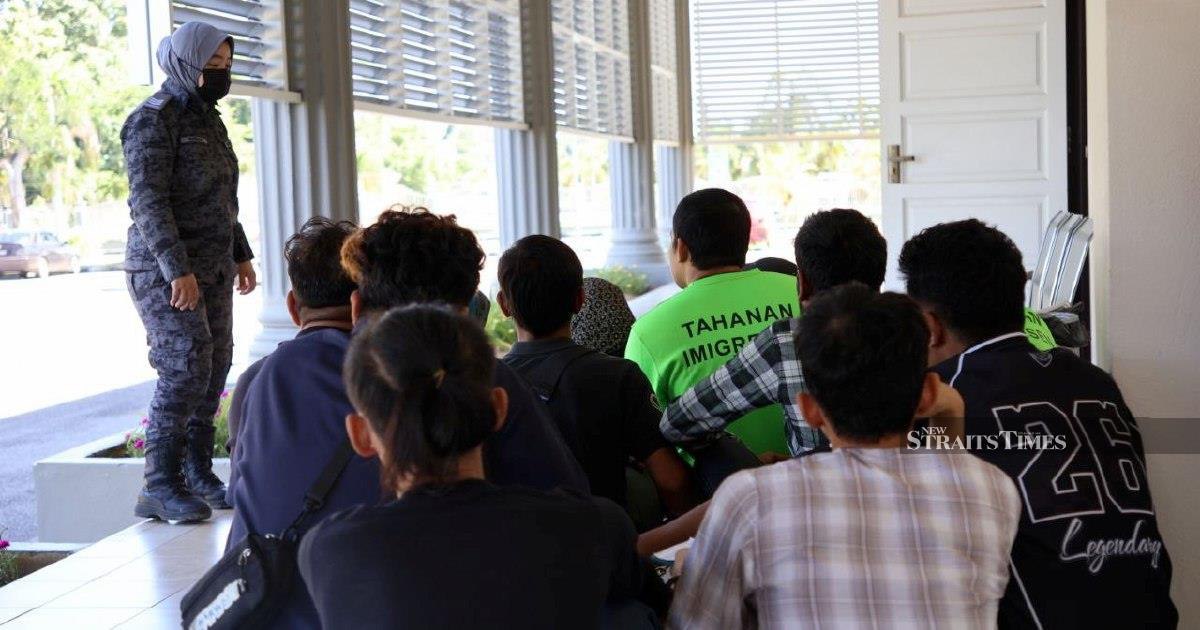
Ten undocumented migrants made court appearances in Pasir Mas today to face charges related to immigration violations, marking another enforcement action in Malaysia's ongoing efforts to manage irregular migration. Among those charged were three foreign women, all of whom stand accused of breaching the country's immigration laws through various means including illegal entry and document misuse.
The charges brought before the Sessions Court encompassed a range of immigration offences that reflect persistent challenges facing Malaysia's border management. The migrants faced allegations of entering Malaysian territory without proper authorisation, a serious criminal matter under the Immigration Act. Additionally, the accused were charged with remaining in the country beyond the validity of their authorised stay, a violation that accumulates penalties the longer an individual remains undocumented.
Misuse of social visit passes formed another significant component of the charges. These travel documents, issued to visitors entering Malaysia for tourism, business, or familial reasons, carry specific conditions limiting the holder's activities and length of stay. When individuals exploit these privileges to work or extend their presence beyond authorised periods, they commit fraud against the immigration system and undermine the integrity of Malaysia's visa categories.
The Pasir Mas case reflects broader immigration pressures across Malaysia and the broader Southeast Asian region. The country's geographic position, economic opportunities, and proximity to neighbouring nations with significant economic disparities create powerful incentives for irregular migration. Unlike wealthier destinations in East Asia, Malaysia has historically absorbed large numbers of migrant workers, both documented and undocumented, contributing substantially to its workforce across manufacturing, construction, agriculture, and domestic service sectors.
Enforcement operations targeting undocumented migrants serve multiple policy objectives for Malaysian authorities. Immigration officers seek to apprehend individuals who have evaded detection, dismantle smuggling networks that facilitate illegal entry, and deter would-be migrants from attempting unauthorised entry. The visibility of court proceedings and charges helps communicate to potential offenders that Malaysia maintains an active enforcement regime with meaningful legal consequences.
The presence of three women among those charged suggests that irregular migration patterns are not exclusively male-driven, contrary to common assumptions. Female migrants often face different vulnerabilities and may be subjected to different exploitation patterns than their male counterparts, including forced domestic service, human trafficking, or other forms of abuse. Prosecutions involving women reveal the complex humanitarian dimensions underlying immigration enforcement, even as authorities necessarily pursue legal remedies for violations.
For Malaysia, managing the intersection of legitimate labour needs and immigration control remains a delicate balancing act. The economy depends substantially on foreign workers in low-skilled sectors where domestic labour supply remains constrained. Yet unchecked irregular migration strains public services, creates unfair competition for documented workers, and facilitates criminal enterprises that profit from human smuggling. The Pasir Mas charges represent efforts to maintain boundaries while acknowledging that complete elimination of irregular migration remains unrealistic without fundamental changes to regional economic conditions.
The charges also carry implications for broader Southeast Asian migration governance. Malaysia sits within complex migration corridors involving Thailand, Indonesia, Bangladesh, Nepal, Myanmar, and the Philippines, among others. As one of the region's more developed economies with established migrant worker frameworks, Malaysia's enforcement approaches influence migration patterns and smuggling routes throughout the region. Effective prosecutions demonstrate that risks exist for those attempting illegal entry, potentially channelling would-be migrants toward official work visa pathways.
Court proceedings in cases like Pasir Mas establish legal precedents and signal policy priorities to stakeholders across Malaysia's immigration system. The willingness to prosecute overstaying and document misuse, not merely illegal entry, indicates comprehensive enforcement targeting the full migration cycle rather than focusing solely on border interdiction. This approach addresses not only initial irregular entry but also the circumstances permitting prolonged undocumented presence.
The judicial process itself matters for rule of law in immigration matters. Sessions Court proceedings ensure that migrants face formal charges, receive notice of allegations, and have opportunity to present defences, distinguishing Malaysia's approach from summary detention or deportation without legal process. While enforcement remains firm, the court setting provides procedural legitimacy that administrative approaches might lack.
Looking forward, this case illustrates why Malaysia continues investing in immigration enforcement infrastructure despite persistent migratory pressures. The prevalence of undocumented migration suggests that legal migration pathways, visa fees, and documentation requirements create sufficient friction to motivate irregular alternatives for some migrants. The Pasir Mas prosecutions address symptoms of these deeper structural factors while authorities grapple with whether reforms to official migration channels could sustainably reduce irregular movement and associated criminal exploitation.

