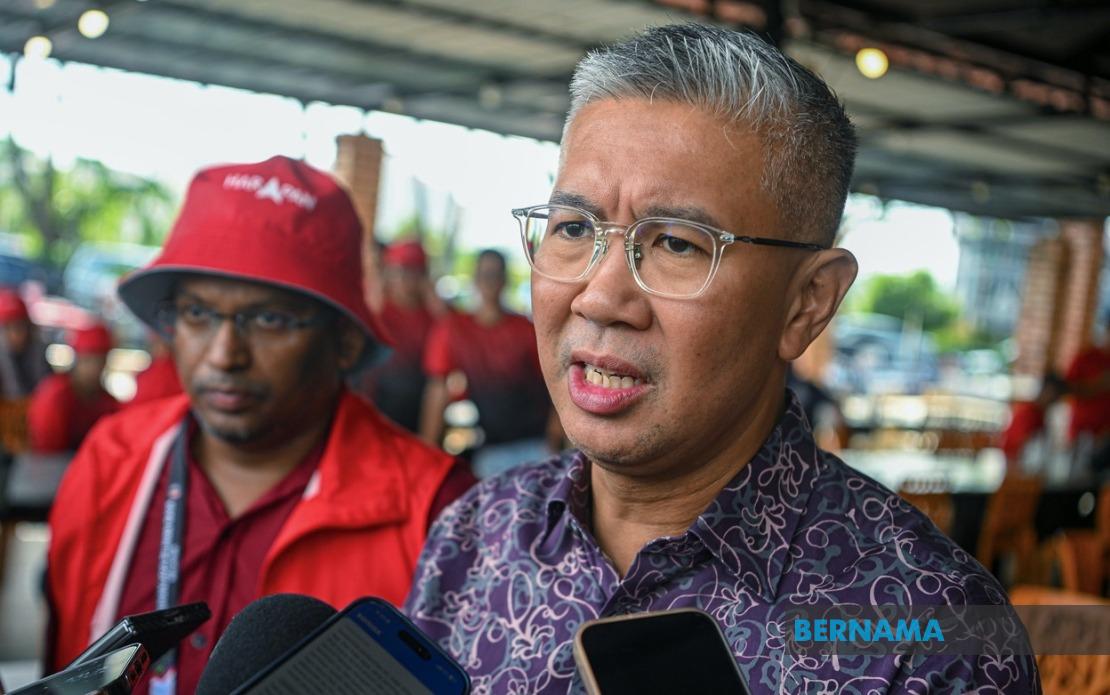
Voters in Negeri Sembilan should move beyond campaign rhetoric and assess political manifestos based on each party's demonstrated capacity to translate pledges into tangible outcomes, according to Tengku Datuk Seri Zafrul Tengku Abdul Aziz, senior political advisor to the Prime Minister. Speaking in Port Dickson whilst accompanying Pakatan Harapan's Sri Tanjung candidate Datuk Dr G. Rajasekaran on the campaign trail, Tengku Zafrul outlined a framework for evaluating the three main competing manifestos from PH, Barisan Nasional, and Perikatan Nasional that goes beyond the conventional metrics of campaign messaging.
The distinction Tengku Zafrul drew between promise-making and promise-keeping reflects a growing recognition among political observers that electoral campaigns have become increasingly crowded with sweeping pledges that struggle to survive contact with governance realities. While acknowledging that each contesting coalition brings its own set of priorities and stated commitments to the table, he positioned implementation capacity as the ultimate differentiator. This reasoning aligns with broader Southeast Asian political trends, where voter fatigue with unfulfilled promises has prompted greater scrutiny of parties' administrative track records and institutional competence.
Tengku Zafrul's emphasis on the Pakatan Harapan government's performance during its tenure in Negeri Sembilan over the past two years and eight months serves as the centrepiece of his argument. According to his assessment, the state administration has already implemented many of the commitments originally outlined in its manifesto, suggesting that performance metrics rather than campaign promises should dominate voter deliberation. This claim invites closer examination of which specific commitments have been fulfilled and to what degree, as voters require concrete evidence rather than generalised assertions of delivery.
The three-way contest between major coalitions in Negeri Sembilan has created a competitive environment where differentiation on past performance becomes increasingly important. Barisan Nasional traditionally relied on the strength of administrative machinery and established networks, whilst Perikatan Nasional represents newer political configurations seeking to disrupt established power dynamics. Pakatan Harapan's relatively recent record in the state provides voters with a more limited historical sample compared to Barisan's decades of governance, yet also offers fresher evidence of how the coalition actually performs when entrusted with executive responsibility.
Tengku Zafrul also addressed allegations of internal discord within Negeri Sembilan's PKR wing, including suggestions of sabotage attempts directed at certain candidates in the state election. He denied the existence of such problems based on his direct observations of party leadership and ground machinery across multiple constituencies. These claims of internal fracturing, if substantiated, would undermine arguments about strong institutional capacity for implementation, as parties beset by internal divisions historically struggle to coordinate complex policy programmes across administrative structures.
The Sri Tanjung seat exemplifies the competitive intensity characterising this election cycle. Dr Rajasekaran's contest against four other contenders—A. Achuthan representing Barisan Nasional, M. Leevineshwaraan from Parti Pribumi Bersatu Malaysia, and independent candidates Datuk A. Saravanan and Islah Wahyudi—demonstrates both the fragmentation of the political landscape and the multiplication of voter choice. For constituencies with such crowded fields, the ability to articulate clear, implementable policy platforms becomes more crucial for securing voter support.
Dr Rajasekaran reported receiving positive feedback throughout his week-long campaign activities and expressed confidence about retaining the Sri Tanjung seat. His sentiment likely reflects the broader campaign mood within PH-supporting constituencies, though such optimism from candidates must be treated with appropriate caution. Campaign-trail atmosphere and actual electoral preferences sometimes diverge significantly, particularly in Malaysian elections where local factors and community concerns frequently override state or national-level partisan considerations.
The timing of the electoral cycle presents interesting dynamics for voters attempting to assess implementation capacity. Early voting for the 16th Negeri Sembilan State Election is scheduled for Tuesday, July 28, with the main polling day set for August 1. This compressed timeline gives voters limited time to conduct thorough research into manifesto claims and counter-claims, potentially advantaging parties with stronger existing ground networks and more established media presence.
For Malaysian observers and Southeast Asian political analysts, the Negeri Sembilan election serves as a useful barometer of how voters weigh incumbency and demonstrated performance against fresh political alternatives. Tengku Zafrul's emphasis on delivery over promises reflects broader lessons from previous electoral cycles across the region, where voters have increasingly punished parties unable to bridge the gap between campaign commitments and governing reality. Whether Negeri Sembilan voters ultimately adopt this framework for decision-making will carry implications for how future Malaysian elections develop their central campaign narratives.
The manifesto comparison itself becomes more meaningful when viewed through a delivery lens. Rather than treating manifestos as mere lists of aspirational statements, they function as operational blueprints against which performance can be measured. This approach demands that voters possess access to credible information about what each government has actually accomplished, what remains incomplete, and what new commitments are being added. The quality of public discourse surrounding these implementation records will significantly influence the election's outcome and the legitimacy accorded to whichever coalition ultimately assumes power in Negeri Sembilan.

