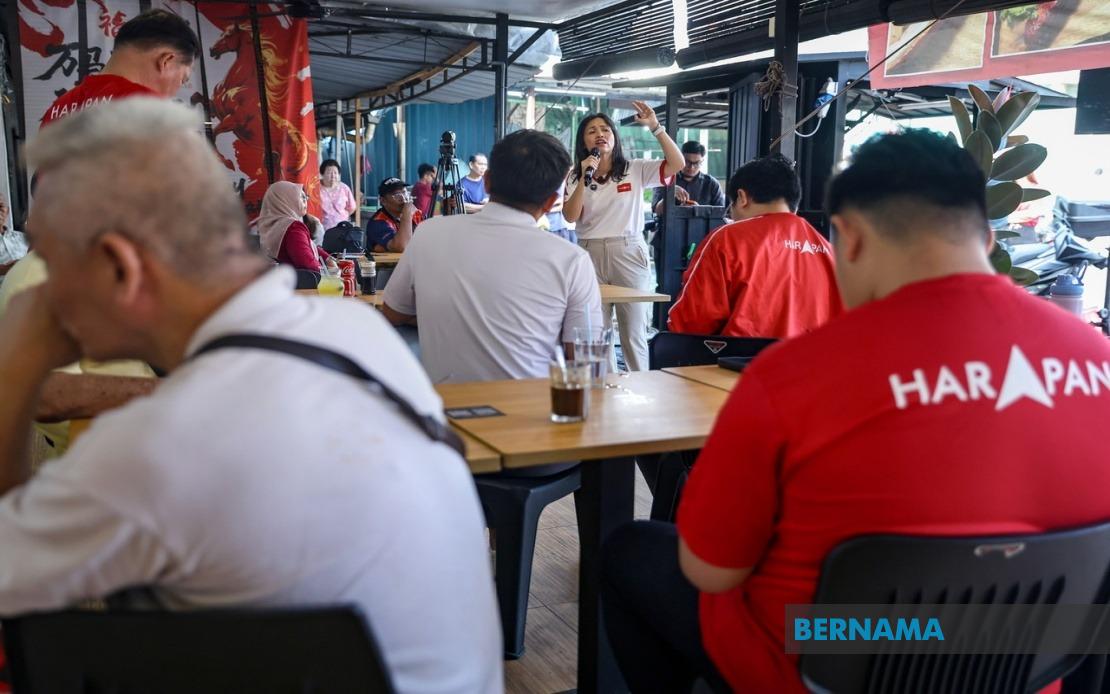
Johor's opposition has intensified scrutiny of the state administration's conduct ahead of the July 11 election, with Deputy Communications Minister Teo Nie Ching demanding accountability over what she characterises as the politicisation of a government-funded vocational training programme. The controversy centres on the Johor MARA TVET Roadshow held at the Inland Revenue Board Hall in Kluang on July 4, where the Menteri Besar allegedly used the platform to campaign for Barisan Nasional candidates despite the event's ostensible purpose being educational and vocational guidance.
According to Teo, the DAP has received multiple complaints from parents and students claiming they faced compulsory attendance at the roadshow, with threats that non-participation would be marked as absenteeism. This allegation raises fundamental questions about the appropriate use of government authority and institutions during election campaigns. In Malaysia's electoral framework, the boundary between legitimate government activity and partisan political campaigning is meant to be strictly observed, yet such incidents frequently blur that distinction during state and federal election periods.
What distinguishes this incident from routine campaign events is the alleged coercive element and the venue. If students attending a TVET programme under institutional directives were subsequently exposed to political messaging and candidate endorsements, it potentially violates both electoral ethics and educational independence principles. Teo emphasised that the DAP harbours no objection to Onn Hafiz attending government functions, but contests the conversion of a supposedly neutral educational event into a campaign rally.
The DAP politician indicated possession of documentary evidence supporting the allegations, including the programme schedule, attendance directives, and video recordings purporting to show campaign-related remarks. These materials strengthen the opposition's position should they proceed with a formal complaint to the Election Commission, Malaysia's independent body tasked with ensuring electoral integrity. The availability of video evidence is particularly significant, as it removes ambiguity about what transpired and shifts the burden to the state government to explain the context and appropriateness of remarks made during the event.
Teo framed the issue in personal terms, invoking her role as a mother to underscore the ethical dimensions of compelling minors to attend programmes that subsequently become political platforms. This rhetorical approach resonates beyond partisan boundaries, appealing to general principles of child welfare and institutional integrity that transcend political affiliation. The concern extends to the broader question of whether vulnerable populations—in this case, students dependent on TVET institutions for their educational pathways—can be inadvertently or deliberately exposed to political pressure through their attendance at mandatory institutional events.
The timing of the allegation, just days before Johor voters cast their ballots across 56 state seats, amplifies its political impact. With early voting already underway, the controversy potentially influences voter perception of the ruling coalition's respect for electoral norms. In Johor, where Barisan Nasional has historically maintained dominance, such controversies chip away at the government's legitimacy narrative and provide Pakatan Harapan candidates with concrete evidence of what they characterise as institutional abuse.
Teo also addressed broader governance issues, challenging Onn Hafiz's recent criticisms of federal government policies. The Menteri Besar had called for policy reviews, framing them as burdensome to ordinary citizens. Teo countered that the state administration selectively claims credit for popular federal initiatives while deflecting blame for unpopular measures onto the Prime Minister and federal coalition partners. She emphasised that Malaysia's Cabinet system requires collective approval for major policies, making individual scapegoating intellectually dishonest.
Lim Kit Siang, the veteran DAP leader present at the forum in Kulai, reinforced the opposition's messaging by calling for voters to transcend racial and communal politics. His invocation of a "Malaysian Dream" based on equality, freedom, prosperity and human rights serves as a counternarrative to what Pakatan Harapan portrays as divisive governance approaches. For opposition parties, the Johor election represents both a challenge—given the region's traditional BN stronghold status—and an opportunity to demonstrate that alternative governance models prioritising institutional integrity and inclusive politics can gain traction.
The question of whether government facilities can be deployed for partisan campaigns has long troubled Malaysian electoral politics. While campaigning itself is legitimate, the employment of state resources, institutional authority, and mandatory attendance requirements to facilitate such activity creates asymmetrical conditions that advantage the ruling coalition. The TVET roadshow incident exemplifies how governments can leverage administrative machinery for electoral purposes in ways that private opposition parties cannot replicate, potentially tilting the electoral playing field.
Regarding follow-up action, Teo indicated that Pakatan Harapan candidates would determine whether to lodge a formal Election Commission complaint. Such a complaint would trigger an investigation by Malaysia's electoral body, potentially resulting in sanctions if violations are substantiated. Even without formal proceedings, the publicity surrounding the allegations affects the election narrative and voter sentiment, particularly among parents and educators concerned about institutional independence.
The broader implications for Malaysian electoral conduct extend beyond Johor. As state and federal elections occur with increasing frequency, instances of institutional politicisation accumulate, gradually normalising what should remain exceptional. The TVET roadshow controversy serves as a reminder that electoral integrity depends not merely on voting day procedures, but on the conduct of all parties and institutions throughout the campaign period, particularly regarding coercive attendance and the misuse of government facilities for partisan advantage.

