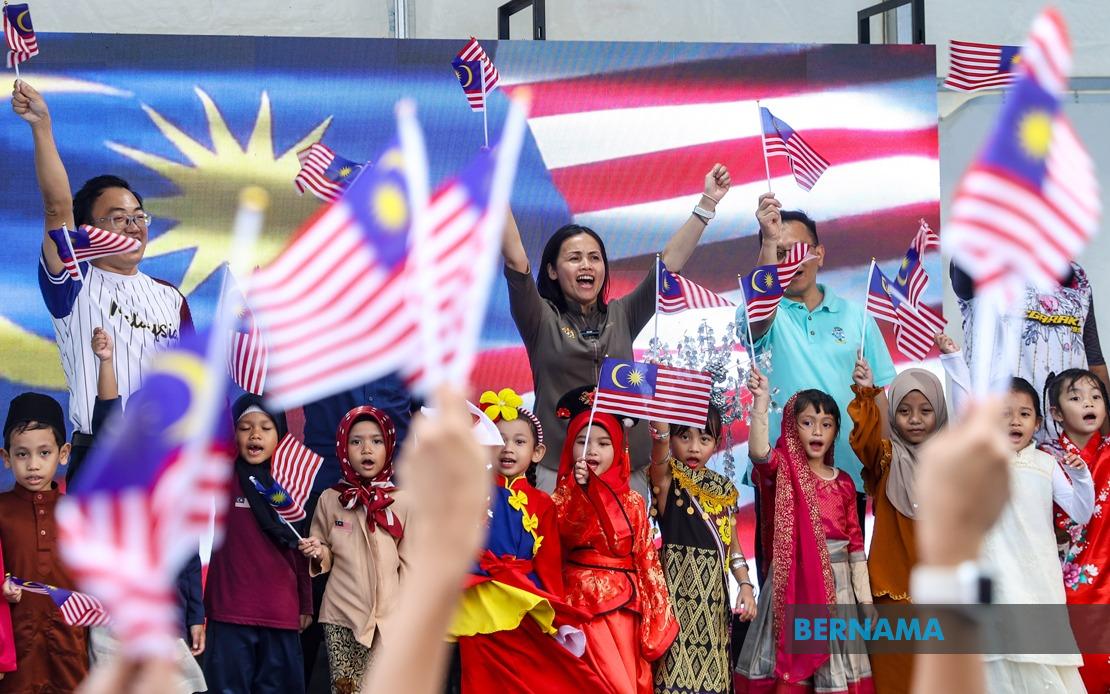
Deputy Communications Minister Teo Nie Ching has rejected allegations circulating on social media that purport to connect her with gang-related activities in Johor and an ongoing police investigation into a road accident. Speaking at the Safe Internet Campaign Community Carnival in Kulai on August 28, the DAP national vice-chairman stressed that the accusations are entirely without foundation and represent part of a broader pattern of coordinated disinformation targeting her reputation.
According to Teo, freshly created social media accounts have been deliberately established to launch these accusations against her. She characterized the claims as demonstrating how easily public figures can become victims of false narratives in an increasingly digital information landscape. The allegations, she explained, rest entirely on photographs showing her with individuals in ordinary social settings—a distinction that does not constitute evidence of impropriety or involvement in illicit activities.
Teo's political career spans nearly two decades, including 13 years serving as a member of parliament. Given this extensive public profile, she noted that encountering and photographing with various individuals across community and social events is an inevitable aspect of elected service. The fact that such encounters have been weaponized into accusations of gang involvement demonstrates, in her view, how vulnerable the public discourse has become to manipulation and deliberate falsehoods.
The allegations have already drawn official attention. Johor police conducted a press conference announcing the arrest of 13 suspects related to gang activities and the road accident under investigation. Teo welcomed police scrutiny and expressed confidence in a comprehensive official inquiry, signaling that independent investigation would vindicate her position and expose the baseless nature of the social media claims.
As Johor DAP chairman, Teo has positioned this incident as emblematic of broader challenges facing Malaysia's digital ecosystem. She emphasized that the ease with which false accusations can proliferate through social platforms demonstrates the critical importance of public digital literacy. Citizens must approach social media claims with skepticism and undertake verification before accepting or sharing unsubstantiated allegations, she advised.
In response to the disinformation campaign, Teo has pursued dual tracks of formal redress. She has filed a complaint with the Malaysian Communications and Multimedia Commission (MCMC) to report the defamatory content and flag accounts engaged in coordinated falsehood-spreading. Additionally, a police report has been lodged to create an official record of the allegations and the campaign itself, establishing legal documentation should further action prove necessary.
However, Teo acknowledged substantial obstacles in combating this form of coordinated disinformation. The responsibility for removing fake news and shutting down accounts ultimately rests with Meta, the parent company of Facebook and Instagram, rather than with Malaysian authorities. This structural limitation means that even when false accusations are reported, the platforms themselves control the timeline and execution of content removal. Consequently, damaging falsehoods can persist in circulation for extended periods before being addressed.
Wong Bor Yang, the Senai assemblyman, has also taken action against the defamatory posts. He lodged a police report at Kulai District Police Headquarters accusing the social media accounts of spreading false allegations that link Teo and the broader DAP organization to gang involvement. This additional formal complaint underscores the seriousness with which political figures and their allies regard the coordinated nature of the disinformation campaign.
The incident illustrates a growing pattern in Malaysian politics whereby social media platforms serve as vehicles for reputation attacks on public figures, particularly those from opposition parties. The temporary nature of social accounts and the relative anonymity afforded to accusers create conditions favorable for spreading allegations without accountability. For elected officials, responding to such claims presents a delicate challenge: ignoring them risks allowing falsehoods to circulate unchallenged, while engaging extensively with unsubstantiated accusations can inadvertently amplify their reach.
Teo's framing of the episode emphasizes her own vulnerability as a long-serving elected representative whose extensive public engagement inevitably creates photographic records with diverse community members. By normalizing such encounters as routine aspects of parliamentary representation, she has implicitly challenged the credibility of the inference chain underlying the allegations—that mere photographs constitute evidence of inappropriate association or involvement in unlawful activities.
The incident also underscores the complex relationship between traditional law enforcement and digital-era disinformation. While police investigations into specific criminal matters can proceed according to established procedures, the broader ecosystem of false narratives operating through social platforms operates according to different dynamics. Official police activity, such as the press conference announcing arrests, provides factual anchors that can help the public distinguish substantiated investigations from unverified social media allegations.
Moving forward, Teo's response reflects recognition that individuals targeted by coordinated disinformation campaigns must engage multiple response mechanisms simultaneously. Legal remedies through police reports and MCMC complaints establish formal records, while public communication emphasizing media literacy and the invitation to rational verification attempts to reshape public perception directly. Yet the underlying challenge—that social media platforms prioritize engagement and speed over accuracy—remains largely beyond the control of individual targets.

