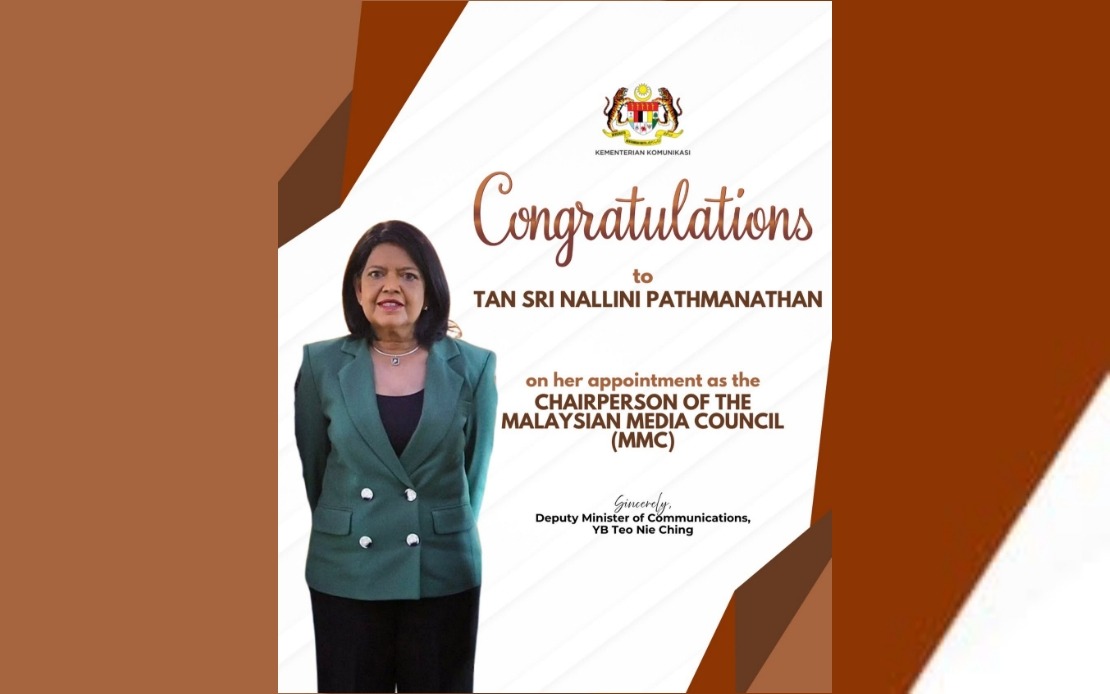
Tan Sri Nallini Pathmanathan has been appointed chairperson of the Malaysian Media Council, the country's new self-regulatory body established under the Malaysian Media Council Act 2025. The appointment was unanimously endorsed by MMC Board members at a meeting held on May 26, marking a significant milestone for Malaysia's media governance landscape. Deputy Communications Minister Teo Nie Ching has publicly welcomed the selection, emphasizing that Nallini's extensive judicial background positions her well to lead an independent body tasked with maintaining professional standards across the media industry.
Teo's endorsement centres on Nallini's demonstrated commitment to constitutional protections and judicial independence throughout her career on the Federal Court bench. In a public statement, the deputy minister described the newly appointed chair as someone whose legal acumen combined principle with pragmatism, characteristics she believes essential for guiding a self-regulatory council. Rather than viewing Nallini's appointment as merely a bureaucratic transition, Teo frames it as evidence that Malaysia's media sector is gaining institutional independence following decades of advocacy for professional self-governance.
One case Teo specifically highlighted involved a landmark ruling on online media liability. Nallini had written a dissenting judgment in which she argued that news portals should not bear legal responsibility for comments posted by their subscribers—a position that carries significant implications for digital journalism and platform accountability in Southeast Asia. This ruling reflected her willingness to challenge prevailing legal interpretations when she believed they would harm media operations or public discourse. Her reasoning extended to broader questions about how courts should approach cases involving technology, user-generated content, and the evolving relationship between publishers and digital platforms.
Another case that shaped Teo's assessment involved citizenship law and constitutional interpretation. In a narrow 4-3 split decision concerning Malaysian citizenship rights for children born to Malaysian fathers and foreign mothers, Nallini authored a dissent advocating for a more compassionate and purposive reading of constitutional provisions. This judgment demonstrated her willingness to argue for interpretations that prioritized human dignity and constitutional principle over narrow technical readings of the law. Such jurisprudence suggests an approach to media regulation that would likely emphasize purpose and fairness over rigid application of rules.
The Malaysian Media Council represents the culmination of a fifty-year advocacy campaign by journalists, editors, and media organizations seeking an independent, self-regulatory framework. Previous attempts to establish such a body had encountered political resistance or failed to gain sufficient industry consensus. The successful passage of the Malaysian Media Council Act 2025 therefore represents a watershed moment for Malaysia's media sector, positioning it alongside countries with established press councils. The council's formation reflects broader regional trends toward professional self-governance, though Malaysia's path has been notably delayed compared to other Commonwealth nations.
Teo's public comments underscore why self-regulation rather than state control matters fundamentally to media freedom. She noted that government intervention in media oversight, regardless of intent, will inevitably be perceived as a threat to editorial independence and press freedom. This distinction carries particular weight in Malaysia, where debates over media freedom and state power have historically proven contentious. By establishing a self-regulatory body led by someone with Nallini's credibility on constitutional matters, the sector positions itself to address complaints and maintain professional standards without appearing to operate under government influence.
The appointment also reflects consideration of how a modern media council should navigate complex challenges including misinformation, defamation, privacy, and online conduct. Nallini's background suggests someone comfortable with nuanced legal reasoning rather than absolutist positions. Her willingness to write dissents indicates she will not shy away from unpopular conclusions if principle demands it. These qualities matter significantly for an ombudsman-like institution tasked with mediating disputes between media organizations and the public while maintaining credibility with both constituencies.
For Malaysian journalists and regional media observers, the council's establishment and leadership matter beyond narrow industry concerns. A functioning, independent press council strengthens democratic institutions by providing mechanisms to address complaints and maintain standards without governmental pressure. It signals to the international community that Malaysia's media sector possesses institutional capacity for self-governance. Simultaneously, the council's effectiveness will depend on genuine independence, adequate resources, and acceptance of its authority by both journalists and the broader public.
Teo's emphasis on Nallini's judicial temperament highlights recognition that regulatory institutions require leaders with demonstrated commitment to principled decision-making rather than political alignment. Her dissenting judgments suggest someone willing to be unpopular when constitutional reasoning demands it. Such independence will be essential if the council is to maintain credibility when investigating complaints involving politically sensitive matters or powerful media organizations. The council's early decisions will largely determine whether it becomes merely a cosmetic body or a genuinely influential force in Malaysian media governance.
The timing of this appointment occurs amid ongoing global discussions about media regulation, platform accountability, and the relationship between journalistic freedom and legal responsibility. Malaysia's council will operate within a regional context where several countries have established or are establishing similar bodies. How Nallini leads the MMC may influence approaches across Southeast Asia to balancing media freedom with professional accountability. Her jurisprudential philosophy, demonstrated through years of decisions and dissents, suggests she will pursue this balance thoughtfully rather than through simplistic rules favoring either absolute press freedom or rigid state control.