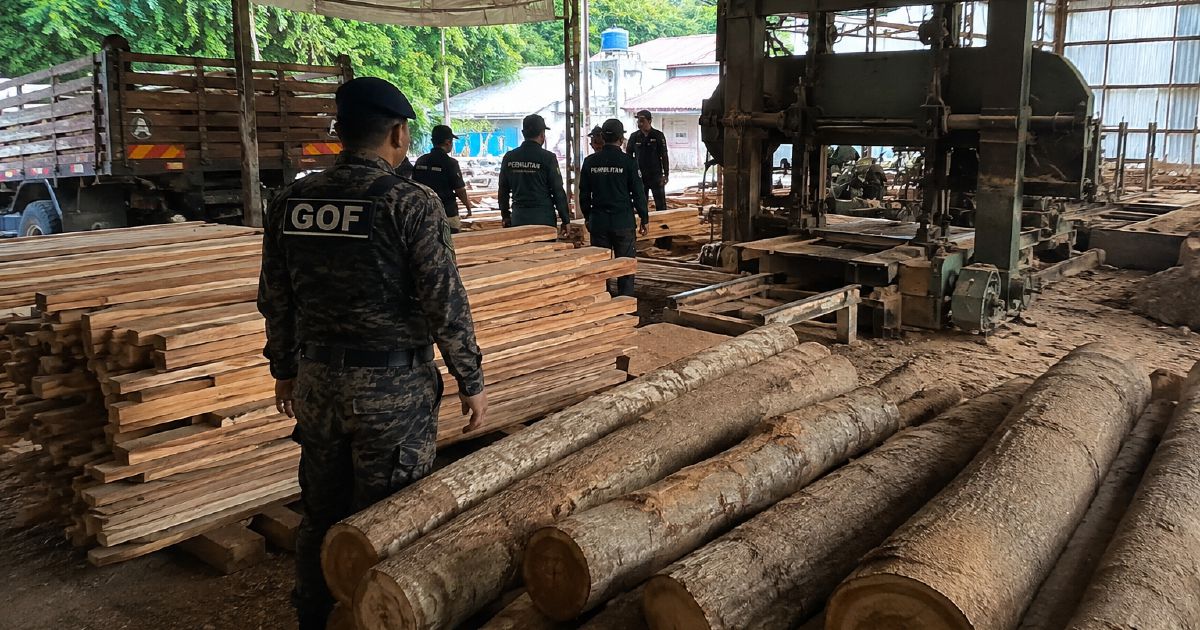
The General Operations Force conducted a high-value raid on a timber processing facility in Kuala Berang, Terengganu, uncovering what authorities described as significant contraband materials and industrial equipment. Officers confiscated timber stocks and processing machinery totalling RM640,510 in estimated market value during the operation, which resulted in the detention of a 20-year-old suspect for further questioning and investigation.
The seizure underscores ongoing enforcement efforts across Malaysia's timber sector, a domain that continues to attract regulatory attention from multiple government agencies. Terengganu, which hosts substantial forest resources and a thriving wood-processing industry, has been the focal point of numerous compliance operations as authorities seek to ensure mills adhere to forestry regulations and licensing requirements. The scale of confiscated materials in this case suggests that the facility in question may have been operating outside prescribed legal parameters.
The General Operations Force, which falls under the Ministry of Defence, regularly conducts joint operations with environmental and forestry enforcement bodies to monitor industrial activities in resource-rich states. These coordinated efforts reflect broader concerns about illegal logging and unregulated timber processing, challenges that persist across Southeast Asia despite strengthened bilateral and regional cooperation frameworks. The Terengganu operation aligns with Malaysia's commitment to sustainable forest management and transparent supply chains.
Investigators will likely examine documentation including timber origin certificates, acquisition records, and processing permits as they work to determine whether the materials were legally sourced. The age of the detainee—described as 20 years old—raises questions about operational oversight and ownership structures at the facility. Malaysian authorities have in recent years emphasised tracing corporate responsibility chains rather than targeting lower-level employees, signalling a shift toward dismantling larger unauthorised operations.
The timber and equipment seizure carries implications for Malaysia's international trade reputation, particularly concerning commitments under frameworks like the ASEAN Agreement on Transboundary Haze Pollution and various forest stewardship initiatives. Export markets, especially in Europe and North America, have increasingly imposed due diligence requirements on timber imports, demanding proof that materials originate from sustainably managed and legally operated sources. Operations such as this one demonstrate the domestic enforcement infrastructure that underpins such supply chain verification.
Sawmill operations across Peninsular Malaysia and East Malaysia generate substantial employment and contribute meaningfully to state revenues, but the sector faces persistent criticism over compliance standards. Smaller, independently operated facilities like the one raided in Kuala Berang often struggle with regulatory complexities, equipment costs, and documentation burdens, creating vulnerability to informal or semi-formal arrangements that circumvent proper channels. This operational reality complicates enforcement, as authorities must distinguish between negligent non-compliance and deliberate evasion.
The RM640,510 valuation encompasses both raw timber in various states of processing and the machinery used to manufacture finished or semi-finished wood products. Modern sawmill equipment—including band saws, planers, kiln dryers, and sorting systems—represents considerable capital investment, and the inclusion of such machinery in the seizure suggests either that the equipment itself was obtained through irregular means or that it was being used to process illegally sourced materials. The composition of confiscated items often provides forensic clues to investigators assessing whether operations deliberately concealed contraband or unknowingly processed compromised materials.
The operation reflects intensifying coordination between the General Operations Force and civilian regulatory agencies responsible for forestry management. State-level authorities in Terengganu, including the Terengganu Forestry Department, typically collaborate on such raids, pooling intelligence and enforcement capacity. These joint operations generate real-time data on sector compliance, feeding into strategic assessments that guide policy adjustments and resource allocation across enforcement agencies.
The detained suspect will undergo interrogation addressing questions of knowledge, authority, operational involvement, and potential connections to larger supply networks. Authorities frequently find that single facilities link to broader networks of suppliers, transportation intermediaries, and purchasers. The investigation's findings may therefore extend beyond the individual sawmill, potentially revealing systemic vulnerabilities in timber tracking across the supply chain from harvesting through processing to export or domestic distribution.
For Malaysian exporters and operators in legitimate timber processing, such enforcement actions carry dual significance. While targeted raids interrupt competitors engaging in unlawful practices, the broader compliance burden grows heavier as international buyers demand increasingly rigorous documentation. Companies investing in proper licensing, sourcing verification, and operational transparency face heightened competitive pressure from less-scrupulous operators, creating economic tension that complicates voluntary compliance.
The seizure underscores persistent enforcement challenges in resource-dependent economies where regulatory capacity, corruption risks, and economic pressures intersect. Terengganu, economically reliant on forestry and primary industries, navigates this tension alongside federal authorities seeking to maintain Malaysia's international reputation in environmental stewardship. The raid demonstrates commitment to enforcement, yet broader structural changes—including transparent allocation of harvesting rights, streamlined licensing, and industry-wide digitalisation of timber tracking—will ultimately determine whether compliance improves sustainably.
The investigation and charging decisions that follow will signal whether the detainee faces prosecution under timber regulations, environmental protection statutes, or industrial licensing frameworks. Penalty severity varies substantially depending on whether violations are classified as administrative breaches or criminal offences, creating incentives for future operators to assess compliance costs against enforcement risks more carefully.

