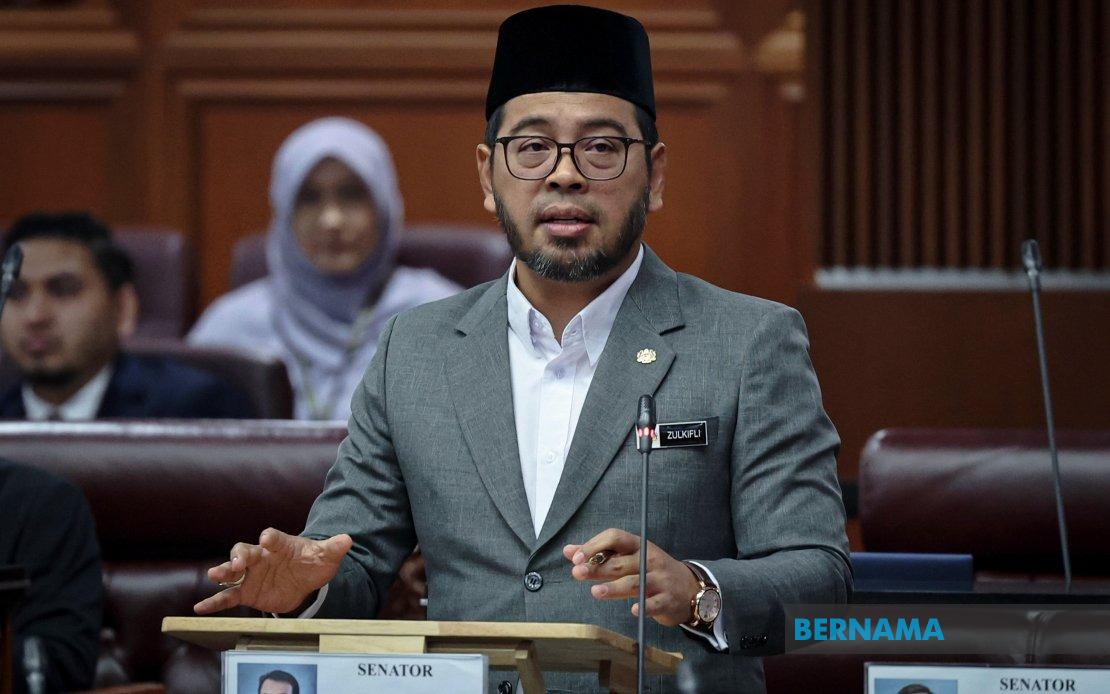
Tabung Haji (TH) depositors can rest assured that their zakat payments have been properly handled and comply fully with Islamic principles, Religious Affairs Minister Dr Zulkifli Hasan declared in Parliament. Speaking during a special sitting of the Dewan Rakyat, he provided comprehensive clarification on the institution's zakat practices, dismissing concerns raised in the Royal Commission of Inquiry report that prompted intense scrutiny of Malaysia's largest pilgrimage savings scheme.
The minister's statement focused particularly on validating zakat payments made prior to 2019, when the wakalah (agency) concept was introduced at TH. According to Zulkifli, TH's Syariah Advisory Committee determined in a September 2020 meeting that zakat paid on behalf of depositors before this institutional change remained valid and Syariah-compliant. This ruling provides crucial reassurance to millions of Malaysians who maintain savings with TH, addressing lingering questions about the legitimacy of historical zakat deductions.
The foundation for TH's zakat obligations traces back decades. Malaysia's National Fatwa Committee established in a May 1979 decision that while TH itself is not subject to zakat, the institution bears responsibility for fulfilling zakat obligations on behalf of individual depositors. This interpretation has guided TH's operations for nearly half a century, and Zulkifli stressed that the institution has consistently adhered to this fatwa throughout its history. The distinction between institutional and depositor-level zakat obligations carries significant implications for how religious duties are discharged within Malaysia's Islamic financial ecosystem.
During the period from 2016 to 2019, when TH operated under the Wadiah Yad Damanah contract, the zakat paid represented business zakat calculated collectively across the pooled funds of depositors whose money was being invested. This approach, known in Arabic as khultah, applies when multiple owners' capital is combined and traded as a unified portfolio. Understanding this technical distinction helps clarify why zakat calculations during that era differed from contemporary practices, and why the RCI's investigation prompted deeper examination of these methodologies.
The Royal Commission of Inquiry, established in 2021 to investigate TH's operations during 2014 to 2020, recommended that matters related to the institution's zakat practices be escalated to the National Council for Islamic Religious Affairs Muzakarah Committee for specialist review. Rather than viewing this as criticism, Zulkifli presented it as evidence of rigorous institutional oversight. He confirmed that TH presented its zakat practices to the Muzakarah Committee in June 2024, securing the committee's endorsement of the institution's approach. This validation then proceeded through the formal channels of Malaysia's Islamic governance structure, being submitted to the Conference of Rulers at their October 2024 meeting.
The layered approval process reflects Malaysia's sophisticated Islamic administrative framework, where religious matters navigate through multiple authoritative bodies before achieving official validation. TH's zakat governance operates under formal guidelines approved and continuously monitored by its Syariah Advisory Committee, which comprises recognized experts in Islamic law and Islamic finance. This institutional architecture aims to prevent unilateral decision-making and ensure that every significant practice undergoes scrutiny by qualified religious specialists.
Beyond zakat matters, the minister also addressed the RCI's recommendations concerning TH's hajj management policies. The 211-page RCI report, publicly released on July 29, contained 25 recommendations for systemic improvement, with TH having implemented 75 per cent of these proposals by late July. Among the key areas targeted for reform were hajj eligibility criteria and the waiting period framework, both of which reflect practical challenges in managing demand from Malaysia's Muslim population seeking to fulfill the fifth pillar of Islam.
TH is currently in the advanced stages of refining its hajj management policies to incorporate these recommendations, with formal announcements anticipated in the near future. The enhanced framework will emphasize greater clarity and systematic planning aligned with the Islamic principle of istito'ah, which mandates that pilgrimage be undertaken only by those possessing genuine financial and physical ability. This principle-based approach aims to prevent financial hardship among depositors while maintaining fair access to hajj opportunities across Malaysia's diverse Muslim communities.
The RCI's investigation emerged from broader concerns about TH's financial resilience and institutional governance that accumulated over several years. By examining operations spanning 2014 to 2020, the commission provided a comprehensive assessment of management weaknesses during a critical period. The subsequent implementation of three-quarters of its recommendations demonstrates institutional responsiveness to formal scrutiny, signaling efforts to strengthen operational practices and restore public confidence.
For Malaysian depositors with funds at TH, the minister's parliamentary assurances carry particular weight given Malaysia's constitutional role for Islam and the established hierarchy of religious authority. The fact that the institution's zakat practices have received validation from TH's specialized Syariah committee, the National Fatwa Committee, the Muzakarah Committee, and implicitly the Conference of Rulers represents comprehensive religious endorsement across Malaysia's Islamic governance structure. This multi-layered approval process, while sometimes appearing bureaucratic, serves to legitimize institutional practices within Malaysia's framework of Islamic law.
The broader context matters for understanding TH's significance within Malaysian society. As the nation's primary hajj savings mechanism, TH holds deposits from millions of Malaysians across income levels and educational backgrounds. Questions about zakat practices therefore extend beyond technical religious matters to affect public trust in a cherished national institution. The minister's public clarification and the formal validation processes he described aim to restore confidence among depositors who may have experienced uncertainty following media coverage of the RCI investigation.
Moving forward, the enhanced hajj management policies will reflect lessons learned from the RCI process. By incorporating clearer eligibility frameworks and more systematic planning, TH seeks to balance accessibility with sustainability. The emphasis on istito'ah provides an Islamic foundation for these practical reforms, grounding policy changes in established religious principles rather than presenting them as arbitrary administrative decisions.
The parliamentary briefing represented a crucial moment for institutional restoration, allowing the minister to present a coordinated response addressing both immediate concerns about zakat compliance and longer-term structural improvements. With three-quarters of RCI recommendations already implemented and the remainder progressing toward completion, TH appears to be navigating the post-inquiry period with deliberate institutional reform. For depositors and prospective pilgrims, these developments signal that Malaysia's pilgrimage savings institution continues evolving to meet contemporary governance standards while remaining rooted in Islamic principles.

