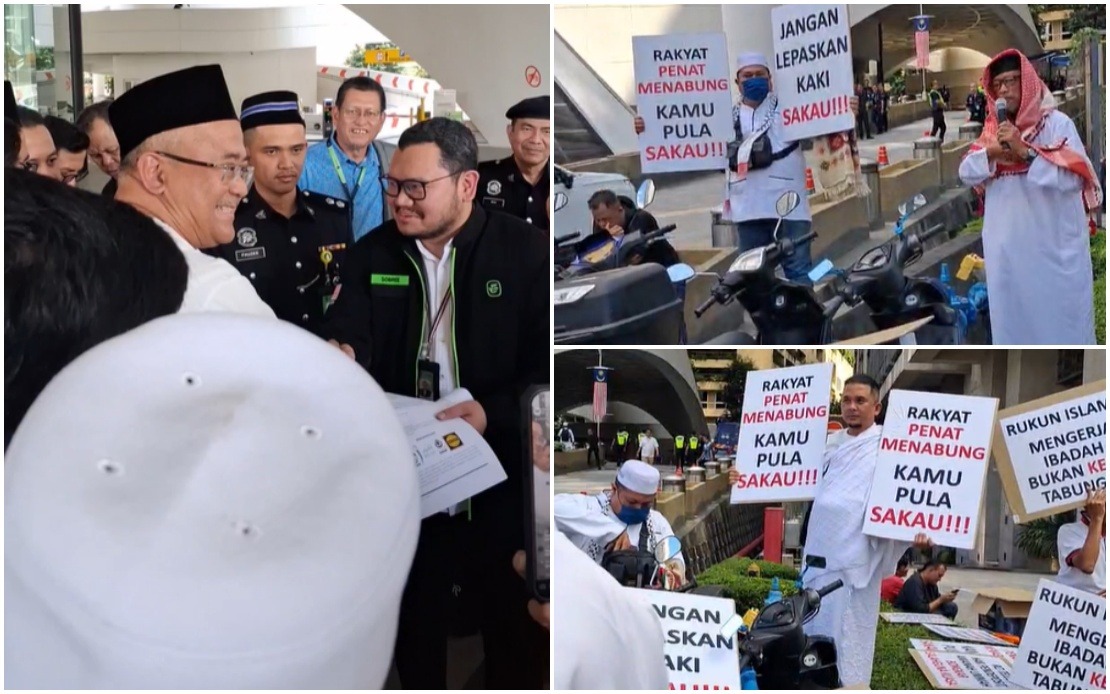
A prominent voice within Malaysia's Islamic political coalition has stressed the critical importance of maintaining investigative independence in the wake of the Royal Commission of Inquiry findings into Lembaga Tabung Haji, warning that the process must remain shielded from external pressures. Speaking at a solidarity gathering held outside Menara TH headquarters in Kuala Lumpur, Amir Zuhair Abdull Khalid, chairman of Daie MADANI, emphasised that those found culpable through proper legal channels should face prosecution regardless of their position or background.
The RCI's examination of TH's management spanning 2014 to 2020 has uncovered significant governance deficiencies requiring remedial action through established legal mechanisms. Amir Zuhair reinforced the government's commitment to pursuing accountability while simultaneously cautioning against any attempts to manipulate or undermine the investigative process. His remarks were directed squarely at protecting the integrity of institutions tasked with examining alleged wrongdoing, particularly the Malaysian Anti-Corruption Commission.
The significance of this matter extends well beyond routine political discourse, as it fundamentally touches upon the fiduciary responsibility owed to millions of Muslim depositors whose savings are entrusted to the institution. The custodianship of these funds carries not merely financial implications but also profound moral dimensions given the institution's religious and social standing within Malaysia's Muslim community. Any lapses in governance or mismanagement therefore represent breaches of public confidence that demand thorough investigation and transparent resolution.
Among the RCI's notable findings was documentation of alleged political interference affecting governance structures and the selection process for board appointments. Such interference, if substantiated, would represent a fundamental distortion of institutional independence and professional merit-based decision making. The investigation must therefore be permitted to follow evidence wherever it leads without constraint, establishing definitively whether such interference occurred and what consequences flowed from it.
Amir Zuhair articulated a crucial distinction regarding presumptions of innocence and ultimate culpability. Those implicated in the RCI's findings will undoubtedly contest allegations against them, as is their right within any just legal system. However, determinations of guilt or innocence cannot rest on claims of innocence alone but must emerge from rigorous investigation followed by formal prosecution and judicial determination. Only courts possessed of full evidentiary materials and proper adjudicatory authority can render binding judgments on these matters.
The MADANI coalition chairman explicitly urged all stakeholders to refrain from exerting pressure on investigating authorities or attempting to shape investigative outcomes. Such interference, whether overt or subtle, can compromise the quality and impartiality of investigations, ultimately undermining public confidence in the legal system's ability to deliver justice. The protection of investigative autonomy therefore serves not only the pursuit of accountability but also the broader legitimacy of Malaysia's governance institutions.
The broader coalition of Islamic non-governmental organisations and the Malaysian Islamic Movement Coalition, encompassing WADAH, IKRAM, HALUAN, and ABIM, formalised their expectations through a comprehensive ten-point framework. These demands encompass immediate initiation of legal proceedings against identified wrongdoers, full recovery of misappropriated losses and assets, comprehensive implementation of RCI recommendations, and sustained governance reforms under MADANI's administration. This structured approach reflects a determination within the Islamic civil society sector to see tangible outcomes rather than mere symbolic gestures.
The convergence of political leadership and grassroots Islamic organisations around the transparency agenda signals broader societal expectations for accountability. The timing and nature of these demands suggest that Muslim constituencies view governance integrity at TH as inseparable from broader questions about institutional trustworthiness and religious institutional management. For an institution specifically established to serve the religious and financial welfare of pilgrims undertaking the Hajj, governance failures carry distinctly heightened reputational stakes.
Regionally, Malaysia's handling of this investigation will send important signals about the credibility of the country's anti-corruption mechanisms. Southeast Asian nations increasingly scrutinise one another's commitment to genuine accountability versus performative action. A transparent, evidence-based prosecution of identified wrongdoers would strengthen Malaysia's standing within this competitive environment, while conversely, perceived interference or selective justice would reinforce scepticism about investigative impartiality.
The insistence on procedural integrity throughout the investigative and prosecutorial phases reflects recognition that sustainable institutional reform cannot be built on compromised processes. Even if investigations ultimately prove charges against particular individuals, any perception that the process itself was politically influenced would contaminate the verdict's legitimacy and leave governance reforms vulnerable to future challenge and reversal. Proper procedure therefore becomes as important as the ultimate substantive outcomes.
Moving forward, the challenge facing Malaysian authorities involves navigating legitimate political and public interest in the investigation while rigorously protecting its independence from day-to-day political considerations. This requires clear communication about investigative progress and prosecutorial strategy, sufficient to sustain public confidence without revealing information that might compromise ongoing inquiries. The institutions tasked with investigating and prosecuting must be empowered to function without the constant anxiety of political second-guessing or interference.

