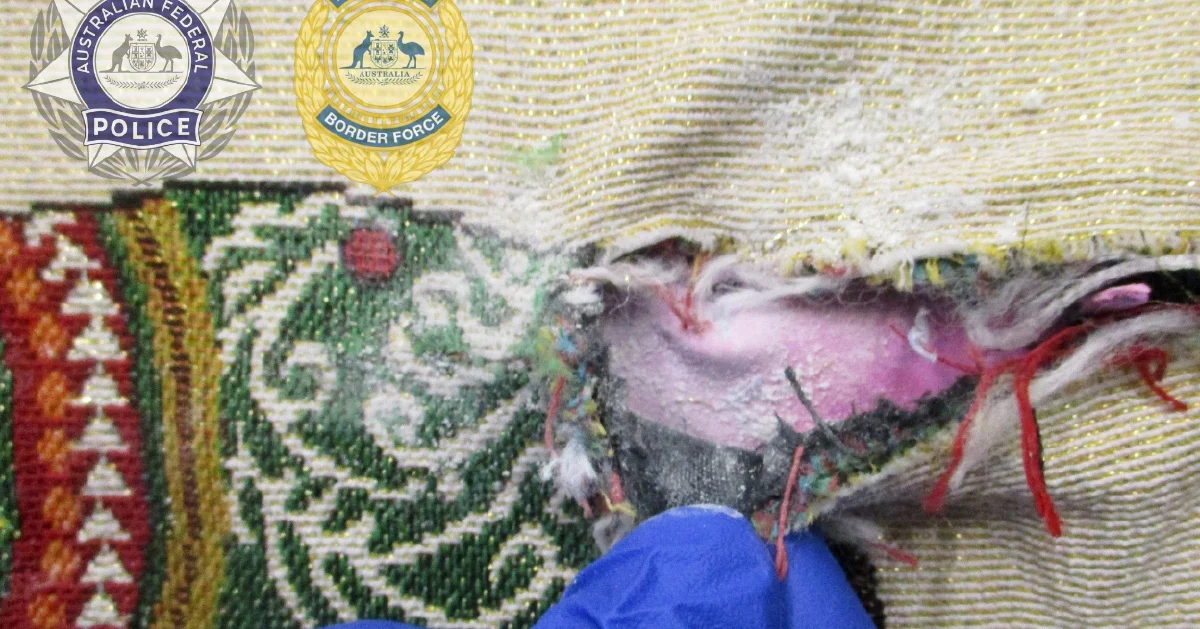
An employee of Thai Airways International has been arrested and charged following the discovery of a substantial heroin shipment at an Australian port of entry. According to the Australian Federal Police, customs officials uncovered more than one kilogramme of the narcotic substance hidden inside tote bags during a routine inspection. The case underscores the persistent vulnerabilities in international aviation security and the continued efforts by organised crime networks to exploit airport workers as drug couriers.
The arrest, which took place in Sydney, marks another high-profile incident of controlled-substance trafficking involving airline personnel. Customs officers conducting standard screening procedures at the airport identified the concealed narcotics before they could reach the illicit distribution network. The discovery triggered an immediate investigation by federal authorities, leading to formal charges against the individual involved.
Airport and airline staff members represent a particularly valuable target for international drug trafficking syndicates. Employees working for major carriers enjoy legitimate access to secure areas and international flights, enabling them to bypass conventional border security measures that would ordinarily scrutinise passenger luggage. The use of aviation personnel as smuggling conduits has been documented across multiple jurisdictions, from major hubs in Southeast Asia to Western destinations, demonstrating the systemic nature of the threat.
Thailand's position as a significant transit hub for Southeast Asian drug trafficking operations has long been a concern for law enforcement agencies throughout the region. While the country has implemented rigorous anti-narcotics programmes domestically, the vulnerability of airport infrastructure and personnel remains a persistent challenge. International cooperation between Thai authorities and their Australian counterparts has been instrumental in addressing such incidents, though the sheer volume of daily passenger and cargo movements continues to strain detection capabilities.
For Malaysia and other Southeast Asian nations, this incident carries particular relevance given the region's geography and its role in global drug supply chains. Malaysian airports, particularly those handling substantial international traffic such as Kuala Lumpur International Airport, face comparable vulnerabilities. Airport security personnel regularly coordinate with customs and federal agencies to identify suspicious activities, yet the evolving sophistication of smuggling operations means that new techniques emerge constantly.
The heroin discovered in this instance represents a significant quantity by street-level standards, suggesting the shipment was destined for wholesale distribution rather than personal consumption. Australian law enforcement estimates indicate that more than one kilogramme of heroin can service hundreds of dependent users when divided into retail portions, underscoring the public health implications of such trafficking operations. The severity of the alleged offence carries substantial penalties under Australian federal law, with trafficking convictions routinely resulting in lengthy imprisonment.
Thai Airways, one of Southeast Asia's major carriers, has faced several security incidents involving employee involvement in illicit activities. The airline operates extensive international routes connecting Thailand with destinations across Europe, the Middle East, and beyond, creating multiple opportunities for criminal exploitation. Institutional responses typically include enhanced personnel vetting, random screening protocols, and closer liaison with law enforcement agencies, though balancing security measures with operational efficiency remains challenging.
The Australian Federal Police and customs authorities have developed sophisticated detection methodologies for identifying concealed narcotics at international borders. X-ray scanning, chemical detection equipment, and intelligence-sharing with overseas agencies all contribute to the identification of trafficking attempts. However, as one smuggling method becomes more difficult, criminal enterprises adapt their approaches, creating an ongoing cat-and-mouse dynamic between law enforcement and organised crime networks.
Regional implications of this arrest extend to broader questions about supply chain security and the adequacy of information-sharing protocols among Asia-Pacific aviation authorities. While Australia maintains relatively stringent border controls compared to other developed nations, the connected nature of global aviation means that gaps in security at any major hub represent risks for other jurisdictions. Malaysian authorities, in consultation with counterparts throughout ASEAN, continue to evaluate and enhance their own protocols for employee screening and cargo verification.
The investigation into this case will likely examine how the heroin entered the supply chain upstream, potentially tracing connections to source production facilities in the Golden Triangle region spanning Thailand, Laos, and Myanmar. Such examinations frequently reveal networks of complicity involving not only individual couriers but also organisational structures that recruit, vet, and compensate participants. Intelligence gathered during this investigation may yield actionable leads for interdiction efforts elsewhere in the region.
ForMalaysian readers and policymakers, this incident reinforces the necessity of sustained investment in border security infrastructure and personnel training. The Southeast Asian region faces persistent drug trafficking pressures, with heroin remaining a significant concern despite decades of enforcement efforts. Cooperation between Malaysia's customs, narcotics agencies, and aviation authorities must remain robust and adaptable to evolving criminal tactics, ensuring that airports remain secure for legitimate commerce and travel.

