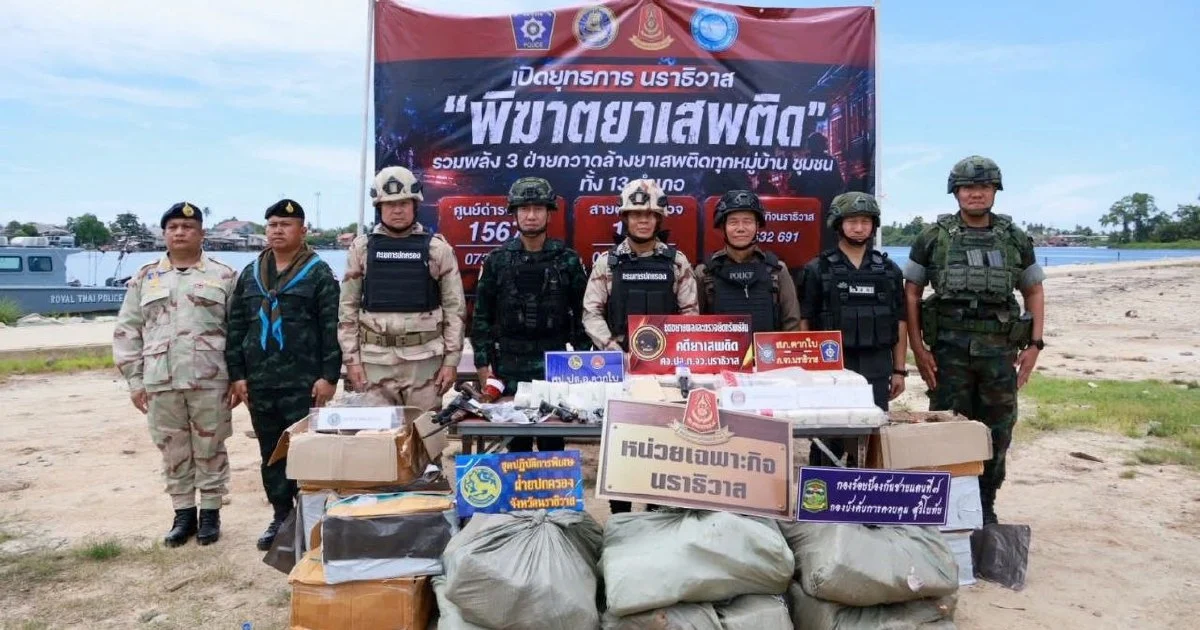
Thai law enforcement has achieved a significant breakthrough against transnational drug trafficking networks, arresting 233 suspects allegedly involved in narcotics distribution rings across the southern border region. The coordinated operation, conducted over the course of a month in Narathiwat province, resulted in the seizure of contraband drugs estimated at RM1.2 million before they could enter Malaysian territory through established smuggling routes.
The magnitude of this enforcement action underscores the scale and sophistication of organised drug trafficking operations that traverse the Thailand-Malaysia border. Authorities in Narathiwat, located in Thailand's southernmost region just across from Malaysia's northern states, have intensified focus on dismantling these networks following intelligence suggesting multiple links between Thai suppliers and Malaysian distribution networks. The timing and scale of the crackdown suggest a coordinated approach aimed at disrupting supply chains during a critical trafficking period.
Malaysian law enforcement agencies have increasingly expressed concern about drugs sourced from Thailand, particularly methamphetamine and heroin, which flow southward through established smuggling corridors. The interception of shipments bound for Malaysian markets represents a collaborative effort between Thai and Malaysian authorities, though the extent of cross-border coordination remains subject to ongoing diplomatic and operational discussions. For Malaysian readers, the implications are significant—disruptions in Thai supply networks have historically led to price volatility and increased scarcity in Malaysian markets, temporarily affecting local drug availability and trafficking patterns.
Among the 233 arrested, some individuals are suspected of maintaining operational connections with Malaysian-based traffickers, suggesting a vertically integrated smuggling ecosystem where Thai production or consolidation points feed directly into Malaysian distribution networks. This interconnection highlights the porous nature of the border and the challenges both nations face in preventing the southbound flow of narcotics. Intelligence gathered during the operation likely provides valuable leads for Malaysian anti-narcotics agencies investigating domestic distribution networks.
The RM1.2 million valuation of seized substances reflects both the quantity and type of drugs involved. Typically, such seizures in the region comprise synthetic drugs—particularly ice methamphetamine, which commands high prices in Malaysian cities—alongside heroin and prescription pill counterfeits. The specific composition of this haul remains undisclosed, but the monetary value suggests a shipment intended for wholesale distribution rather than retail street supply, indicating a disruption at a critical node in the smuggling hierarchy.
Narathiwat province, situated in Thailand's Pattani region, has long served as a transshipment hub for regional drug trafficking. Its proximity to the Malaysian border, combined with challenging terrain and historical cross-border movement of goods both legal and illicit, makes it a natural concentration point for smuggling operations. Thai authorities' focused enforcement effort there suggests intelligence-led targeting rather than routine interdiction, potentially indicating successful tracking of specific trafficking rings.
The arrest of 233 individuals, if sustained through prosecution, represents a substantial disruption to operational capacity within these networks. However, law enforcement observers caution that the arrest of frontline operatives—suppliers, couriers, and mid-level distributors—often has temporary effects unless coupled with seizures of financial assets, vehicles, and equipment used in trafficking. The ability of these networks to reconstitute depends heavily on the scope of asset freezing and the level of key figure dismantlement achieved.
For Malaysian authorities, this operation provides an opportunity to trace financial flows and identify local distribution hierarchies connected to the arrested Thai suspects. Police and Customs cooperation between the two nations typically follows such enforcement actions, leveraging arrested suspects and seized evidence to map networks and locate Malaysian-based traders. The intelligence gathered could inform operations against domestic trafficking syndicates suspected of sourcing from Thailand.
The broader context involves Thailand's significant role in regional drug production and transshipment. Despite efforts to disrupt manufacturing facilities and precursor chemical supplies, Thai territories—particularly remote areas of northern provinces and border regions—remain centres of synthetic drug production. Myanmar, Laos, and Thailand form what is commonly termed the "Golden Triangle," a region of continued illicit narcotics manufacturing that supplies much of Southeast Asia and beyond.
Rising drug seizures and enforcement actions in the region reflect both increased supplies and heightened police activity. Malaysia's own anti-drug campaigns have recorded increasing volumes of narcotics intercepted at borders and airports, suggesting that while enforcement pressure mounts, supply flows persist or even increase. This dynamic reflects the economic forces driving trafficking—high profit margins ensure that disruptions, however significant, often result in rapid network regeneration through recruitment and route adjustment.
The cooperation evidenced by this Thai operation aligns with broader regional frameworks addressing transnational crime. The ASEAN framework on drug control and bilateral agreements between Malaysia and Thailand provide mechanisms for intelligence sharing, joint operations, and extradition support. Success in dismantling networks requires sustained pressure and information exchange, particularly given the fluidity of criminal organisations and their capacity to exploit jurisdictional boundaries.
Looking ahead, the effectiveness of this enforcement action will be measured not only by arrests and seizures but by whether it produces convictions and asset forfeitures that deter participation in trafficking. Malaysian readers should understand that border security and interdiction represent one layer of drug control; sustained reductions in availability and price stability require complementary efforts in demand reduction, treatment, rehabilitation, and addressing the socioeconomic drivers that make trafficking an attractive livelihood in border communities.

