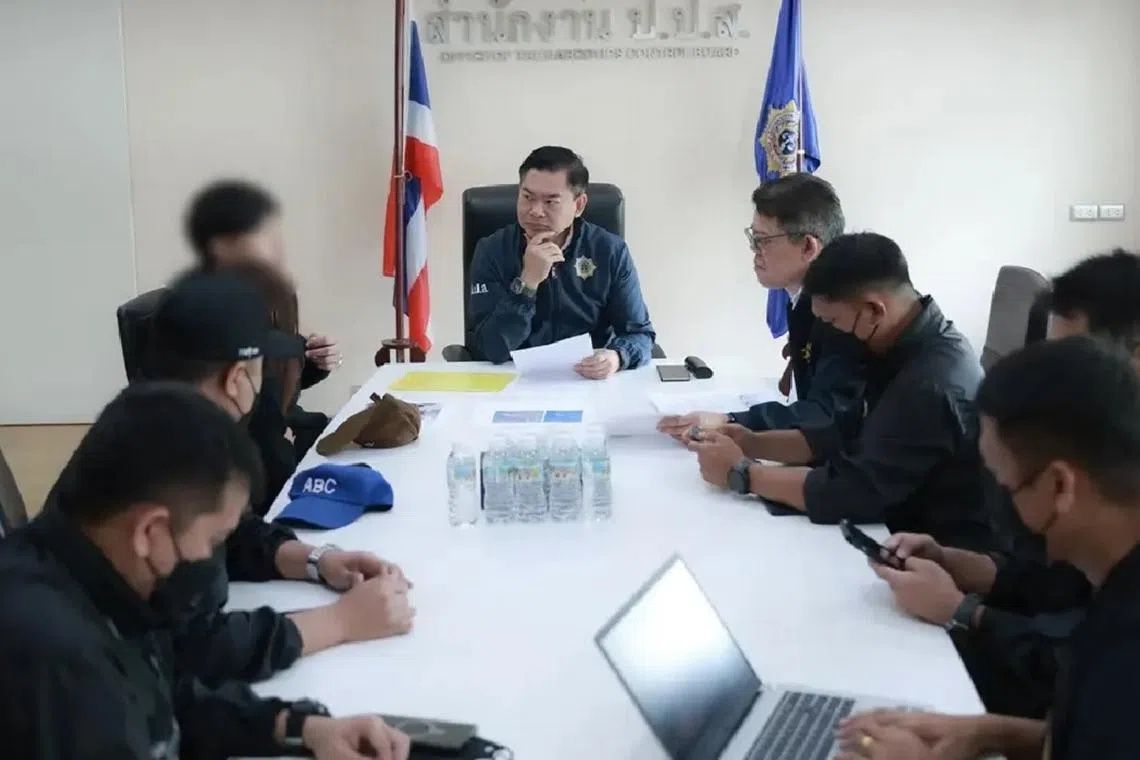
Thai drug enforcement authorities have confirmed that heroin discovered in connection with the arrest of a Thai female airline crew member in Australia was concealed within the fabric of only two out of 12 bags contained in a larger parcel, according to Police Major Suriya Singhakamol, secretary-general of the Office of the Narcotics Control Board (ONCB). Initial analysis by Australian officials who opened one bag revealed approximately 900 grams of suspected heroin, though Thai authorities emphasize they are still awaiting formal laboratory confirmation from their Australian counterparts to establish definitive substance identification and precise quantities.
The sophisticated concealment methodology employed by the suspected trafficking network demonstrates a deliberate attempt to distribute the contraband across multiple bags while masking the true nature of only two receptacles, a tactic designed to evade detection during routine customs inspections. Investigators currently assess that the two bags together likely contained no more than 2 kilograms of drugs, though final weight determinations remain pending official test results. The use of such targeted concealment—embedding drugs directly into bag fabric rather than loose packing—suggests operational experience and advance knowledge of border security procedures, raising questions about the network's capabilities and previous successful operations.
The investigation has expanded into a significant international operation, with the ONCB working in close coordination with the Australian Federal Police to dismantle what officials characterize as a transnational drug-trafficking organisation. This collaboration marks part of a broader regional security effort to combat the flow of illicit narcotics through Southeast Asia. The fact that a Thai national employed by an airline was allegedly used as a courier highlights the vulnerability of transport sector workers to recruitment by criminal networks, a concern that carries implications for aviation security protocols across the region.
A critical development in the case came when investigators ruled out a delivery rider who voluntarily presented himself to ONCB officials claiming innocence. After detailed examination of closed-circuit television footage and comparative evidence analysis, authorities determined the rider was not responsible for delivering the parcel containing heroin. The distinction proved straightforward: the suspicious brown cardboard box was delivered on June 22 around midday, while the rider who came forward had delivered a different black plastic box on June 23 in the late afternoon. Furthermore, the suspect visible in CCTV footage wore a black helmet, contradicting the yellow shirt and white helmet worn by the cooperative rider who stepped forward.
The meticulous nature of this investigative distinction underscores the importance of systematic evidence review in transnational cases, where seemingly minor details can rapidly narrow suspect parameters. However, the voluntary cooperation of the innocent rider also hints at potential nervousness within the delivery services industry regarding associations with suspicious parcels, a concern that may yield additional intelligence as investigators expand their net. The ONCB has formally recorded the rider's statement and publicly thanked him for his assistance, a gesture likely designed to encourage further cooperation from others in the logistics and transportation sectors.
Investigators are now intensifying efforts to locate the actual delivery personnel who transported the heroin-laden parcel, while simultaneously pursuing a secondary suspect identified only through a Facebook account under the username "Rose." This online recruiter allegedly coordinated the parcel's delivery through group chats, employing a digital infrastructure to mask identity and maintain operational distance from physical shipment activities. The ONCB has explicitly stated it cannot rely solely on the Facebook profile information and is engaging technical and intelligence resources to identify the actual person controlling the account, a process that may involve requests for assistance from Meta and other technology platforms.
The expanded investigation has been formally integrated under Task Force Storm, a joint operation encompassing the ONCB, Customs Department, Department of Special Investigation, and Australian Federal Police. This multi-agency framework reflects the reality that modern drug trafficking networks operate across jurisdictional boundaries and require coordinated responses that transcend traditional law enforcement silos. On July 1, ONCB officials convened with AFP representatives to exchange detailed intelligence on the case, with discussions focused on identifying major network operatives and tracing the supply chain that produced this particular shipment.
Authorities have clarified that substances including crystal methamphetamine, heroin, and methamphetamine pills are not manufactured within Thailand but rather smuggled from the Golden Triangle region spanning neighbouring countries. This geographic sourcing reflects the enduring dominance of Myanmar, Laos, and adjacent territories as primary production hubs for Southeast Asian narcotics markets. However, Thai officials suggest the sophisticated packaging and concealment techniques—specifically embedding drugs within bag fabric—could have been executed either in originating countries or within Thai territory, indicating that the trafficking network may maintain domestic processing and preparation capabilities separate from manufacturing operations.
The detailed route mapping of this particular parcel shipment represents a priority for investigators, as tracing distribution channels and identifying waypoints throughout the supply chain can reveal network infrastructure and operational patterns. Understanding whether this shipment originated in Myanmar, was processed in Laos, transited through Thailand via courier services, and then moved internationally to Australia will provide crucial intelligence about how the network adapts to enforcement pressures and maintains supply continuity across the region. Each identified node in the distribution network represents a potential intervention point for regional law enforcement cooperation and an opportunity to dismantle the organisational structure supporting transnational movements.
For Malaysia and other Southeast Asian nations, this case carries significant implications regarding aviation security vulnerabilities and the recruitment of transportation workers into drug-trafficking schemes. Airlines operating throughout the region should reassess employee vetting procedures and consider enhanced monitoring of staff accessing cargo and baggage areas. The case also demonstrates the increasing sophistication of concealment methods employed by trafficking networks, underscoring the need for enhanced training of customs and border security personnel in identifying non-conventional drug concealment techniques. As Task Force Storm pursues the network's architects and operatives, the investigation may yield intelligence applicable to broader regional anti-narcotics strategies and information-sharing protocols among Southeast Asian law enforcement agencies.

