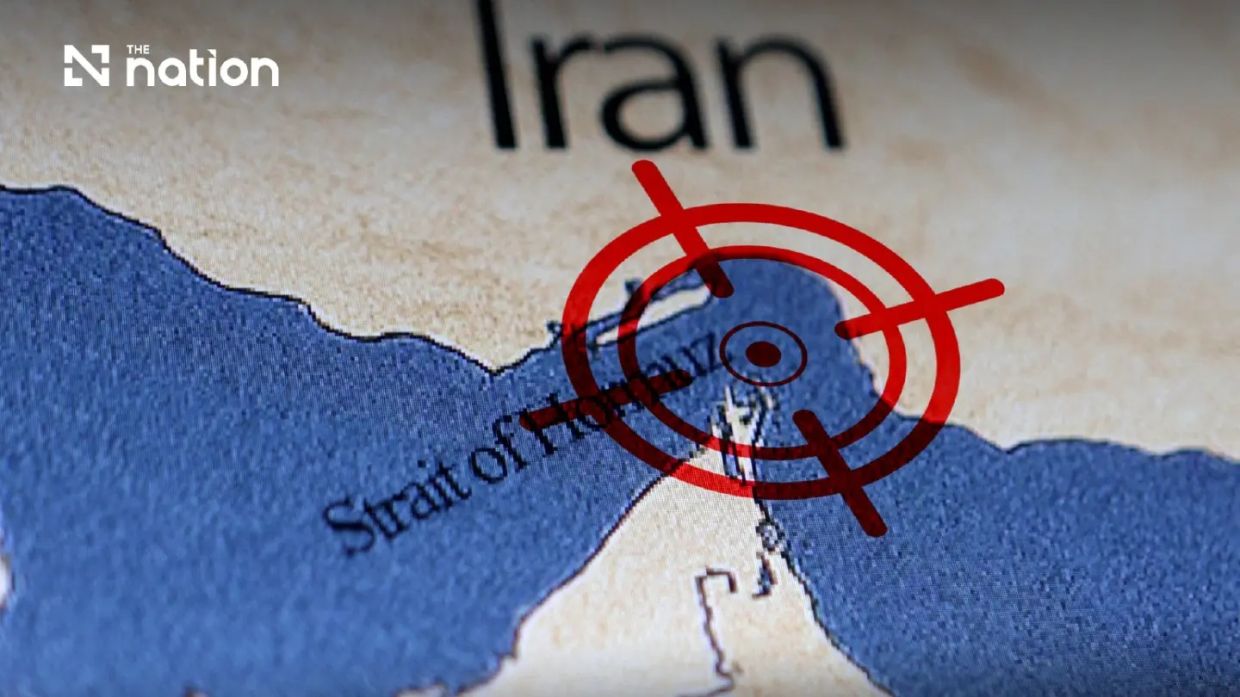
A vessel sailing under the Thai flag has reportedly come under attack from Iranian forces while transiting the Strait of Hormuz, marking the latest incident to threaten one of the world's most strategically vital waterways for global energy supplies. The assault underscores the mounting risks facing commercial shipping as military tensions between Washington and Tehran reach dangerous new levels, with both sides conducting sustained operations that have transformed the already volatile Gulf region into an active conflict zone.
According to Iran's semi-official Tasnim news agency, the attack occurred amid broader military activities across the strait. However, the Iranian outlet provided minimal details about the incident, declining to name the vessel, identify its operator, specify its cargo or destination, or clarify the nationality of crew members aboard. Thai authorities have not yet confirmed the incident, and neither independent maritime monitoring organisations nor the ship's operators have made immediate public statements. The condition of the vessel and whether any crew members sustained injuries remain similarly unclear.
The reported targeting of the Thai-flagged ship forms part of a more alarming pattern of disruptions affecting commercial navigation through the Hormuz corridor. Tasnim also reported that two oil tankers caught fire following explosions while attempting passage through waters that Iranian media characterised as a minefield within the southern sections of the strait. These incidents reflect Iran's determination to tighten control over the waterway, with the Islamic Revolutionary Guard Corps Navy declaring the route had become "extremely unsafe" and attributing complete closure to what it described as American aggression.
Iranian military officials have grown increasingly assertive in their navigation claims. The IRGC separately stated that it had intercepted four oil tankers attempting passage through Hormuz with claimed American military support. These vessels were allegedly ordered to remain stationary during a combined missile and drone operation, a move designed to demonstrate Iranian capacity to enforce its authority over the strait. The IRGC Navy subsequently warned vessel operators to heed Iranian military notices rather than relying on protection purportedly provided by United States forces. Notably, the identities, positions, registration particulars and status of these four tankers have not been disclosed.
These maritime incidents carry potentially severe consequences for global commerce and energy markets. The Strait of Hormuz represents an indispensable route through which enormous quantities of oil and natural gas transit daily to supply markets worldwide. Any sustained disruption to shipping operations through the passage could trigger cascading economic effects, from elevated freight and insurance charges to constraints on energy supplies and volatile commodity pricing. Southeast Asian economies, which depend significantly on stable energy imports and predictable shipping costs, face particular vulnerability to prolonged instability in this critical corridor.
The maritime crisis has developed concurrently with intensified military operations launched by American forces. The United States military announced through its Central Command that it commenced a seventh consecutive night of air strikes against Iranian targets, with operations beginning at 1900 hours GMT on Friday. The American military characterised these strikes as intended to "continue degrading Iran's military capabilities," though CENTCOM did not immediately release comprehensive target information or detailed damage assessments. Iranian authorities responded by asserting that previous American strikes had inflicted damage upon civilian infrastructure, including bridges, airports, electrical facilities and railway installations in southern regions.
Casualties and infrastructure damage have mounted during the escalating exchange of strikes. Iran's Foreign Minister Abbas Araghchi stated that three individuals killed during an attack on a bridge in Bandar Khamir comprised part of eight fatalities sustained during overnight American military operations. Iranian state media, citing a Bushehr province deputy governor, claimed that American forces had struck an Iranian oil tanker stationed at Kharg Island. These casualty and damage figures derive entirely from Iranian official statements and state-controlled media outlets and have not been independently verified by international observers or neutral monitoring agencies.
Iran has responded to American military pressure with its own sustained retaliatory operations. Iranian military leadership claimed responsibility for attacking American military assets and facilities positioned across multiple Gulf states, including installations in Bahrain, Jordan, Kuwait and Qatar. Qatari authorities confirmed that their armed forces successfully intercepted an incoming Iranian strike, though a child sustained injuries from falling debris generated during the defensive operation. The Iranian military additionally claimed to have destroyed an American MQ-9 reconnaissance drone over the port city of Bushehr using what it described as a newly developed air-defence system integrated into Iran's broader air-defence architecture. The United States has not yet confirmed the loss of an MQ-9 drone in that location.
The confrontation carries broader regional implications that extend well beyond the immediate military engagement. Multiple Gulf states maintain significant American military personnel deployments and logistical infrastructure within their territories, positioning them as potential targets for Iranian retaliation. The current escalation therefore risks spreading conflict beyond the narrow confines of direct Iran-American military engagement, potentially drawing neighbouring countries into active hostilities. This prospect troubles regional security observers and has prompted international concern about the stability of one of the world's most economically important regions.
For Malaysian observers and Southeast Asian stakeholders, the deteriorating situation in the Persian Gulf presents immediate and long-term challenges. The region's reliance on Hormuz-transiting energy supplies, combined with the region's dependence on predictable shipping costs and insurance regimes, makes regional economic vulnerability to Gulf instability substantial. Beyond energy markets, manufacturers dependent on just-in-time supply chains face potential disruption if shipping delays or security incidents force vessels to divert from traditional routes or incur higher insurance premiums. The unfolding crisis thus represents not merely a distant geopolitical conflict but a direct threat to Southeast Asian prosperity and stability.
The convergence of maritime attacks, military strikes, civilian infrastructure damage and competing claims about military capability demonstrates how comprehensively the Iran-America confrontation now dominates the Hormuz corridor. What began as targeted military operations has evolved into a complex security environment where commercial shipping operators face genuine uncertainty about safe passage. The Thai-flagged vessel incident, while significant in itself, signals a broader transformation of the waterway from a challenging but navigable commercial route into genuinely contested territory where civilian shipping operations occur amid active military operations. Without rapid de-escalation or international intervention to establish secure shipping corridors, the economic consequences will extend far beyond the immediate region.

