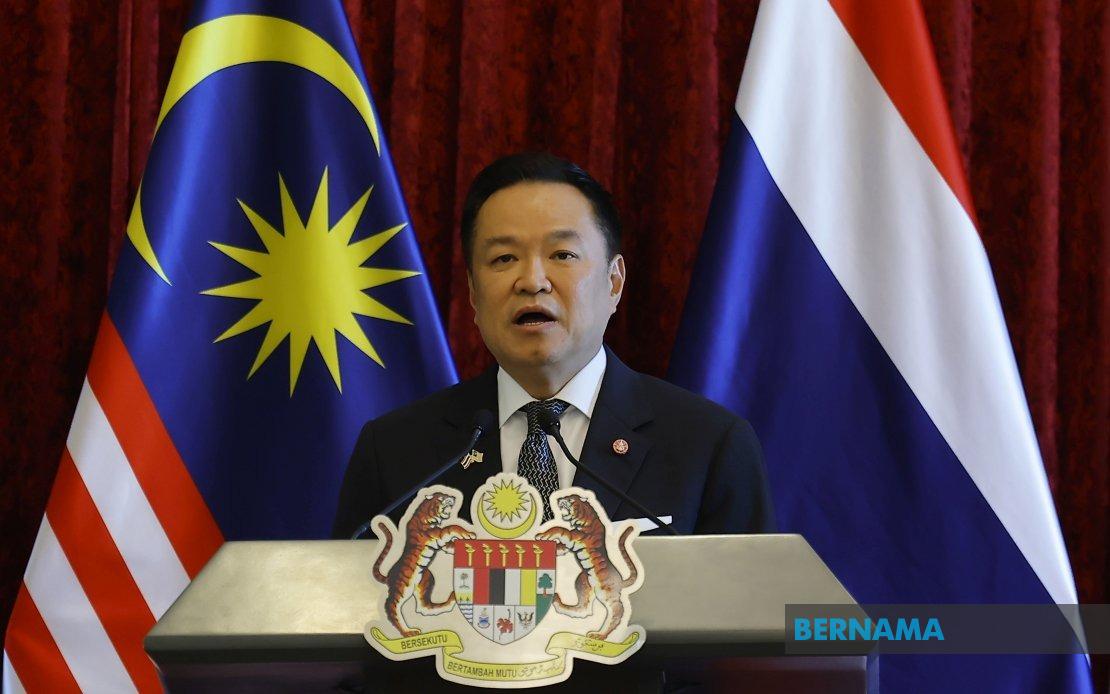
Thailand's Prime Minister Anutin Charnvirakul extended warm wishes to Malaysia's leader Datuk Seri Anwar Ibrahim on the eve of the Johor state election, underscoring the cordial ties between the two Southeast Asian neighbours. The gesture came during a joint press conference at Putrajaya as Anutin concluded remarks following his official two-day visit to the country, which marks his first return to Malaysia since his reappointment in March 2026.
The timing of Anutin's visit—coming just before Johor's electoral battle—carries symbolic weight in the region's political calendar. The state election, set for Saturday, represents a significant electoral test for Prime Minister Anwar's coalition government, with Pakatan Harapan fielding candidates across all 56 parliamentary seats. Against this backdrop, the Thai premier's public backing signals strong diplomatic support from a key regional partner.
Johor, Malaysia's second-largest state by population and a crucial economic hub, will see 172 candidates compete for the 56 available seats. The election represents an important barometer of public sentiment towards the federal government's performance, particularly given the state's historical significance in Malaysian politics. Pakatan Harapan's campaign strategy emphasizes continuity and development, drawing upon a diverse slate of experienced politicians alongside fresh faces from its constituent parties—PKR, DAP, and Amanah—to appeal to different voter demographics.
Anwar characterised his engagement with the Thai leader in notably personal terms, portraying the bilateral discussions as a meeting between long-standing friends rather than a formal diplomatic protocol. He expressed appreciation for Anutin's visit, suggesting that the Thai PM's presence reinforced a sense of ease and mutual understanding between the two governments. This language reflects broader efforts to deepen personal relationships among Southeast Asian leaders, a trend that has gained momentum as regional cooperation becomes increasingly intertwined with personality-driven diplomacy.
The substance of the two leaders' discussions centred on fortifying bilateral relations and exploring expanded cooperation across multiple sectors of shared interest. Malaysia and Thailand, as neighbouring nations with significant people-to-people connections, considerable cross-border trade, and common regional challenges, have long maintained strategic partnerships. Anutin's visit provides an opportunity to advance these ties at a moment when both nations face complex regional dynamics and domestic economic considerations.
Thailand's engagement with Malaysia carries particular relevance given the intricate geopolitical landscape of Southeast Asia. As regional powers continue to balance relationships with major global actors, bilateral cooperation between Thailand and Malaysia offers a foundation for coordinated approaches to regional stability and prosperity. The warmth of official interactions between the two leaders suggests a commitment to maintaining strong ties regardless of domestic political circumstances.
For Anwar's coalition government, securing strong electoral performance in Johor remains essential to consolidating its political standing and validating its governance record. The state election serves as a crucial test before more significant electoral contests, and international support—even in symbolic form—can bolster domestic confidence. Anutin's well-wishes, though courteous, reflect international acknowledgement of Malaysia's democratic process and implicit confidence in the government's direction.
The election itself unfolds amid broader conversations about Malaysia's economic direction, infrastructure development, and social policies. Johor's position as a manufacturing and logistics hub means that voter priorities often reflect concerns about employment, cost of living, and business conditions. The Pakatan Harapan campaign will need to articulate how its federal policies translate into tangible benefits for Johor residents, while opposition parties seek to highlight any perceived shortcomings.
Anutin's visit also reflects the practical importance of maintaining strong interpersonal relationships among Southeast Asian leaders. In a region where diplomatic niceties often matter as much as formal agreements, regular high-level visits and positive public exchanges help sustain cooperative frameworks. The Thai PM's first return visit since his reappointment signals that Malaysia remains a priority destination within Thailand's regional diplomacy strategy.
Looking forward, the successful conduct of the Johor election will be closely observed not only domestically but throughout the region. Strong democratic participation and competitive elections strengthen Malaysia's standing as a stable democratic nation in Southeast Asia, contributing to the region's overall political credibility. International figures like Anutin acknowledging Malaysia's electoral processes through visits and supportive statements reinforce this democratic narrative.
The broader implications of Thailand-Malaysia cooperation extend beyond immediate electoral politics to encompassing infrastructure projects, trade partnerships, and coordination on transnational issues ranging from border management to environmental protection. Anutin's cordial engagement with Anwar provides momentum for advancing these longer-term collaborative agendas. As both nations navigate post-pandemic economic recovery and regional repositioning, sustained high-level dialogue remains invaluable for identifying synergies and addressing challenges mutually.

