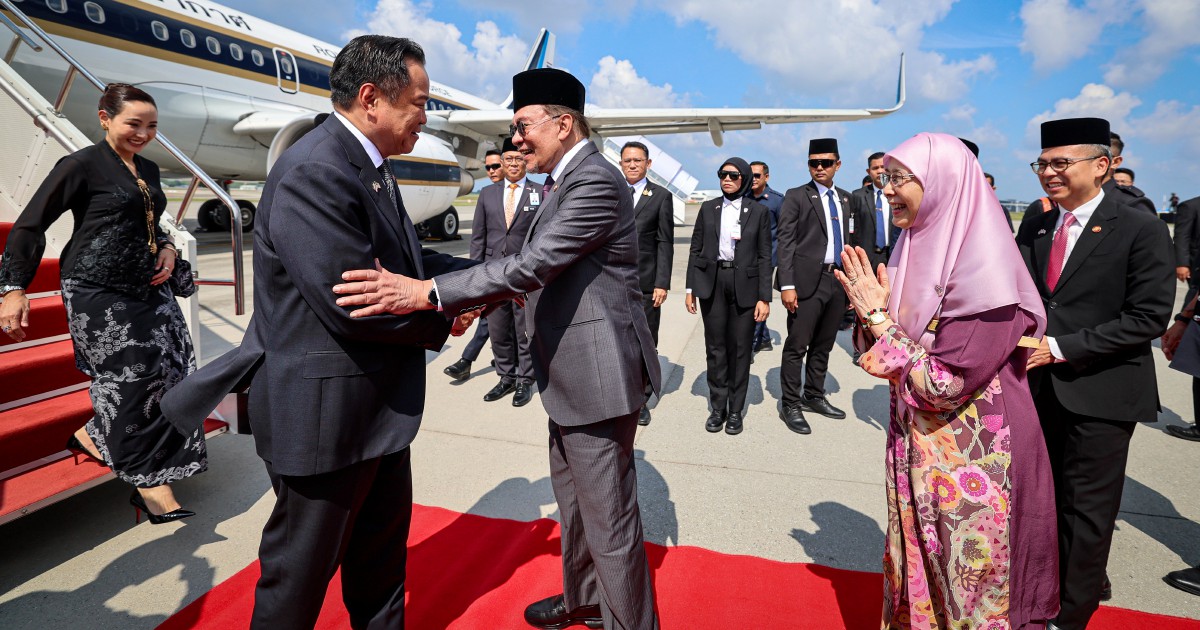
Thailand's Prime Minister Anutin Charnvirakul touched down in Malaysia today, beginning a two-day official visit that represents an important moment of diplomatic engagement between two of Southeast Asia's most influential economies. The visit comes at the explicit invitation of Malaysian Prime Minister Datuk Seri Anwar Ibrahim, underlining the commitment both nations have expressed toward strengthening their bilateral relationship.
The timing of Anutin's arrival carries particular significance given the complex regional landscape facing ASEAN member states. Thailand and Malaysia, neighbours linked by geography, history, and economic interdependence, have long recognised the value of high-level political dialogue in addressing shared challenges. The visit, based at Sepang, signals the leadership of both countries' commitment to maintaining momentum on key issues affecting their populations and the broader Southeast Asian region.
Anwar Ibrahim's invitation to the Thai premier reflects Malaysia's proactive approach to regional diplomacy during a period of notable change in the Thai government's composition and policy direction. Since Anutin Charnvirakul became Deputy Prime Minister in previous administrations and has played an increasingly prominent role in Thai politics, such bilateral visits have become routine mechanisms for maintaining cordial relations and addressing matters of mutual concern at the highest levels.
The two-day nature of the visit suggests a comprehensive agenda is planned. Official visits of this duration typically encompass formal state ceremonies, bilateral meetings between the prime ministers and their respective cabinets, and discussions on trade, security cooperation, regional stability, and people-to-people exchanges. Malaysia, as chair or co-chair of various ASEAN initiatives during different periods, has long sought to leverage such visits for advancing the bloc's collective interests.
For Malaysian observers, the significance of this visit extends beyond mere protocol. Thailand remains one of Malaysia's most important trading partners within Southeast Asia, with bilateral commerce spanning manufacturing, agriculture, energy, and services. Both nations share significant cross-border interests, particularly regarding the commercial corridors that link their economies and the movement of goods and people across their shared maritime boundaries.
Anutin's prominence in Thai politics has grown substantially in recent years. His political party and coalition positions have granted him considerable influence over domestic policy and foreign relations. The fact that he personally undertakes such visits reflects the seriousness with which Bangkok's leadership regards its relationship with Kuala Lumpur, even as both governments manage their respective domestic political complexities and regional commitments.
The visit also occurs within the context of broader ASEAN developments and regional architecture discussions. Malaysia has consistently advocated for ASEAN unity and centrality in regional affairs, particularly as the bloc navigates its relationship with major powers and addresses transnational challenges ranging from maritime security to environmental concerns. Thailand, as another major ASEAN player with significant regional influence, shares many of these priorities, and bilateral meetings between their leaders often touch upon such collective regional matters.
Security and stability considerations represent another dimension to this visit. Both nations have interests in maintaining peace and stability across the region, and this includes attention to maritime boundaries, piracy prevention, and law enforcement cooperation. The Strait of Malacca and other shared maritime spaces have always featured prominently in Malaysia-Thailand bilateral discussions, reflecting their mutual stakes in ensuring safe passage for international commerce and protecting territorial waters.
From an economic perspective, deepening Malaysia-Thailand ties offers opportunities for both countries to enhance supply chain integration and boost intra-ASEAN trade. With global supply chains in flux and both nations seeking to position themselves competitively in manufacturing and technology sectors, closer cooperation on investment facilitation and trade procedures could yield mutual benefits. The visit provides an ideal platform for discussing such economic initiatives and identifying new areas for joint development.
The cultural and people-to-people dimensions of the Malaysia-Thailand relationship also warrant attention. Both nations have significant Thai and Malaysian diaspora communities and substantial flows of tourists, workers, and students crossing their borders regularly. Bilateral visits at the prime ministerial level invariably address visa policies, education exchanges, and cultural cooperation, all of which strengthen the human foundations underlying the formal diplomatic relationship.
Looking ahead, the outcomes of this two-day visit will likely be documented in joint statements and agreements covering areas ranging from trade facilitation to security cooperation. Such formal instruments serve as benchmarks for progress and provide frameworks for continued engagement at lower levels of government throughout the coming months and years.
The visit exemplifies the rhythm of Southeast Asian diplomacy, wherein regular high-level exchanges maintain the relationships necessary for addressing both anticipated and unforeseen challenges. For Malaysia and Thailand, such engagement remains essential to navigating their shared neighbourhood effectively and maintaining the stability and prosperity both populations require.

