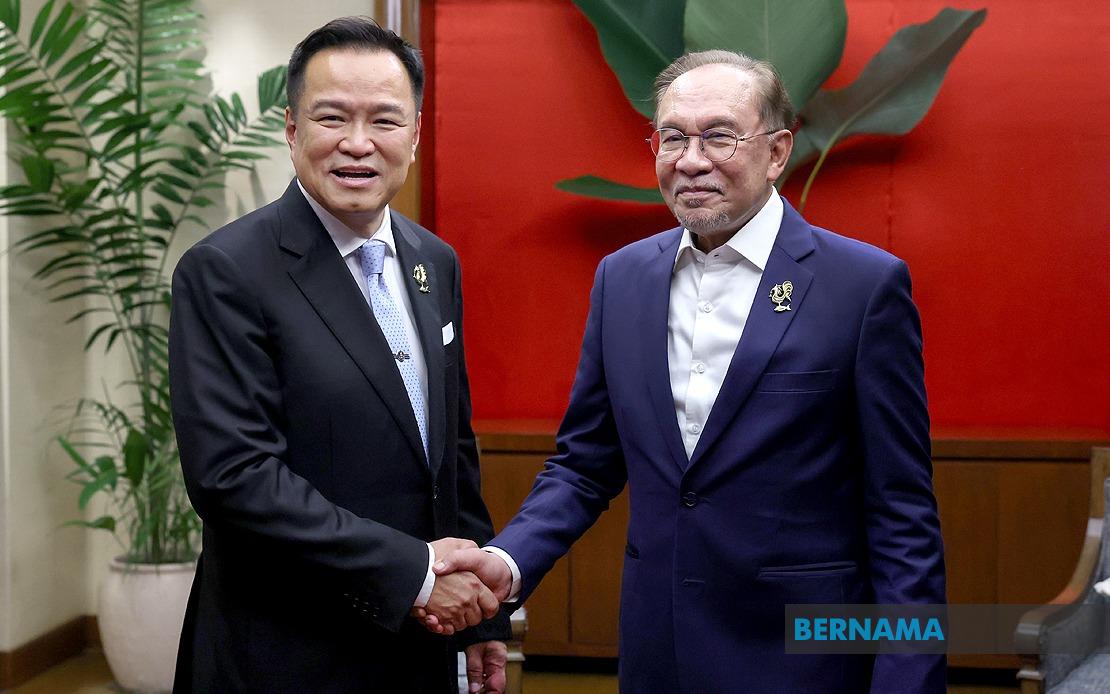
Thai Prime Minister Anutin Charnvirakul is set to arrive in Malaysia on Thursday, July 9, for a two-day official visit that underscores deepening cooperation between Bangkok and Kuala Lumpur. The timing is significant, as the trip precedes the July 11 inauguration of the new permanent Sadao border checkpoint, a facility poised to transform logistics flows and economic activity along one of Southeast Asia's busiest terrestrial crossing points. The visit, extended at the invitation of Malaysian Prime Minister Datuk Seri Anwar Ibrahim, signals both nations' commitment to tangible advancement in bilateral relations as they prepare to mark seven decades of formal diplomatic ties in 2027.
Thailand's Cabinet formally approved the checkpoint's opening on Tuesday, clearing the way for what officials describe as a transformative upgrade to border infrastructure. The new Sadao Customs, Immigration and Quarantine (CIQ) Complex, situated in Songkhla province on the Thai side, will directly interface with Malaysia's Bukit Kayu Hitam checkpoint across the border in Kedah. This permanent facility represents a substantial departure from existing arrangements, consolidating previously scattered border operations into a single, purpose-built venue designed to accelerate the movement of goods, vehicles, and travellers between the two countries. The checkpoint will maintain operating hours from 5 am to 11 pm Thailand time daily, providing extended accessibility compared to many comparable regional border crossings.
Government spokesperson Ratchada Thanadirek emphasised that the upgrade goes beyond the checkpoint itself. Thai authorities have instructed relevant agencies to expedite complementary infrastructure projects essential for the facility's effectiveness. These include the construction of connecting roads on the Thai side to optimise traffic flow, congestion-mitigation measures directly around the checkpoint, and shuttle bus services linking the border crossing to inland population centres. Such supporting infrastructure proves critical in border regions where rapid surges in traffic volume can quickly overwhelm crossing facilities unless adequate feeder roads and distribution networks are in place.
The initiative reflects broader regional recognition that border efficiency translates directly into economic competitiveness. The Dan Nok border community stands to benefit substantially from intensified public awareness campaigns regarding revised traffic routes, updated customs procedures, and streamlined immigration protocols. Authorities have been tasked with ensuring that businesses and residents understand the operational changes, reducing confusion during the transition period and enabling traders to capitalise on improved cross-border mobility. Such communication proves particularly valuable for small and medium enterprises operating across the border, whose success often depends on minimising delays and transaction costs.
For Malaysia, the new checkpoint aligns with longstanding efforts to enhance connectivity with Thailand and strengthen the broader ASEAN economic architecture. Bukit Kayu Hitam serves as a critical gateway for Kedah and northern Peninsular Malaysia, channelling substantial volumes of agricultural products, manufacturing inputs, and consumer goods. A more efficient checkpoint promises tangible benefits to businesses in Perlis, Kedah, and Penang, regions where Thai trade constitutes a significant component of economic activity. The facility's design and operational framework specifically target the facilitation of cross-border tourism, an increasingly important revenue stream for communities on both sides of the frontier.
Anutin's visit represents his third journey to Malaysia since becoming prime minister, underscoring the regularity of high-level engagement between the two capitals. His previous appearances included the October ASEAN Summit in Kuala Lumpur and a dedicated official visit on November 26, establishing a pattern of substantive bilateral contact. This frequency contrasts with earlier periods when Thai-Malaysian relations operated at more measured diplomatic temperatures, reflecting a deliberate shift towards proactive collaboration on shared challenges and opportunities. The checkpoint opening provides a concrete manifestation of this elevated engagement, moving beyond rhetoric to tangible infrastructure investments that will benefit ordinary citizens and businesses across border communities.
The checkpoint project also carries implications for Thailand's broader border strategy. Sadao has historically functioned as a primary crossing point, yet operational constraints have occasionally created bottlenecks affecting Thailand's trade relationships and regional connectivity. By investing in permanent, purpose-designed infrastructure, Bangkok signals its commitment to facilitating rather than restricting legitimate cross-border activity. This approach contrasts with security-first border policies that can inadvertently hobble regional economic integration, demonstrating instead that security and facilitation need not be mutually exclusive when coupled with modern infrastructure and streamlined procedures.
From a regional perspective, the enhanced checkpoint represents progress towards the ASEAN vision of seamless connectivity. The organisation has repeatedly emphasised the importance of border efficiency in achieving its economic community objectives. Thailand and Malaysia, as major ASEAN economies sharing a substantial land border, carry particular responsibility for demonstrating that member states can modernise crossing facilities and procedures in ways that enhance both security and commerce. Success at Sadao offers a template that other ASEAN border pairs might reference as they contemplate their own infrastructure upgrades.
The checkpoint's opening also occurs at a moment when global supply chains are undergoing significant reconfiguration. Companies reassessing geographic exposure and seeking to optimise sourcing arrangements across Southeast Asia may find enhanced Thailand-Malaysia connectivity particularly valuable. The facility potentially enables more flexible just-in-time manufacturing and distribution arrangements, allowing producers to locate components on either side of the border while maintaining efficient cross-border logistics. This flexibility could influence investment decisions for multinational enterprises considering expansion in the region.
Meanwhile, the tourism dimension should not be overlooked. Both Thailand and Malaysia rely substantially on cross-border tourism, and enhanced checkpoint efficiency directly reduces friction costs for leisure travellers. Thai tourists visiting Langkawi and Malaysian travellers exploring southern Thailand comprise significant flows that warrant consideration in border policy. Smoother crossing procedures, reduced waiting times, and improved information dissemination all contribute to more positive travel experiences and potentially stimulate incremental tourism demand along the corridor.
Looking ahead, both governments will likely monitor the checkpoint's performance during its initial operational period. Learning from early experience can inform any necessary procedural adjustments and provide valuable data for benchmarking purposes. If the facility performs as anticipated, it may justify additional infrastructure investments or operational refinements that further enhance efficiency. Success here could also strengthen the political consensus within both countries for continued border modernisation initiatives, potentially accelerating infrastructure upgrades elsewhere along the Thailand-Malaysia frontier.
Anutin's visit and the checkpoint opening together represent a clear statement of bilateral intent. Rather than viewing the border as primarily a line separating two nations, both capitals increasingly recognise it as an interface where carefully managed facilitation of legitimate flows can generate mutual prosperity. The checkpoint embodies this philosophy in concrete form, transforming a potential point of friction into a facilitating mechanism. As the two countries advance toward their 70th diplomatic anniversary, such mutually beneficial infrastructure investments provide a tangible foundation for continued relationship deepening and regional economic integration.

