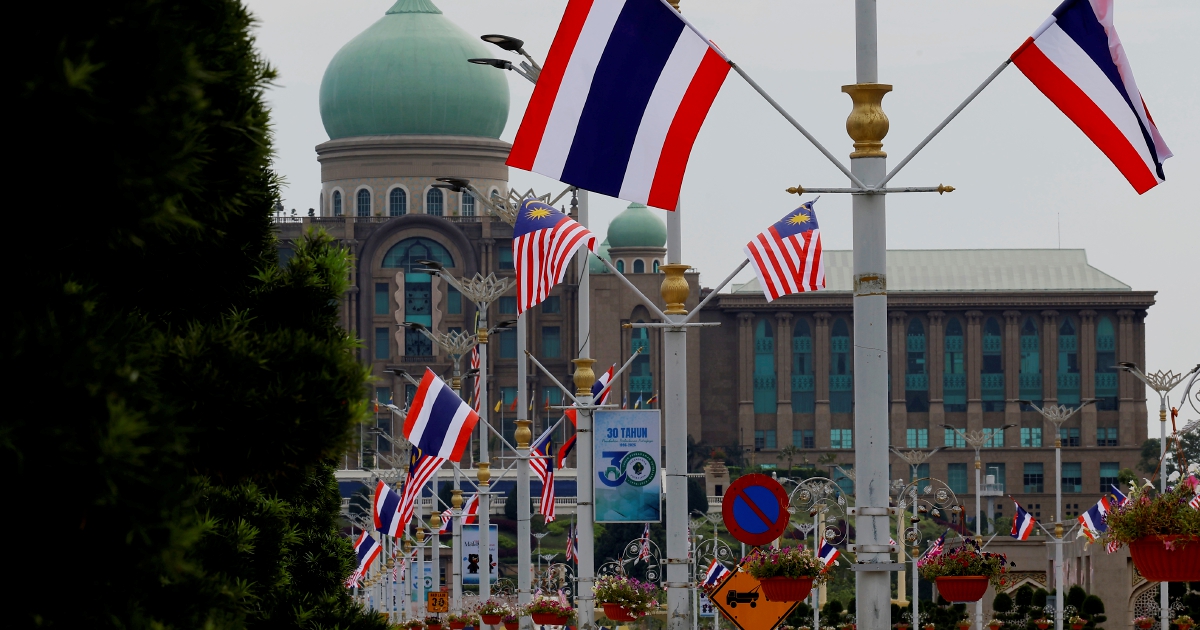
Thai Prime Minister Anutin Charnvirakul will arrive in Malaysia on Thursday for a high-level visit aimed at accelerating bilateral collaboration across key sectors, particularly infrastructure development and the agricultural trade that underpins regional economic integration. The visit represents a significant diplomatic engagement between Bangkok and Kuala Lumpur at a time when cross-border connectivity projects are reshaping the economic landscape of Southeast Asia.
The centrepiece of the trip will be the official inauguration of a new border road connecting the two countries, a symbolic gesture underscoring both nations' commitment to reducing trade barriers and facilitating smoother movement of goods and people across their shared frontier. Border infrastructure projects such as this one carry substantial weight beyond their immediate practical applications—they signal to investors and traders that the region is serious about regional integration and cost reduction in cross-border logistics.
Malaysia and Thailand have long maintained strong economic ties, but the efficiency of these connections has been historically constrained by aging transport infrastructure in remote areas. The new road represents an upgrade to these arteries, promising to cut transit times and transportation costs for businesses operating in both countries. For Malaysian enterprises looking to expand into Thailand and beyond, and vice versa, such improvements translate directly into competitive advantages.
Agriculture remains a cornerstone of bilateral trade, with Thailand being a major producer and exporter of agricultural products, while Malaysia maintains significant agricultural interests in the northern states. The joint emphasis on agricultural cooperation during this visit reflects an understanding that food security and rural development are interconnected challenges that transcend borders. Climate change, labor shortages, and market volatility are issues affecting both nations, making coordinated policy approaches increasingly valuable.
Prime Minister Anwar Ibrahim's role in formally receiving Anutin and participating in the border road inauguration highlights Malaysia's institutional commitment to strengthening regional bonds. Such visits, while often overshadowed by bilateral disputes or individual incidents, form the backbone of sustained diplomatic relationships that weather short-term disagreements and crises.
The timing of this visit also carries regional significance. Southeast Asia is navigating a complex geopolitical environment where major powers are intensifying their engagement with the region. Bilateral visits between ASEAN members reinforce the bloc's centrality and demonstrate that internal connectivity and economic interdependence remain priorities. Thailand and Malaysia, both gateway nations with substantial trade and transit roles, have particular incentive to deepen these connections.
Border agreements and infrastructure projects are notoriously complex undertakings, involving multiple government agencies, land acquisition considerations, and sometimes delicate political sensitivities in frontier communities. The fact that both governments have progressed to the point of an official inauguration ceremony suggests that technical and diplomatic hurdles have been largely overcome. This bodes well for future joint projects and signals that bureaucratic mechanisms between the two nations are functioning effectively.
For Malaysian businesses, particularly those in logistics, manufacturing, and agriculture, this visit and the tangible outcomes it produces have practical implications. Reduced border delays and improved road quality translate to lower operational costs and faster market access. The agricultural sector, in particular, stands to benefit from harmonized standards and smoother cross-border agricultural trade flows that often hinge on the quality of physical infrastructure.
The visit also provides an opportunity for both governments to address regulatory and procedural matters that continue to slow bilateral commerce. Issues such as customs procedures, product certifications, and transport permits often require high-level attention to be resolved efficiently. Diplomatic visits at the prime ministerial level create momentum for resolving such technical obstacles.
Thailand's position as a regional manufacturing hub and its role as a land bridge to Myanmar and Laos give it considerable leverage in Southeast Asian trade networks. Malaysia, with its stronger financial sector and technology capabilities, offers complementary strengths. The new border infrastructure facilitates these complementarities by making it physically easier to combine Thai manufacturing capabilities with Malaysian distribution and financial networks.
The agricultural dimension of this engagement deserves particular attention for Malaysian policymakers. Thailand's agricultural sector is highly developed and competitive globally, yet faces similar pressures as Malaysia's—including climate vulnerability and demographic challenges in rural areas. Cooperation on agricultural technology, crop research, and market access could yield mutual benefits beyond simple trade expansion.
Looking forward, this visit establishes a foundation for deeper integration that aligns with ASEAN's broader connectivity agenda. The Asean Connectivity Master Plan emphasizes infrastructure development as foundational to regional competitiveness. When individual member states invest in bilateral connectivity, they simultaneously advance the collective regional goal of seamless cross-border commerce.
The new border road, while a specific infrastructure project, represents a broader commitment to the notion that Southeast Asian prosperity depends on reducing friction in cross-border interactions. As the region faces increasing competition from other global regions, such internal investments become both economically rational and strategically essential for maintaining competitiveness.

