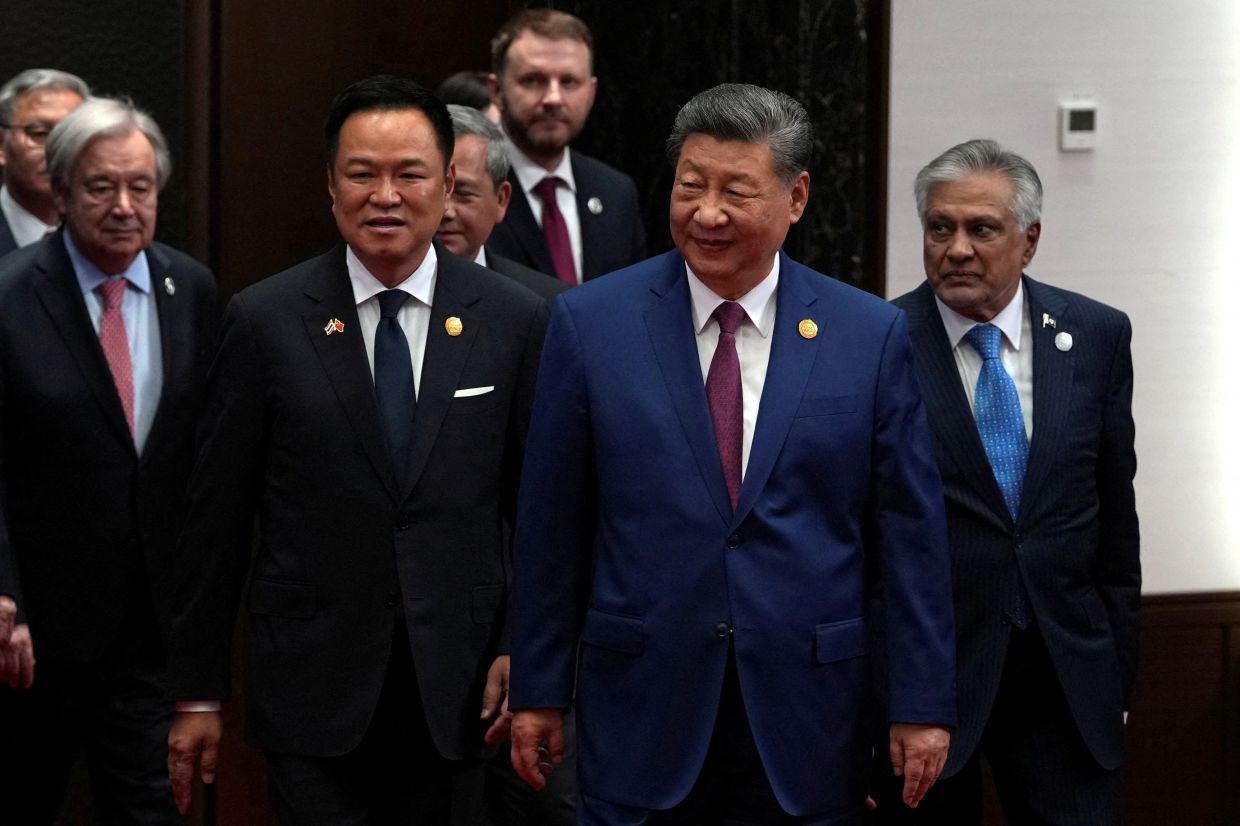
Thai Prime Minister Anutin Charnvirakul has adopted an unconventional approach to statecraft, performing a rendition of a Teresa Teng hit for Chinese Premier Li Qiang during a formal lunch in Beijing on Monday, marking the latest instalment in what observers have dubbed his musical diplomacy strategy. Video footage distributed by the Thai leader's office captured the moment Anutin sat alongside Li at an extended table, microphone in hand, while piano accompaniment played in the background and assembled guests clapped in time. The performance took place with Thai and Chinese flags displayed prominently, lending an official character to what might otherwise appear as informal entertainment.
This Beijing performance represents merely the most recent example in a deliberate pattern of musical engagement that Anutin has orchestrated across the region since assuming office in September, shortly before securing a decisive victory in February elections. The strategy reflects a calculated effort to project a persona that balances accessibility with adherence to Thailand's institutional traditions—a balance that has proven politically effective in the kingdom's still-conservative society. By engaging regional leaders through artistic performance rather than through conventional bilateral formalities, Anutin has created memorable moments that generate favourable media coverage while simultaneously demonstrating cultural confidence.
Earlier this month, Anutin demonstrated his musical versatility by joining Malaysian Prime Minister Anwar Ibrahim in a performance of "My Way", the Frank Sinatra standard. Rather than simply accompanying, Anutin took the saxophone while allowing his Malaysian counterpart the honour of singing the lead vocals—a gesture that subtly acknowledged Malaysia's role as the host while establishing Anutin's credibility as a capable musician. The choice of song itself carries symbolic weight, as its themes of independence and conviction align with the personal brand Anutin has cultivated since taking office.
His diplomatic outreach through music extended to Vietnam during a visit to Hanoi last month, when Anutin performed on a traditional Vietnamese instrument alongside local musicians in the presence of Prime Minister Le Minh Hung. These performances serve multiple strategic purposes: they generate positive diplomatic atmospherics, create informal moments that may facilitate candid discussions, and position Thailand as a culturally sophisticated nation comfortable asserting its identity within regional forums. For Southeast Asian leaders accustomed to formal state protocols and sometimes strained bilateral relations, Anutin's willingness to blur the boundaries between official ceremony and cultural expression provides welcome relief.
The Prime Minister's musical credentials extend beyond these high-profile diplomatic performances. Anutin maintains serious competence as a pianist and proficiency with the Thai flute, suggesting that his performances are not mere novelty acts but reflect genuine artistic interest. Additionally, he holds a pilot's license and operates his own jet, further establishing his image as a multifaceted individual rather than a conventional political operator. These pursuits, while sometimes dismissed as hobbies by critics, have become integral to his personal brand and have resonated with segments of the Thai public who view him as approachable despite his wealthy background.
The latter point merits examination, as Anutin's personal biography might otherwise create significant distance between himself and ordinary Thais. As the scion of a prominent construction dynasty, he inherited considerable wealth and privilege—circumstances that could readily alienate him from voters in a country with persistent wealth inequality and populist political currents. However, his deliberate cultivation of a populist image, encompassing everything from musical performances to association with entertainment personalities, has provided counterbalance to perceptions of elite detachment. Recently, Anutin has also collaborated with a Thai teenager who achieved international recognition through a viral performance on America's Got Talent, further cementing his association with contemporary popular culture and grassroots entertainment.
These musical performances also carry implications for Thailand's foreign policy direction, particularly regarding engagement with major powers. China has invested heavily in infrastructure projects throughout Thailand and maintains significant economic leverage over the kingdom. Through personal engagement at the highest levels—particularly engagement framed through culture rather than explicit negotiation—Anutin signals receptiveness to Chinese interests while avoiding the appearance of capitulation. Music provides diplomatic cover, allowing substantive discussions to occur alongside cultural performance. Similarly, engagement with Malaysia and Vietnam positions Thailand as a country comfortable operating within ASEAN frameworks while simultaneously maintaining individual bilateral relationships with key partners.
The strategic deployment of music for diplomatic purposes is not entirely novel in Asian statecraft, yet Anutin has elevated it to unusual prominence as a consistent practice rather than occasional occurrence. His approach reflects an intuitive understanding that contemporary diplomacy, particularly among nations with shared cultural heritage across Southeast Asia, benefits from humanising exchanges that transcend the formal statement and bilateral communiqué. By performing rather than merely discussing, Anutin creates moments of genuine connection that penetrate media coverage in ways traditional state visits frequently fail to achieve.
Moreover, these performances serve a domestic audience as effectively as international audiences. Thais, particularly younger demographics connected to social media, have circulated footage of their Prime Minister performing with regional counterparts and international celebrities. This visibility builds a narrative of Thailand as a culturally confident nation whose leaders operate comfortably on regional and global stages. For a country navigating periodic political instability and occasional international criticism regarding governance, such positive cultural optics provide valuable soft power assets that enhance Thailand's regional standing independent of any single policy achievement.

