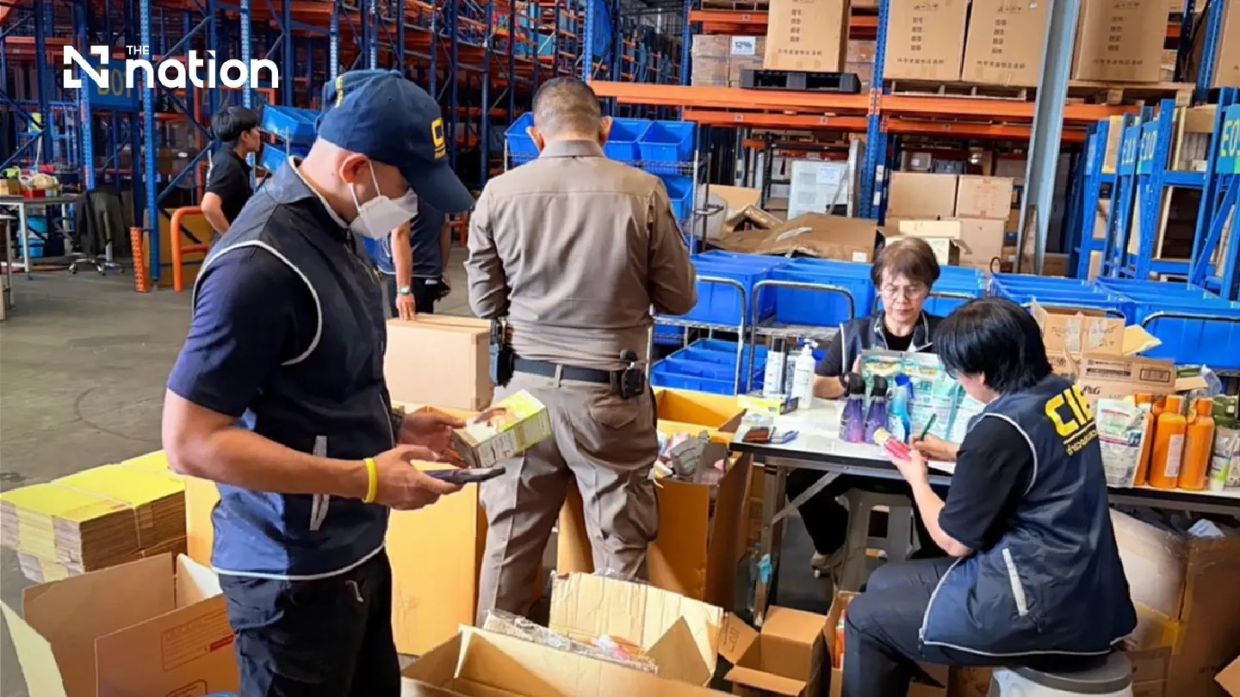
Thai authorities have cracked down on a sprawling underground distribution network supplying unapproved Japanese products to hundreds of online retailers, confiscating more than 83,000 items in a coordinated warehouse raid in Samut Prakan province. The operation, conducted by the Consumer Protection Police Division under the direction of Pol Maj Gen Kongkrit Lertsittikul, targeted a facility in Bang Phli district that had been systematically processing and distributing cosmetics, dietary supplements, and medicinal products lacking proper Thai regulatory approval. The seized cache, comprising 116 different product types valued at 8.34 million baht, represents a significant blow to what investigators believe is a much larger illicit trade in unregulated Japanese imports flowing through Thailand's e-commerce ecosystem.
The warehouse had evolved into a sophisticated logistics hub servicing multiple online sellers simultaneously, a model that enabled rapid distribution while maintaining anonymity. According to police findings, the facility processed between 200 and 300 items daily for shipment to various digital platforms, charging packing fees of 10 to 12 baht per box. This industrial-scale operation had apparently flourished undetected for more than four years, suggesting serious gaps in monitoring of third-party logistics providers and warehouse facilities that facilitate e-commerce fulfillment across Thailand.
The investigation traced the products back to Japanese imports that had bypassed mandatory safety inspections, regulatory certifications, and Thai-language labelling requirements—fundamental safeguards designed to protect consumers from potentially harmful substances. Cosmetics, supplements, and medicines require strict verification protocols before entering Thailand's market, particularly given the health risks posed by unvetted pharmaceutical ingredients and cosmetic formulations. The absence of Thai-language packaging compounds the danger, as consumers cannot access crucial information about ingredients, contraindications, dosage instructions, or warning labels in their native language.
Initial complaints to authorities highlighted a troubling pattern: numerous online sellers were advertising cosmetics, supplements, medicinal products, and household hazardous substances without proper labelling or documentation. These complaints triggered an investigation that proved far more extensive than initially suspected, eventually leading police to seek court authorization for the warehouse inspection. The systematic nature of the operation—dedicated storage, regular processing, and integrated packing operations—indicated that this was no minor smuggling enterprise but rather a professionally managed distribution centre with established relationships among suppliers, warehouse operators, and online merchants.
For Southeast Asian readers, this case illustrates vulnerabilities in regional e-commerce infrastructure that criminals exploit for profit. Thailand's experience mirrors challenges Malaysia and other ASEAN nations face with counterfeit and unapproved products circulating through online channels. The rapid growth of cross-border e-commerce, while economically beneficial, has created enforcement blind spots where products slip through without proper scrutiny. Warehouse facilities offering generic storage and packing services, particularly those operating at scale with minimal oversight, represent critical chokepoints where authorities can intervene to disrupt illicit supply chains.
The legal pathway forward involves prosecutions under Thailand's Cosmetics Act, Hazardous Substances Act, Food Act, and Drug Act—a multi-statute approach reflecting the complexity of the seized goods and the breadth of regulatory violations. Those charged face potential liability for knowingly importing prohibited items, failing to maintain required certifications, and distributing potentially dangerous products to consumers. The severity of these charges signals Thai authorities' determination to prosecute not merely the warehouse operators but upstream importers and downstream online sellers complicit in the distribution network.
The economic dimensions merit scrutiny alongside consumer protection concerns. Japanese cosmetics and supplements enjoy strong brand reputation and consumer demand throughout Southeast Asia, creating pricing advantages for legitimate products but also incentives for counterfeiting and illegal importation. The eight million baht value of seized goods—a single warehouse operation over an unspecified period—suggests this illicit trade represents meaningful lost customs revenue and market share for legitimate importers and retailers operating within regulatory frameworks.
The four-year operational history is particularly telling about enforcement capacity and coordination challenges. A facility processing hundreds of items daily, maintaining dedicated staff, and conducting regular packing operations should theoretically have attracted attention from tax authorities, labour inspectors, or customs officials. That it apparently operated beneath regulatory radar for years indicates insufficient inter-agency intelligence sharing, limited resources for monitoring commercial warehouse districts, or vulnerability to corruption among local officials. This represents a systemic weakness that criminals will continue exploiting until Thailand strengthens coordination mechanisms and increases inspection frequency in warehouse-heavy districts like Bang Phli.
Consumer safety implications extend beyond individual health risks to broader confidence in e-commerce platforms and online merchants. When unapproved products circulate freely, legitimate sellers face unfair competition from unscrupulous competitors operating outside regulatory costs. Consumers lack reliable mechanisms to verify product authenticity or regulatory status before purchase, particularly vulnerable segments such as elderly individuals seeking health supplements or young consumers purchasing cosmetics based on influencer recommendations. The warehouse's supply relationship with multiple online platforms suggests that dozens or potentially hundreds of sellers unknowingly participated in distributing illegal goods, creating reputational and legal exposure for merchants unaware of the provenance of products they were reselling.
Police investigations into the warehouse have expanded to identify upstream suppliers and downstream retailers, recognising that the facility itself represents merely one node in a broader import-distribution-retail network. Tracing the supply chain backwards toward importers and Japanese suppliers requires cross-border cooperation, as does identifying the individuals who coordinated procurement and logistics. The downstream challenge of tracking online sellers who purchased from this warehouse involves coordination with digital commerce platforms, which increasingly face pressure to police content and transactions occurring on their services.
For Malaysian and other regional authorities, this case provides valuable intelligence about operational patterns and vulnerability points in transnational product trafficking networks. The warehouse model—combining import consolidation, storage, processing, and fulfillment services—enables efficient distribution of illegal goods while maintaining distance between importers and retail-level sellers. Replicating Thai authorities' approach requires building capacity for systematic warehouse inspections, establishing inter-agency task forces focused on e-commerce supply chain risks, and implementing technology-enabled tracking of suspicious product movements across borders and through logistics networks.

