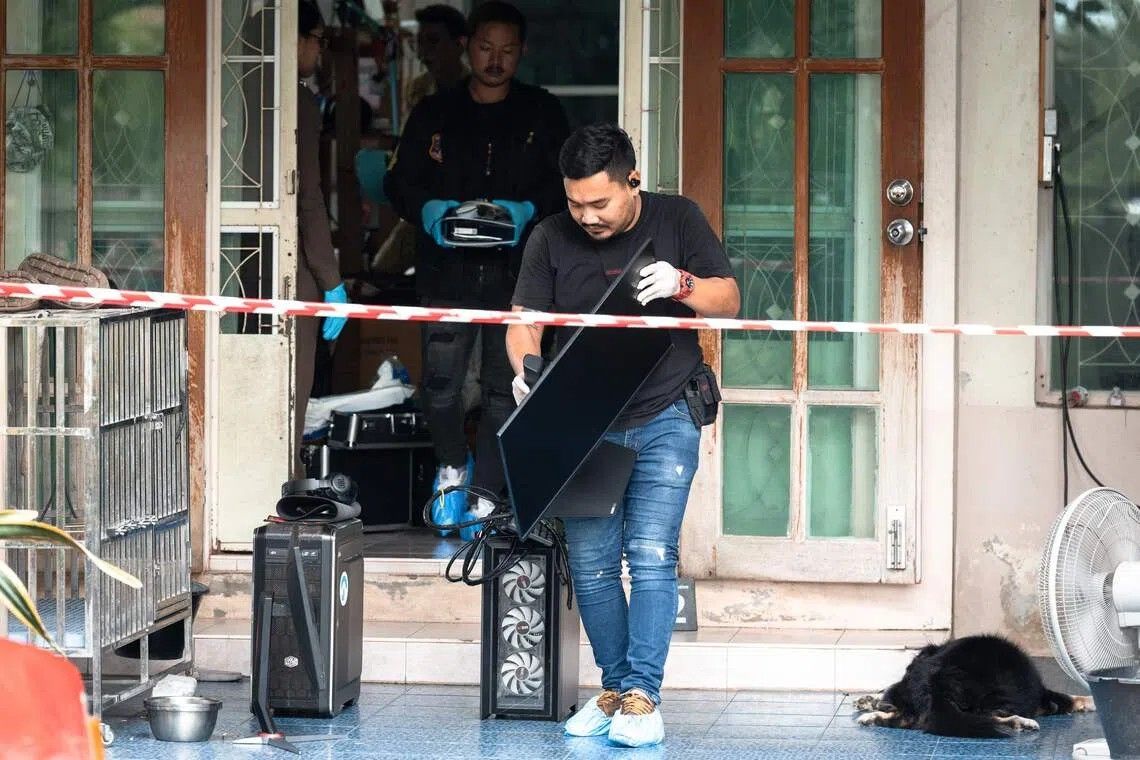
Thai police have launched a detailed investigation into the digital footprint of a teenage suspect in the fatal shooting at Debsirin Nonthaburi School, uncovering evidence that he had searched for information about American school shootings and spent considerable time immersed in violent video games. The discovery has become a central focus of investigators attempting to understand what factors may have contributed to the tragic incident on August 7, though authorities have cautioned that no definitive link has been established between the online content and the actual attacks.
The investigation has revealed a deeply troubling sequence of events. Police believe the 14-year-old suspect killed his grandparents at their home in Bang Khu Rat subdistrict, Bang Bua Thong district, before making his way to the school where the shooting subsequently took place. Officers and forensic teams discovered the grandparents' bodies after entering the locked property, with the front door having been secured from the outside following the deaths. The teenager apparently left the house after the killings and travelled to the school, where the violence escalated further that morning.
Wattana Yichin, commissioner of Provincial Police Region 1, personally oversaw the inspection of the grandparents' residence as part of the broader investigative effort. The examination of the crime scene and the subsequent analysis of evidence found there have become crucial elements in attempting to reconstruct the timeline and circumstances leading to the attacks. Forensic teams have worked methodically to piece together what transpired within the home before the teenager's departure for the school.
Computerised records have become increasingly important to the investigation, with authorities closely examining the teenager's digital behaviour in the weeks preceding the incident. Preliminary analysis identified searches and online research concerning US school shootings dating back approximately to July 30, suggesting a period of weeks during which the suspect was consuming this material. The same examination also revealed substantial engagement with computer games featuring violent content, though investigators remain cautious about drawing causal connections. The police have explicitly stated they have not yet established that either the gaming activities or the search history directly caused or motivated the attacks, instead treating them as potential factors among several others that warrant examination.
The investigation continues to explore multiple possible contributing circumstances. Officers are investigating whether difficulties involving the teenager at school, relationship problems, or other personal stressors may have played a role. According to information provided by the teenager's uncle to authorities, the boy had resided with his grandparents since early childhood and had developed a pattern of social isolation, spending considerable time engaged with computer games and generally avoiding interaction with others. The relative indicated no awareness of significant disputes, family tensions, or observable warning signs of psychological distress prior to the incident, complicating efforts to identify precipitating factors.
The firearm used in the shooting was legally registered to the teenager's grandfather, according to police records. This detail raises questions about weapon storage and access within the household, though investigators have not yet publicly detailed how the teenager obtained the gun or whether any safeguards that should have been in place were compromised. The legal ownership of the weapon by the grandfather creates additional dimensions to the investigation, as authorities examine whether any oversight or negligence occurred regarding the storage and security of the firearm within the home.
Thananyaporn, 60, the younger sister of the deceased grandfather and an aunt to the suspect, has provided family perspective on the teenager's circumstances and personality. She confirmed that the boy had lived with his grandparents throughout his childhood following his parents' separation, with his grandparents assuming full responsibility for his upbringing. She characterised the family relationship as deeply affectionate, describing how his grandfather, a former bank manager, would transport him to and from school daily whilst treating him with gentleness and care. The grandmother worked as a teacher, and both grandparents clearly invested considerable love and attention in raising the teenager.
According to Thananyaporn, the teenager exhibited markedly introverted behaviour compared to his peers. He rarely ventured outside the home, maintained no established peer group, and did not engage in the typical social activities and recreational pursuits that most children his age would pursue. Instead, he remained at home where his recreational time was dominated by computer gaming. This pattern of isolation was apparently accepted and accommodated by his grandparents, who structured their lives around his needs and preferences, yet it may have contributed to deeper psychological issues that went unrecognised or unaddressed.
The aunt emphasised her disbelief that family conflict could have motivated the violence, given the closeness and affection she observed among the three. She portrayed the grandfather as a gentle, caring figure and the grandmother as a dedicated educator, both individuals deeply invested in their grandson's wellbeing. From her perspective, the family circumstances provided no obvious explanation for such a drastic and tragic turn of events, suggesting that whatever psychological or emotional factors may have contributed to the violence originated elsewhere or developed silently within the teenager's mind without visible manifestation to those around him.
This case presents particular challenges for Thai law enforcement and child welfare professionals seeking to understand how a teenager raised in what appeared to be a caring, stable environment could commit such acts. The absence of detected warning signs despite the suspect's documented isolation and immersion in violent digital content suggests either that warning indicators were present but not recognised, or that the teenager's psychological deterioration occurred internally without external manifestation. For Malaysian and Southeast Asian societies grappling with similar concerns about youth exposure to violent media and the mental health of isolated adolescents, the investigation underscores the complexity of predicting and preventing such tragedies, even in seemingly protective family environments.
As the investigation proceeds, Thai authorities remain focused on establishing the precise sequence of events and determining what combination of factors, if any, contributed to the attacks. Police have indicated that while the online searches and gaming history merit examination, they represent only one potential element within a larger investigative framework. The case highlights ongoing regional concerns about youth mental health, social isolation, and the role of digital media consumption in the lives of adolescents, questions that extend far beyond Thailand's borders and demand serious consideration from policymakers and child welfare advocates across Southeast Asia.

