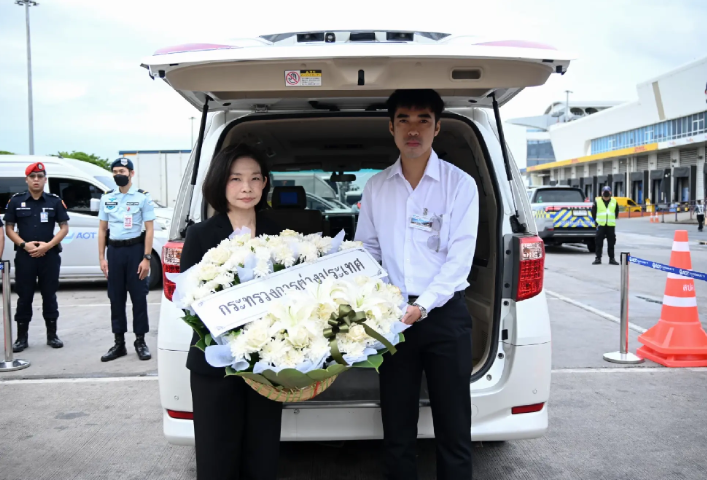
Thailand's Ministry of Foreign Affairs has successfully arranged the return of the remains of Bavorntat Pengsuk, a prominent travel content creator better known online as 'Hlun Solo', who died in Tbilisi, Georgia last month. The repatriation marks the conclusion of weeks of diplomatic coordination between Thai authorities, Georgian officials, and the deceased's family to bring the young vlogger home for final rites.
Jaithai Upakarnitikaset, spokesperson for the Foreign Ministry and director-general of its information department, announced the development on Thursday that the body had been successfully repatriated. Deputy Prime Minister and Foreign Minister Sihasak Phuangketkeow designated Prathuangtip Sirivithes, the acting director-general of the Department of Consular Affairs, to personally oversee all arrangements surrounding the arrival of Bavorntat's remains and coordinate with the family during this sensitive period.
Bavorntat, who was 27 years old at the time of his death, passed away on 14 July 2026 in the Georgian capital. The circumstances surrounding his death prompted immediate intervention from Thai diplomatic channels, reflecting the government's commitment to safeguarding citizens abroad and facilitating their return during emergencies. The Royal Thai Embassy in Ankara, which oversees Thai diplomatic interests in the broader Caucasus region, became the focal point for coordinating the repatriation effort once notification of the incident was received.
From the moment the embassy learned of Bavorntat's death, consular staff maintained continuous communication with multiple stakeholders including his immediate family members, Georgian government agencies, and law enforcement authorities investigating the circumstances. This multi-party coordination proved essential to navigating the administrative and logistical complexities inherent in international repatriation cases. Thai embassy personnel were rapidly dispatched to Tbilisi to provide on-the-ground support, addressing obstacles that initially delayed the process and ensuring that all necessary documentation and procedural requirements were fulfilled according to both Thai and Georgian legal standards.
The case highlights challenges that periodically confront countries with citizens traveling or living abroad, particularly young people engaged in content creation across unfamiliar territories. Travel vlogging, a globally popular pursuit among younger demographics seeking both adventure and online income, carries inherent risks that are sometimes underestimated by participants or their families. Bavorntat's tragic circumstances underscore the potential vulnerabilities faced by individual content creators operating independently in foreign environments, often without the institutional support structures available to traditional media organizations.
Following the arrival of the remains in Thailand, Bavorntat's family made the decision to commission a comprehensive forensic examination to establish the precise medical and circumstantial causes of death. This examination, conducted domestically according to Thai procedures and standards, will provide the family and authorities with definitive answers regarding the incident and may inform any ongoing investigations by Georgian officials. The results will be crucial for the family's understanding of what transpired and could potentially have implications for broader travel safety awareness within Thailand's content creation community.
Once all medical, legal, and administrative procedures are finalized, the remains will be transported to Somdet district in Kalasin province, Bavorntat's home region in northeastern Thailand. There, his family will conduct traditional Buddhist funeral ceremonies in accordance with Thai cultural and religious practices. These rites represent not merely a final farewell but also an opportunity for his community to mourn collectively and reflect on his life, achievements, and the unexpected loss that has affected those who knew him and followed his online content.
The repatriation operation, though ultimately successful, encountered earlier complications that required the Thai embassy to apply diplomatic pressure on Georgian counterparts to expedite processing. Such delays in international repatriation cases are not uncommon, stemming from bureaucratic procedures, language barriers, coordination challenges between national systems, and the need for thorough investigations before remains can be released. The Ministry of Foreign Affairs' willingness to escalate the matter and maintain persistent engagement with local authorities demonstrates the priority placed on supporting Thai nationals in distress abroad, a responsibility that extends across all diplomatic missions regardless of the destination country's proximity or profile.
Bavorntat's death has rippled through Thailand's online content creation ecosystem, where travel vlogging represents a significant and growing segment. His case serves as a sobering reminder of the risks inherent in solo travel to unfamiliar destinations, particularly in regions where language barriers, unfamiliar legal systems, and limited social networks may complicate emergency response. For families of content creators similarly engaged in international travel documentation, the incident underscores the importance of maintaining regular contact, sharing itineraries, and having contingency plans in place should unexpected circumstances arise.

