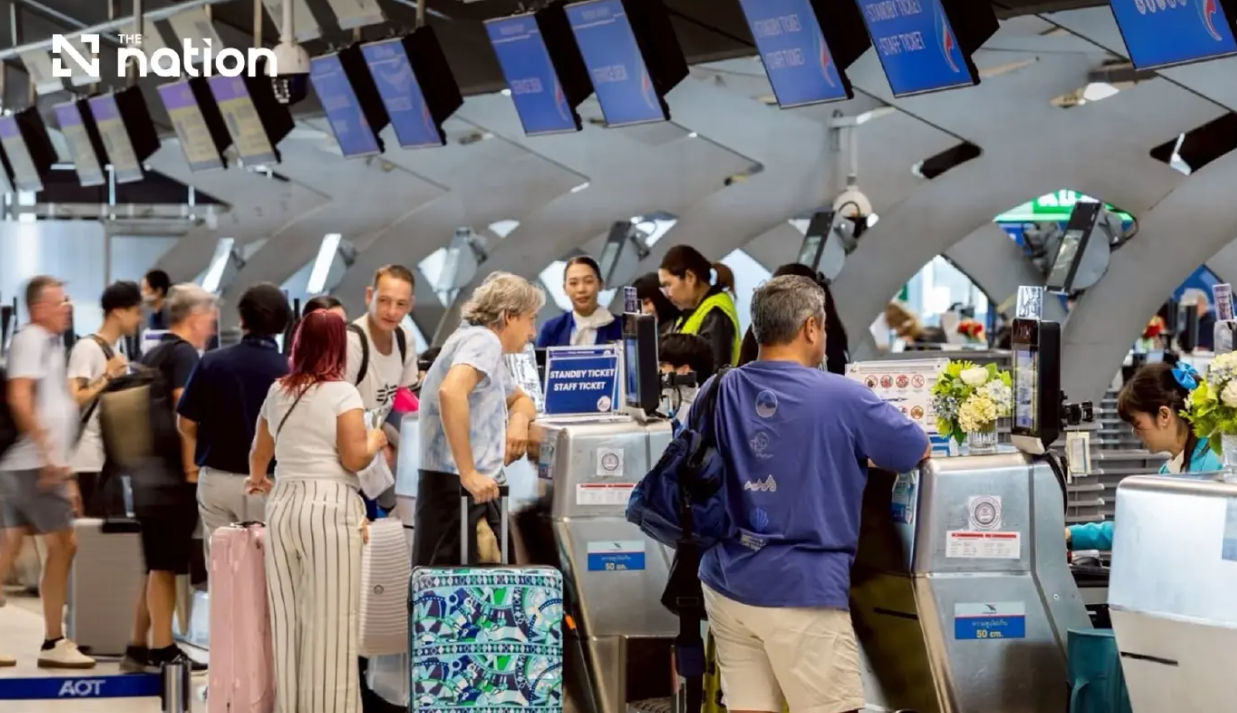
Thailand is moving forward with a two-pronged tourism strategy designed to stimulate domestic spending while generating revenue from international arrivals. The government plans to launch the Thai Travel Thai Plus domestic subsidy programme in September and is simultaneously developing a fee structure for foreign visitors that would channel funds into a dedicated tourism promotion account. Tourism and Sports Minister Surasak Phancharoenworakul outlined both initiatives at a government economic subcommittee meeting, signalling Bangkok's commitment to revitalising the tourism sector through coordinated spending incentives and infrastructure investment.
The domestic subsidy scheme represents a significant attempt to distribute tourist spending more equitably across Thailand's economy. With a preliminary budget of 1.75 billion baht and 500,000 available entitlements, the four-month programme would operate through Krungthai Bank's Pao Tang digital application, reaching Thai citizens with direct spending support. The government would cover half of eligible expenses, with a ceiling of 3,000 baht per entitlement and participants able to claim up to five allocations each. This structure could theoretically inject more than 26 billion baht into the tourism economy, according to ministerial projections, though the exact funding mechanism remains under negotiation between the Tourism and Sports Ministry and the Finance Ministry.
What distinguishes Thai Travel Thai Plus from previous stimulus attempts is its broad sectoral coverage. Rather than concentrating subsidies on dining and accommodation as earlier versions contemplated, the revised scheme now encompasses admission fees to tourist attractions, guided tours, car rentals, community merchandise and tourism-related products nationwide. This expansion reflects feedback from private sector representatives and aims to benefit smaller operators and community-based tourism enterprises that might otherwise be bypassed by concentrated visitor spending. The voucher component attached to each entitlement will increase from 500 to 1,000 baht, providing greater flexibility for participants and spreading economic benefits across provincial tourism networks.
The timing of the September launch during Thailand's Green Season carries strategic significance for regional tourism patterns. The monsoon season typically draws fewer international visitors, making it an opportune moment to encourage domestic travel when accommodation and attractions would otherwise operate below capacity. This demand management approach could stabilise employment in tourism-dependent communities and provide economic relief to smaller operators during traditionally slower months. The ministry envisions the initial four-month phase as a pilot, with potential expansion into subsequent phases contingent on positive economic indicators and public uptake.
Simultaneously, the proposed foreign visitor fee represents a longer-term revenue strategy with implications for Thailand's competitive positioning in Southeast Asian tourism. While no specific fee level or collection mechanism has been announced, the revenue stream would address three identified policy objectives: developing new and existing tourist attractions particularly in secondary cities branded as "Must-Visit Cities", establishing comprehensive visitor insurance and safety protection frameworks, and funding environmental restoration projects in areas affected by tourism pressure. This aligns with growing international concern about overtourism and environmental degradation in popular destinations.
The foreign visitor fee proposal enters a complex regional landscape where competing Southeast Asian nations employ varying tourist taxation approaches. Malaysia, Indonesia and Vietnam have implemented or considered similar mechanisms, though implementation methods and fee structures differ considerably. Thailand's approach would need careful calibration to avoid deterring visitors while generating meaningful revenue. The absence of a specified implementation date suggests the government recognises the need for stakeholder consultation and international competitive analysis before finalisation.
Minister Surasak's emphasis on visitor safety and destination development reflects shifting Thai tourism priorities beyond simple arrival numbers. The strategy acknowledges that sustainable tourism depends on infrastructure quality, personal security assurance and environmental preservation. By bundling these concerns into a foreign visitor fee framework, the government signals commitment to addressing overtourism challenges that have affected flagship destinations like Phuket and Krabi. Secondary city development, meanwhile, offers potential economic redistribution away from concentrating tourism wealth in Bangkok and coastal regions.
The governance structure supporting these initiatives demonstrates coordinated policymaking across multiple ministries. Deputy Prime Minister Suphajee Suthumpun chaired the subcommittee meeting, with involvement from the Commerce Ministry, Culture Ministry and various agency representatives. This interagency coordination suggests the tourism initiatives form part of broader economic policy rather than sectoral initiatives operating in isolation. The establishment of a Creative Economy and Visitor Economy working group chaired by Weerasak Kowsurat indicates sustained institutional focus on tourism competitiveness and innovation.
Implementation challenges remain substantial, particularly regarding programme financing and operational details. The preliminary 1.75 billion baht budget would rely on government borrowing, raising questions about fiscal sustainability should the programme extend beyond the initial four-month period. Discussions about private sector participation conditions and operator eligibility requirements continue, suggesting finalisation of programme mechanics remains incomplete despite the September launch timeline. The ministry's stated expectation of clearer conclusions within a week indicates time pressure to resolve outstanding technical and financial questions.
For Malaysian observers, Thailand's dual strategy offers instructive comparisons with domestic tourism approaches. Malaysia's own regional competitiveness depends partly on understanding how neighbouring nations deploy subsidy programmes and visitor fees. The success or failure of Thai Travel Thai Plus in stimulating off-season domestic tourism and the effectiveness of any implemented visitor fee in balancing revenue generation with tourist volume preservation will inform regional policy discussions. Thailand's emphasis on secondary city development and community-benefit tourism also reflects broader Southeast Asian shifts toward more inclusive and sustainable tourism models rather than concentration-focused approaches that previously dominated the region.
The government's commitment to removing regulatory obstacles and achieving "quick win" results within six to twelve months indicates pressure to demonstrate visible tourism sector improvements amid broader economic challenges. The targeting of measures not requiring legislative amendments suggests pragmatic acknowledgement of Thailand's political complexities and parliamentary constraints. This bottom-up approach through administrative action rather than legislative reform may accelerate implementation but potentially limits the depth of structural tourism transformation achievable within the stated timeframe.
Looking ahead, Thailand's tourism strategy reflects evolving global conversations about tourism's role in sustainable development and equitable economic distribution. The combination of domestic spending stimulation and foreign visitor fee revenue generation attempts to balance short-term economic stimulus with long-term destination management and infrastructure investment. Success depends on effective programme administration, realistic visitor fee calibration that maintains competitiveness, and genuine distribution of benefits to smaller operators and communities as policy documents promise. For Thailand's tourism-dependent economy and the broader Southeast Asian region, the coming months will test whether these coordinated initiatives can achieve their ambitious objectives.

