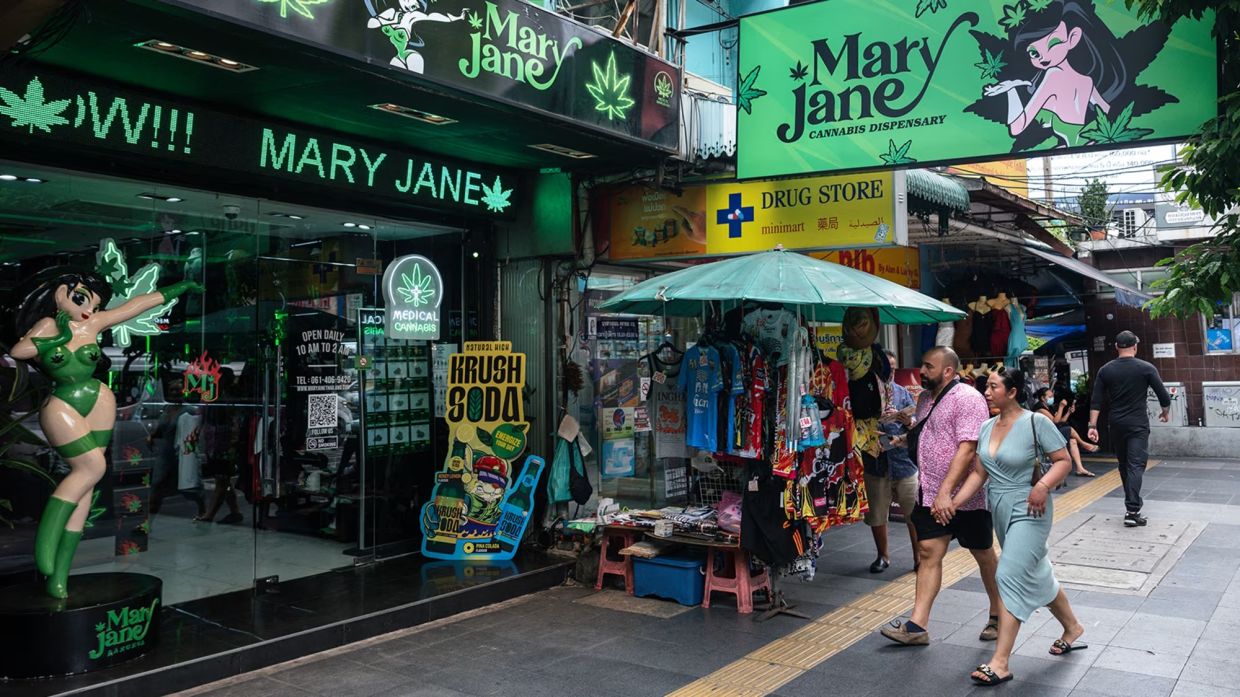
Thailand's cannabis regulatory framework is undergoing intense review as lawmakers confront the consequences of liberalisation, wrestling with a fundamental tension between economic opportunity and public health protection. The House Public Health Committee convened on June 18 to assess whether cannabis should return to the narcotics list while comprehensive legislation is drafted, highlighting deep disagreements over how to manage a sector that has grown chaotically since restrictions were eased three years ago.
The debate reflects Thailand's struggle to construct a coherent cannabis policy in the absence of enabling legislation. When the country decriminalised cannabis in June 2022, it did so without a dedicated regulatory framework, leaving the substance in legal limbo. Currently managed under the Protection and Promotion of Thai Traditional Medicine Wisdom Act 1999, cannabis exists in regulatory purgatory—neither fully legalised nor properly controlled. The Department of Thai Traditional and Alternative Medicine oversees cannabis as a controlled herb, while cannabis extracts with more than 0.2 percent THC remain classified as narcotics under separate laws. This fragmented approach has created significant compliance challenges and enforcement gaps that have allowed unregistered cultivation and informal sales networks to flourish across the country.
Medical professionals and public health advocates argue compellingly for immediate reclassification as a temporary measure to impose order before permanent legislation arrives. Dr Tewan Thaneerat from the Department of Thai Traditional and Alternative Medicine acknowledged persistent concerns since liberalisation, noting that the government has attempted to address these through regulations issued in June 2025 governing research, sales, processing and exports. However, these administrative measures have proven insufficient to contain underground activity. Ekkapop Sittiwantana, representing the People's Party on the committee, specifically highlighted how unregistered cultivation and direct informal sales have proliferated, creating gaps that opportunistic businesses exploit. He proposed mandatory plant registration as a mechanism to close regulatory loopholes and bring the sector into formal oversight.
Associate Professor Dr Smith Srisont, representing a coalition of doctors, academics and community organisations focused on drug harm prevention, presented further evidence of the system's weaknesses. He noted that while cannabis flowers are classified as controlled herbs requiring oversight, other plant components fall outside criminal regulation when cultivated, allowing producers to circumvent restrictions through strategic harvesting. The tiered approach to different plant parts has created absurd situations where farmers can legally grow the entire plant but face restrictions only on specific components—a distinction easily circumvented through creative harvesting and processing. Srisont advocated for returning cannabis to narcotics classification first, then developing a separate regulatory statute, arguing this sequencing would prevent further deterioration while permanent protections are constructed.
The Food and Drug Administration outlined its current supervisory regime, comprising three main licensing categories: production facilities and processing plants, import authorisation, and retail sales permits for certified shops and products. The agency reported that most inspected cannabis products meet labelling standards and contain appropriate raw materials, suggesting the regulatory infrastructure functions reasonably well for entities willing to comply. However, the FDA acknowledged the fundamental problem: significant cannabis distribution channels operate entirely outside the legal system. This informal sector represents the genuine threat—not licensed operators attempting to work within regulations, but underground networks that evade inspection, taxation and quality controls entirely.
Cannabis industry representatives and advocacy networks presented a starkly different perspective on the policy dilemma. The Thai Cannabis Future Network argued that legalised operators face impossible competitive conditions, struggling against both black market alternatives and illegal imports that undercut prices while avoiding regulatory costs. They further alleged that some officials demand unofficial payments or create pressure linked to cannabis licensing decisions, adding layers of uncertainty and corruption to the business environment. The network raised serious concerns about medical prescription requirements that farmers cannot afford or access outside healthcare facilities, creating artificial barriers that force compliance costs onto small cultivators while enriching intermediaries.
The network contends that cannabis possesses value beyond pharmaceutical applications, encompassing traditional and economic dimensions that merit recognition. They called for regulations developed through genuinely inclusive public participation rather than frameworks designed primarily to favour large corporate investors with capital to navigate complex compliance regimes. This argument has particular resonance for Thailand's agricultural sector, where cannabis cultivation offers farmers alternative income in an era of declining commodity prices. Small-scale farmers who invested in legal cultivation legitimately now face business extinction if regulations shift unpredictably, creating legitimate grievances about government reliability and fairness.
The timing of this policy review carries significant implications for regional cannabis regulation. Thailand has positioned itself as a potential regional hub for medical cannabis research and production, capitalising on first-mover advantage in Southeast Asia. However, incoherent domestic regulation undermines international credibility and investment confidence. If the government vacillates repeatedly between liberalisation and restriction, companies will seek alternatives in jurisdictions offering clearer frameworks. Malaysia, with growing interest in medicinal cannabis, watches Thailand's regulatory evolution closely to extract lessons about what works and what creates unnecessary friction.
Chairman Sakoltee Phattiyakul concluded the meeting by directing officials to compile comprehensive registries of licensed cannabis retailers and FDA-certified products across Bangkok. He emphasised that cannabis has become excessively accessible and insisted that future legislation must establish minimum distances between retailers and educational institutions—a standard provision in mature cannabis markets internationally. The committee requested broader epidemiological studies examining cannabis-related harms and affected populations, suggesting that evidence-based policymaking may yet override ideological positions.
The government has positioned a new cannabis and hemp bill as the solution to current regulatory dysfunction. Originally submitted to the Cabinet under the previous administration before Parliament dissolved, the draft is now undergoing public consultations expected to conclude by late July before resubmission to Cabinet. The Public Health Ministry remains committed to advancing this legislation, viewing it as essential to establishing coherent rules governing cultivation, processing, sales and exports aligned with international standards. However, the legislative process itself has become a test of political will, as competing interests—farmers, businesses, medical professionals, enforcement agencies and public health advocates—mobilise to shape provisions favouring their constituencies.
The fundamental challenge confronting Thai policymakers involves balancing legitimate but conflicting interests without creating new distortions. Farmers invested in cultivation face ruin if regulations shift drastically. Businesses that attempted legitimate operation require legal certainty and competitive fairness against informal competitors. Public health authorities require mechanisms to prevent youth access and monitor adverse effects. International trading partners demand standards ensuring product safety and quality. Resolving these tensions requires legislation sufficiently detailed to address real-world complexity yet sufficiently flexible to adapt as experience accumulates. Thailand's ability to construct such a framework will significantly influence not only its own cannabis sector but regional attitudes toward medicinal plant regulation across Southeast Asia.
The stakes extend beyond simple economics or public health metrics. Thailand's cannabis policy review represents a crucial moment in determining whether Southeast Asian governments can regulate emerging sectors effectively, balancing innovation with protection, economic opportunity with public welfare. The next legislative iterations will reveal whether Thailand's approach serves as a model for neighbouring countries contemplating similar regulatory questions, or becomes a cautionary tale of regulatory chaos born from inadequate initial planning.

