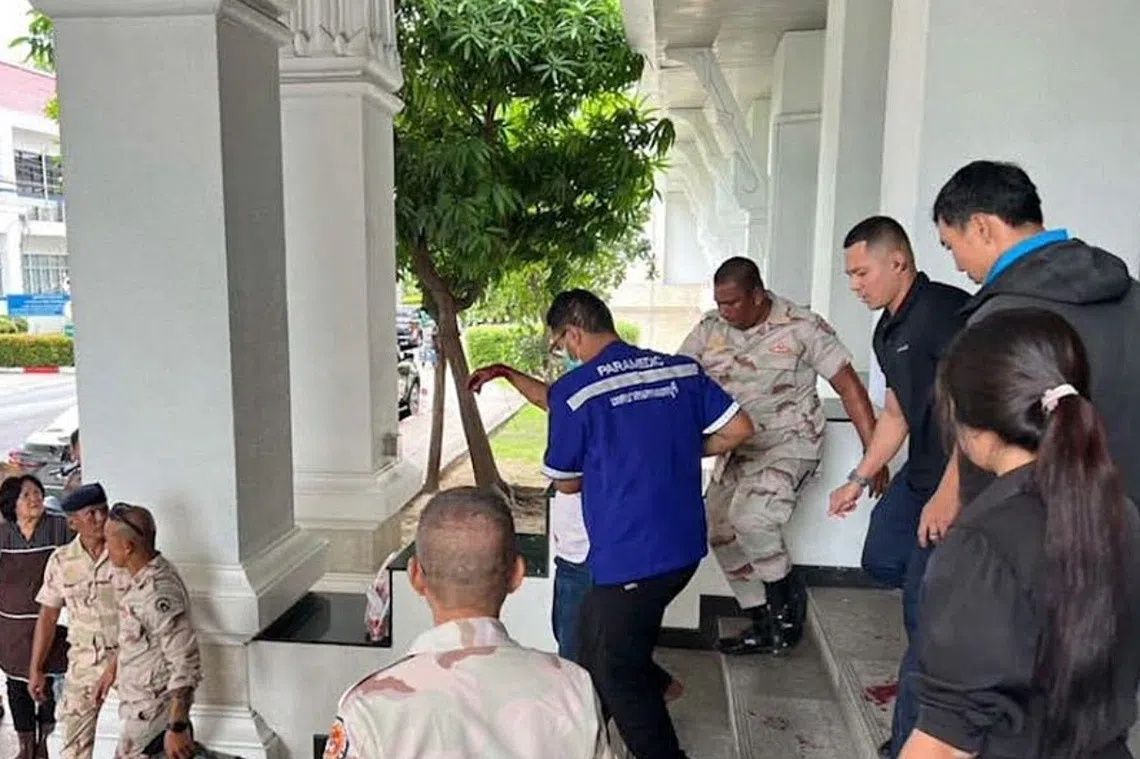
Thailand's battle with gun violence intensified on Monday when an armed individual discharged a firearm at a local government office on the periphery of Bangkok, leaving two people wounded and forcing fresh discussions about the nation's approach to firearms regulation. The incident occurred barely three days after a teenager's devastating rampage at Debsirin Nonthaburi School claimed nine lives and wounded more than twenty others, marking Thailand's deadliest mass shooting event in nearly four years and sparking renewed scrutiny of the ease with which firearms can be obtained and used in the country.
Authorities swiftly responded to the Monday shooting, with the provincial police commander, Major General Dejrapee Kongdee, confirming that the suspected gunman—identified as a former lawmaker—had been arrested at the scene. The attack targeted a senior provincial official and his driver, both of whom sustained injuries during the incident. Officials transported the two wounded men to nearby hospitals for emergency treatment, though neither injury was reported as life-threatening. The rapid arrest suggests security protocols at government facilities may have been heightened following the school shooting earlier in the week, though questions remain about how the assailant gained access to the premises while armed.
The Friday shooting at the school in Nonthaburi Province remains the focal point of national concern and policy debate. A fourteen-year-old student allegedly first opened fire on his grandparents before arriving at the school campus and initiating a shooting spree that left nine people dead and wounded over twenty others. The teenager subsequently turned the weapon on himself, ending the rampage but leaving Thailand confronting uncomfortable questions about youth access to firearms, mental health support systems, and the proliferation of weapons throughout the country. The incident represents a significant tragedy for Thai society, which has experienced relatively limited mass shooting events compared to some neighbouring regions but nonetheless grapples with intermittent armed violence.
The timing of Monday's incident has amplified the urgency of the national conversation surrounding firearm regulation. Prime Minister Anutin Charnvirakul responded to Friday's school shooting by publicly reiterating his administration's intention to strengthen gun control measures, signalling that the government recognises both the immediate security concern and the broader policy vacuum that permits such incidents. The Prime Minister's commitment suggests legislative action may follow, though the specifics of potential reforms remain undisclosed. Thai governments have historically struggled to implement comprehensive gun control policies, partly owing to entrenched interests among licensed firearms owners and inconsistent enforcement of existing regulations.
Schools across the country attempted to resume normal operations on Monday despite the trauma of Friday's events, though heightened security measures became immediately visible. Many institutions implemented metal detectors at entrances and conducted secondary screening procedures for arriving students and staff, visual reminders of the new security consciousness gripping Thai education. These measures reflect both genuine concerns about potential copycat incidents and the psychological impact of mass violence on an entire generation of young people. Students, parents, and educators all confronted the reality that schools once considered safe havens were now potential targets, fundamentally shifting the social landscape and institutional culture surrounding childhood education.
The identity of the Monday gunman as a former lawmaker raises additional questions about how individuals with political backgrounds and connections navigate Thailand's firearms permitting process. Former elected officials may possess elevated social standing and networks that facilitate access to weapons, or conversely, their involvement in the second incident may be entirely coincidental. Nonetheless, the fact that someone with legislative experience participated in armed violence suggests that Thailand's approach to firearm licensing does not adequately screen for propensity to violence or changing behavioural red flags. The circumstances motivating the former lawmaker to open fire at the government office remain unclear, though investigating authorities will likely explore whether personal grievances, political disputes, or other conflicts underpinned the attack.
For Malaysia and other Southeast Asian nations observing Thailand's unfolding security crisis, the incidents underscore the importance of robust firearms regulations and mental health infrastructure. Thailand's experience demonstrates that even relatively stable countries with functioning institutions can experience sudden outbursts of gun violence when regulatory frameworks prove inadequate and warning signs go unheeded. Malaysian policymakers and security officials may view Thailand's situation as a cautionary example, particularly given Malaysia's own history of periodic armed incidents and the significant number of licensed firearms held by civilians and security personnel. The Thai government's stated commitment to tightening gun control offers a case study in how nations respond to mass violence, whether through genuine legislative reform or temporary symbolic gestures.
The regional implications extend beyond immediate security concerns to encompass questions about how governments balance individual rights with public safety, particularly when cultural traditions or economic interests advocate for firearms access. Thailand's relatively liberal approach to civilian gun ownership reflects historical, social, and political factors specific to the Thai context, yet the consequences of permissive regulation now demand reassessment. The school shooting and subsequent government office attack occur within a broader global context of mass violence prevention, where countries increasingly examine their own policies against international benchmarks and observed outcomes.
Investigating authorities face the dual challenge of establishing detailed facts about both incidents while simultaneously managing public anxiety and political pressure for immediate policy responses. The provincial police commander and other officials must conduct thorough forensic and witness-based investigations, determine the motivations driving both perpetrators, and identify any patterns or connections between the separate incidents. Additionally, they must recommend specific preventive measures to government leadership, balancing effectiveness against concerns about infringing upon established interests or civil liberties. The credibility of these investigations and the resulting policy recommendations will significantly influence public confidence in Thailand's institutional capacity to address gun violence.
Looking forward, Thailand's government faces mounting pressure to translate its stated intentions into concrete legislative and administrative measures. Potential reforms could include stricter background checks, mandatory psychological evaluations, enhanced licensing renewal procedures, restrictions on certain weapon categories, or requirements for secure storage of firearms. International examples from countries that have successfully reduced gun violence following mass shooting incidents may inform Thai policymaking, though cultural and institutional differences necessitate locally appropriate solutions. The challenge for Prime Minister Charnvirakul's administration involves implementing changes substantial enough to meaningfully reduce violence while navigating political opposition and stakeholder interests resistant to regulation.

