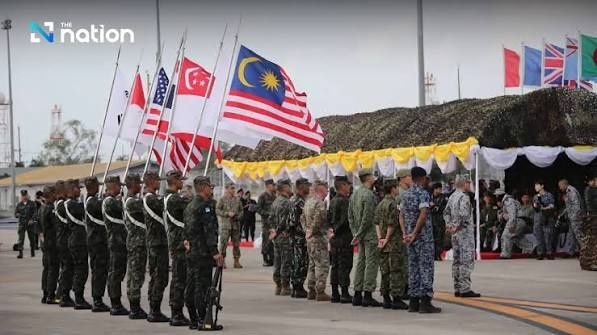
Thailand is adopting an unconventional negotiating stance by linking its military cooperation with the United States to the outcome of ongoing trade discussions. According to an official familiar with Bangkok's strategy, the Thai government plans to alert the Trump administration that imposing steep tariffs could necessitate a recalibration of defence ties, particularly regarding participation in joint military exercises. This approach represents an unusual move for Thailand, which typically separates security relationships from commercial negotiations.
The linkage is expected to feature in a counterproposal Thailand will submit when trade talks resume later this month. While the Thai government has deliberately kept the wording broad, the underlying message is explicit: if higher tariffs inflict substantial economic harm to Thailand's economy, the kingdom may need to reassess its commitment to shared military activities with Washington. This negotiating tactic underscores Bangkok's frustration with the current tariff environment and its determination to use all available levers to secure more favourable trade conditions.
Thailand's economic position provides genuine grounds for concern. The kingdom recorded a trade surplus of US$51.4 billion with the United States in the preceding year, making it among the most significant beneficiaries of bilateral trade flows in the region. The Trump administration's imposition of a 12.5 per cent tariff on most exports under Section 301 has created immediate pressure on Thai exporters and threatens broader economic stability. This burden falls particularly heavily on manufacturers who depend on American markets and have limited capacity to absorb higher costs without reducing employment or competitiveness.
In parallel with this leveraging strategy, Thailand has already tabled concrete trade proposals aimed at addressing American concerns. Bangkok has indicated willingness to eliminate tariffs on selected product categories and to adopt United States standards for imports of beef, lamb, and alcoholic beverages. These concessions reflect genuine efforts to find common ground and demonstrate flexibility. However, as the Trump administration continues its investigations into what it characterises as manufacturing overcapacity in strategic sectors, Thailand recognises that conventional tariff negotiations may prove insufficient to secure relief.
Thailand occupies a uniquely important position within the Asia-Pacific security architecture as one of only two formal treaty allies of the United States in Southeast Asia, the other being the Philippines. This distinction carries both advantages and constraints. The Thai-US alliance, rooted in decades of cooperation, has fundamentally shaped American military engagement throughout mainland Southeast Asia and remains central to Washington's strategic posture in a region where Chinese influence has expanded considerably. For Bangkok, this deep historical relationship represents significant diplomatic currency that should theoretically warrant preferential trade treatment.
Commerce Minister Suphajee Suthumpun has explicitly invoked this rationale in recent public statements, arguing that Thailand's strategic importance, combined with the Treaty of Amity agreement and substantial Thai investment in the United States, justify more generous trade terms. She has characterised the current negotiation effort as a whole-of-government endeavour, involving not only the Commerce Ministry but also the Foreign Ministry, Defence Ministry, and private sector representatives. This coordinated approach signals Bangkok's seriousness about the matter and its determination to mobilise all available diplomatic and economic resources.
The centrepiece of bilateral military cooperation is Cobra Gold, a major annual exercise co-hosted by Thailand and the United States. The drill represents the largest multinational military training event of its kind in mainland Asia, regularly attracting approximately 8,000 personnel from roughly 30 countries. The exercise serves multiple purposes beyond tactical training: it reinforces interoperability among allied forces, demonstrates American commitment to regional security, and provides Thailand with an opportunity to deepen defence relationships with partner nations. Any scaling back would signal a significant shift in bilateral ties and potentially reverberate throughout regional security calculations.
Defence Ministry spokesman Surasant Kongsiri has adopted a cautious public posture, stating he cannot verify or confirm the proposal while suggesting that negotiations are more likely to emphasise enhanced cooperation rather than constraints. This measured language reflects the sensitivity surrounding security discussions and Thailand's apparent desire not to provoke Washington unnecessarily. Nevertheless, the willingness of an official to brief journalists on this strategy suggests that Bangkok views the warning as sufficiently credible to merit advance communication to American counterparts.
Historical precedent demonstrates that the alliance has weathered significant political turbulence. Following Thailand's 2014 military coup, Washington scaled back Cobra Gold participation and suspended several military engagement programmes in response to democratic concerns. The relationship gradually recovered as Thailand moved toward constitutional governance and civilian administration. This experience indicates that the bilateral military partnership, while durable, is not automatically immune to strain and can be modulated based on political circumstances or, as Thailand now implies, economic grievances.
The Pentagon's recent public messaging suggests confidence in the current state of affairs. During a visit to Bangkok last week, Undersecretary of Defense Elbridge Colby reaffirmed the "renewed strength of the US-Thai alliance" following discussions with Thai Permanent Secretary for Defense General Tharapong Malakam. This positive rhetoric contrasts somewhat with Thailand's implicit threat, suggesting that either the American interlocutors were not fully briefed on Bangkok's negotiating position or that Washington views such warnings as negotiating posture rather than serious intention.
Thailand has additionally pledged to accelerate legislation banning imports of goods produced through forced labour, addressing another dimension of American concerns about supply chain integrity and workers' rights. The government is simultaneously seeking to establish a tariff ceiling at no higher than 19 per cent, based on a previously discussed framework. These multifaceted concessions demonstrate Thailand's determination to resolve differences through substantive compromise rather than confrontation.
For Malaysia and other Southeast Asian nations observing these developments, Thailand's approach offers both cautionary lessons and potential strategic insights. The region's generally small economies and heavy dependence on trade with major powers have historically constrained negotiating leverage. Thailand's attempt to introduce security considerations into economic discussions reflects a broader regional vulnerability and the limited tools available to smaller trading partners when confronting tariff actions by the United States or other major economies. The outcome of Thailand's negotiation could influence how other regional governments approach similar challenges in an era of renewed trade protectionism.

