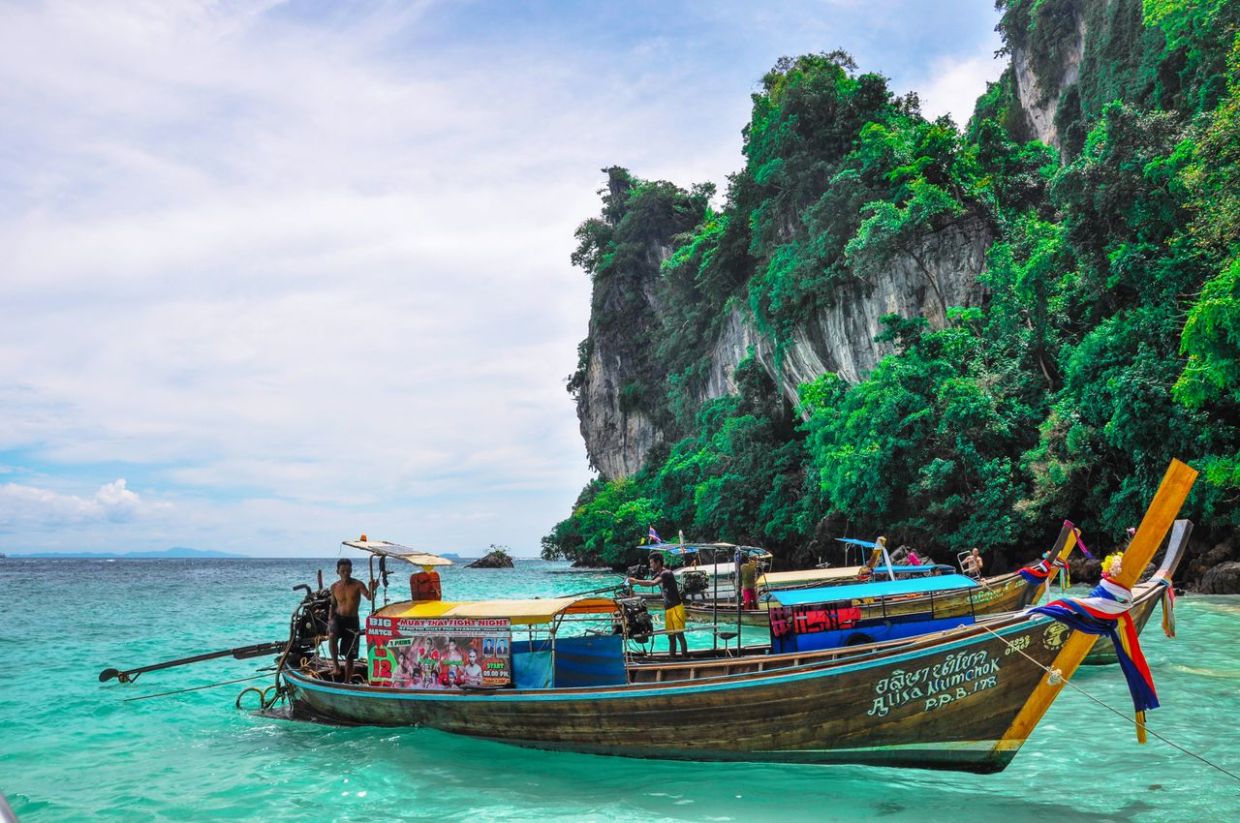
Thailand is fundamentally rewriting its tourism playbook after four decades of relentless pursuit of higher arrival figures. The Kingdom's government has declared that visitor volume no longer drives policy, marking a watershed moment for a nation where tourism has long been equated with success measured in raw numbers. Instead, officials are now orchestrating what amounts to a complete recalibration, targeting approximately 33 million foreign tourists this year—substantially below the pre-pandemic peak of nearly 40 million visitors in 2019. This strategic downshift carries real significance: should arrivals dip below last year's 32.97 million, Thailand would register back-to-back annual declines for the first time in three decades outside the coronavirus crisis period.
The rationale behind this reversal stems from mounting pressures unique to Southeast Asia's tourism landscape. Intensifying competition from neighbouring Vietnam and Indonesia, combined with shifting geopolitical dynamics, has forced Bangkok to recognise that market saturation cannot guarantee prosperity. Tourism Authority of Thailand Deputy Governor Nithee Seeprae articulated this philosophy bluntly, emphasising that revenue generation per visitor matters infinitely more than aggregate headcount. The authority's marketing apparatus has pivoted toward affluent demographic segments—those pursuing medical tourism, wellness retreats, concert experiences, golf holidays and endurance events—precisely because these travellers demonstrate higher spending patterns and extended stays. Recent promotional campaigns in British cities including Oxford and Manchester exemplify this targeting precision, deliberately steering marketing resources toward markets unlikely to produce budget backpackers but rather individuals with substantial disposable income.
The financial ambitions underlying this strategic repositioning are substantial yet measured. Currently, foreign visitors spend roughly US$1,500 per trip on average, a figure officials hope to elevate toward US$2,400 within the medium term. Yet revenue projections reveal the challenge inherent in this transition: international tourism receipts are anticipated to climb only marginally this year to THB1.55 trillion from THB1.54 trillion in 2025, suggesting that eliminating millions of lower-spending visitors while simultaneously raising per-capita expenditure remains extraordinarily difficult in practice.
Perhaps the most tangible manifestation of Thailand's philosophical shift appears in its dramatic reversal on visa liberalisation. Post-pandemic stimulus measures that eased foreign entry requirements have been systematically dismantled after officials connected relaxed immigration protocols to proliferating problems: undocumented employment, visa overstays, and criminal activity involving foreign nationals. This connection became brutally apparent recently when Thai authorities arrested an Australian man at Bangkok's Suvarnabhumi Airport on suspicion of murdering a 17-year-old Thai girl and disposing of her remains in Pattaya, a case that galvanised political pressure for stricter entry controls. The tacit acknowledgment that mass tourism accessibility inadvertently created security vulnerabilities represents perhaps the most significant policy acknowledgment in recent memory that quantity cannot substitute for quality control.
Yet executing this theoretical transformation presents formidable practical obstacles that extend throughout Thailand's tourism ecosystem. For decades, the nation constructed an enormous infrastructure predicated on sheer volume: hundreds of hotels, thousands of restaurants, sprawling night markets, transport networks, diving operations and guide services all calibrated for processing massive daily visitor throughput. Destinations like Phuket and Chiang Mai were literally developed according to mass-tourism economics, meaning a fundamental reorientation toward fewer but wealthier tourists requires not merely marketing rebranding but structural economic recalibration affecting millions of hospitality workers, small business operators and service providers dependent on visitor volume.
Thailand's traditional competitive advantages in the value-for-money tourism segment have simultaneously eroded through forces beyond Bangkok's control. Vietnam and Indonesia have systematically improved their tourism infrastructure and marketing while remaining more price-competitive, effectively encroaching on markets Thailand once dominated through sheer cost advantage. Currency dynamics have further complicated matters: a strengthened baht in recent years has systematically undermined Thailand's historic price advantage, making the nation less attractive to budget-conscious travellers while failing to automatically attract premium segments accustomed to alternatives in Switzerland, Maldives or other luxury destinations.
Historically, Thailand built one of the world's most formidable mass-tourism industries through complementary factors: a consistently weak currency facilitated affordability, global cultural exposure through film and television generated worldwide awareness, and explosive Chinese visitor growth before the pandemic created unprecedented demand. The country's tourism receipts became among the world's largest, accounting for roughly one-fifth of Thailand's entire economy. Yet post-pandemic momentum proved remarkably difficult to reconstruct, with visitor numbers and spending patterns remaining stubbornly below pre-2020 trajectories despite supposed recovery.
The semantic repositioning accompanying Thailand's strategic pivot reveals nuanced thinking about luxury and exclusivity. Officials explicitly reject suggestions that the new strategy amounts to excluding budget travellers wholesale. Instead, Nithee reframed luxury not as a price point but as experiential quality, defining it as "meaningful experiences and exclusive experiences." This rhetorical move attempts to distinguish Thailand's emerging positioning from markets competing purely on opulence and expense, instead emphasising authenticity, personalisation and cultural depth—factors theoretically accessible across income brackets but practically requiring more sophisticated marketing and curation.
For Malaysia and broader Southeast Asian tourism markets, Thailand's recalibration carries strategic implications. The regional competition intensifies as Thailand redirects resources toward high-value segments, potentially creating opportunities for other destinations to capture price-sensitive travellers Thailand deliberately marginalises. Simultaneously, Thailand's experience piloting higher-revenue-per-visitor models may provide instructive lessons for Malaysian tourism policymakers considering similar strategic transitions. The mechanics of shifting from volume-based to value-based tourism economics—managing infrastructure overcapacity, retraining service workforces, repositioning brand identity—represent challenges likely to affect multiple regional destinations confronting similar pressures.
Implementation challenges will ultimately determine whether Thailand's policy shift represents visionary adaptation or aspirational rhetoric divorced from economic reality. The tourism authority's website now emphasises wellness and healing narratives, with welcome videos inviting visitors to "heal and become a warmer, happier you." Yet translating this messaging into actual visitor behaviour change requires consistency across multiple tourism stakeholders, many of whom benefit directly from volume-driven models. Whether thousands of small hotel operators, restaurant owners and tour guides willingly embrace lower visitor numbers in exchange for higher individual spending remains a fundamentally unresolved tension within Thailand's tourism transformation.

