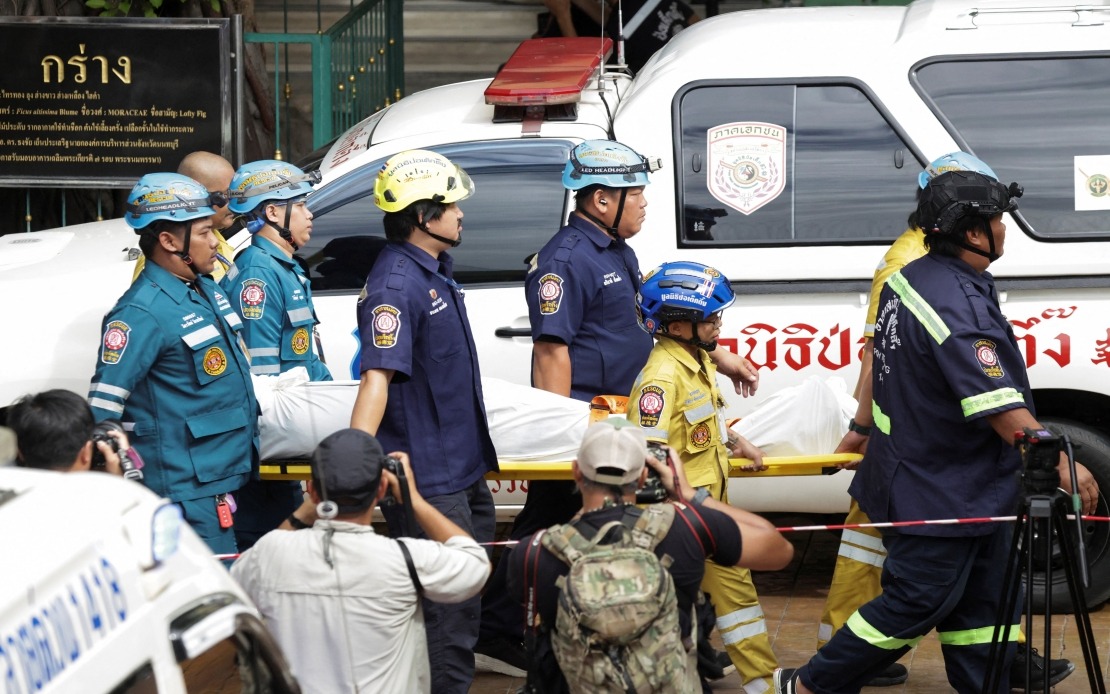
A deadly school shooting in Thailand's Nonthaburi province on Friday has revealed a deeply troubling sequence of events, with police investigations suggesting the student suspect first killed his grandparents before carrying out the attack on Debsirin Nonthaburi School. The suspected gunman opened fire at the school around 10am, resulting in the deaths of three teachers and three students, with 15 others wounded. Police subsequently located the suspect dead at the school premises. The revelation that family members may have been targeted before the broader attack underscores the complex and often interconnected nature of mass violence incidents, raising critical questions about warning signs and intervention opportunities that might have averted the tragedy.
Royal Thai Police Deputy Inspector-General and Spokesperson Lieutenant General Trairong Piwpan disclosed that preliminary investigations uncovered evidence of the suspect firing 26 rounds before arriving at the school, suggesting a deliberate pattern of violence initiated at a residential location. When investigators searched the suspect's home in Bang Bua Thong district, they discovered the bodies of both his grandfather and grandmother inside the residence. According to Trairong's statement to reporters at the scene, both elderly victims had sustained fatal gunshot wounds to the head. The discovery of the grandparents' bodies strongly indicates that the suspect may have committed these murders as a precursor to the school attack, though authorities have cautioned that the precise sequence of events and exact timing of the killings remain subjects of ongoing investigation.
The weapon used in the multiple killings was identified as a 9mm handgun, recovered near the suspect's home along with 34 additional rounds of ammunition found outside the magazine. This detail raises significant questions about firearm acquisition and storage in Thailand, particularly concerning how a student was able to access such a weapon. The presence of substantial ammunition reserves suggests premeditation rather than an impulsive act, pointing to careful planning that likely extended over days or weeks. The amount of ammunition recovered—both what was fired and what remained—indicates the suspect may have prepared for an extended engagement, though police have not yet disclosed whether additional weapons or ammunition were located.
For Malaysian observers and policymakers, this incident carries sobering implications regarding school security protocols and mental health warning systems. Thailand, like Malaysia, must grapple with how educational institutions balance openness and accessibility with adequate safeguarding measures. The apparent targeting of family members before a broader attack follows patterns documented in other mass shooting incidents globally, suggesting that warning signs within households—deteriorating relationships, expressed grievances, or behavioral changes—may precede public violence. This underscores the critical importance of community awareness and reporting mechanisms that enable concerned relatives, teachers, or neighbours to alert authorities before violence escalates.
The investigation into motive and the reconstruction of the precise chronology remains incomplete, according to Royal Thai Police. Establishing why the suspect targeted his grandparents, what precipitated the school attack, and whether these acts were connected through a single motivation or represented separate incidents will be crucial to understanding the tragedy's roots. Thai authorities have committed to thorough inquiry, but the complexity of such investigations—requiring forensic analysis, witness interviews, timeline reconstruction, and psychological autopsy—typically requires weeks or months to complete fully. Public understanding of the suspect's state of mind and grievances may take considerable time to emerge.
The casualty count—six deaths and 15 injured—ranks this among Thailand's most severe recent school shooting incidents. For regional context, such mass casualty events at educational institutions are comparatively rare in Southeast Asia, making this tragedy particularly shocking for Thai society and serving as a stark reminder of vulnerabilities that exist across the region. The fact that the violence claimed the lives of educators reinforces how school staff often place themselves between potential threats and students, performing protective roles that extend beyond their traditional instructional responsibilities. The 15 injured survivors will face both physical recovery and psychological trauma, with many potentially requiring long-term mental health support.
The Royal Thai Police's rapid response in securing the scene, recovering the suspect, and conducting preliminary investigations demonstrates institutional capacity to manage such crises. However, the incident raises systemic questions about preventive measures that might have identified and intervened with the suspect before violence occurred. In Malaysia and throughout Southeast Asia, schools and law enforcement agencies will likely review their crisis response protocols and threat assessment procedures in light of this tragedy. The challenge lies in distinguishing genuine threats from typical adolescent difficulties while protecting privacy rights and avoiding unnecessary stigmatization of young people experiencing mental health challenges.
The discovery that the suspect attended Debsirin Nonthaburi School suggests he had been integrated into the school community, potentially making his access to the building during school hours less remarkable to security personnel than that of a complete outsider. This pattern—where perpetrators possess legitimate reasons to be present at targeted locations—complicates prevention strategies that rely on restricting access. Schools face the difficult task of maintaining secure environments without becoming fortified compounds that undermine their educational mission and create psychological barriers between students and the broader community. Finding this balance remains one of the most pressing challenges for educational institutions across the region.
As investigators continue examining the evidence, including forensic findings from both the residential and school locations, the narrative of what transpired will become clearer. Understanding the timeline—precisely when the grandparents were killed relative to the school attack—may reveal whether these acts occurred in rapid succession or with a time gap that might have created intervention opportunities. The geographic relationship between the suspect's home in Bang Bua Thong district and the school location in Nonthaburi will also inform analysts' understanding of whether the crimes represent impulsive escalation or carefully planned sequential targeting of specific individuals and locations.

