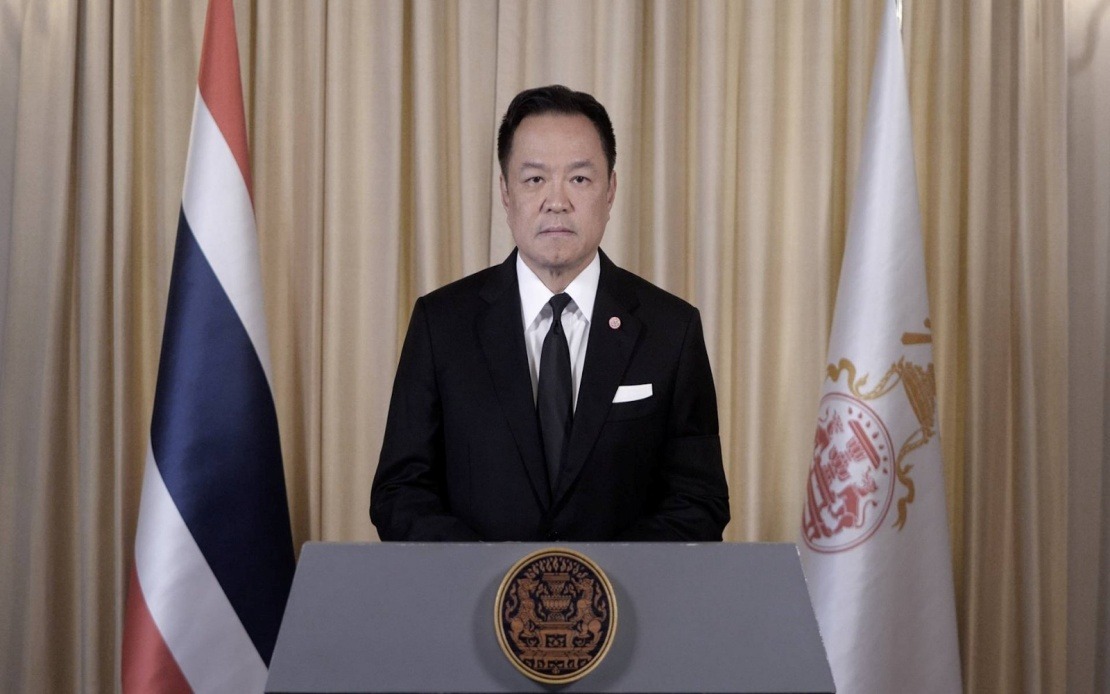
Thailand's government is optimistic that a potential ceasefire between the United States and Iran could provide meaningful relief to the global economy and help stabilise regional growth prospects. Prime Minister Anutin Charnvirakul commented favourably on announcements of a breakthrough agreement, framing any resolution to tensions in West Asia as a constructive development that would diminish various interconnected crises affecting trade, investment, and commodity markets across Southeast Asia.
The implications of de-escalation in the Middle East extend beyond diplomacy to the practical concerns of Thai policymakers grappling with inflation, energy security, and household purchasing power. Speaking at Government House, Anutin emphasised that while Thailand faces persistent external pressures from global instability, the kingdom has demonstrated considerable resilience through deliberate strategic management rather than reactive policymaking. His comments reflect a broader confidence that the Thai economy can weather geopolitical shocks if underlying fundamentals remain sound and leadership maintains discipline in long-term planning.
US President Donald Trump announced the agreement on Sunday, with provisions including reopening the Strait of Hormuz and lifting a US naval blockade that had previously constrained regional commerce and shipping. For an economy like Thailand's that relies significantly on maritime trade routes and international supply chain integration, the restoration of normal shipping through this critical waterway carries tangible economic meaning. Disruptions to the Strait have historically driven up transport costs and commodity prices, effects that ripple through to Thai manufacturers, exporters, and ultimately consumers.
Deputy Prime Minister and Finance Minister Ekniti Nitithanprapas articulated the financial ministry's perspective more explicitly, linking the ceasefire prospect directly to energy market dynamics and inflation management. The resolution of tensions would likely ease upward pressure on crude oil prices, which have remained volatile amid geopolitical concerns. For Thailand, a net energy importer heavily dependent on imported oil and natural gas, lower global energy costs translate into reduced input expenses for power generation, transportation, and manufacturing across the economy. This relief could allow household budgets breathing room and reduce cost burdens on small and medium enterprises that have struggled with elevated operating expenses.
The government is monitoring inflationary trends closely as a priority, particularly the impact of elevated costs on vulnerable populations and smaller businesses operating with limited profit margins. Ekniti expressed cautious optimism that an improvement in the global risk environment could support economic growth projections beyond current estimates. This optimism, however, is tempered by recognition that multiple uncertainties remain in the global economy, requiring continued vigilance and adaptive policy responses.
That measured outlook is reflected in Thailand's commitment to proceeding with its substantial 200-billion-baht energy transition programme regardless of near-term oil price movements. This decision underscores a crucial strategic insight: the government recognises that even if a US-Iran ceasefire brings temporary energy cost relief, Thailand's structural vulnerability to imported fossil fuels demands a comprehensive shift toward renewable energy and domestic energy security. The programme represents an investment in long-term resilience rather than a short-term response to commodity prices.
Thailand's energy situation presents a paradox familiar to many Southeast Asian economies. While cheaper global oil prices may temporarily ease inflationary pressures and support consumer purchasing power, continued reliance on volatile global energy markets leaves the nation exposed to future shocks. The 200-billion-baht transition initiative aims to reduce that structural vulnerability through diversification toward renewables and more sustainable energy sources. This approach reflects mature economic thinking that prioritises genuine long-term stability over the illusion of relief from temporary price declines.
For Malaysian observers, Thailand's position illuminates broader regional challenges in managing geopolitical risk while pursuing economic transformation. Like Malaysia, Thailand is a middle-income economy deeply integrated into global supply chains, exposed to energy price volatility, and seeking to balance immediate cost pressures with longer-term sustainability imperatives. The Thai government's framing of the ceasefire as welcome but not transformative suggests a realistic assessment that while geopolitical de-escalation helps, structural economic reforms remain essential.
The emphasis on strategic planning rather than day-to-day reactive responses also carries implications for regional governance and policy credibility. Markets and investors respond positively to governments that communicate clear long-term directions while remaining flexible enough to adapt to changing circumstances. Thailand's articulated commitment to both welcoming improved geopolitical conditions and maintaining disciplined pursuit of energy transition suggests an institutional maturity that can enhance investor confidence and support more stable capital flows into the kingdom.
Within the broader Southeast Asian context, Thailand's cautious optimism about the ceasefire reflects a shared regional interest in stability without complacency. Any resolution of US-Iran tensions benefits all ASEAN economies through improved security of shipping lanes, potentially lower energy costs, and reduced risk premiums in financial markets. Simultaneously, individual national governments must pursue their own structural economic reforms and investments in resilience, recognising that geopolitical stability alone cannot substitute for sound domestic policy and strategic foresight in addressing long-term challenges like energy security, inflation management, and inclusive growth.