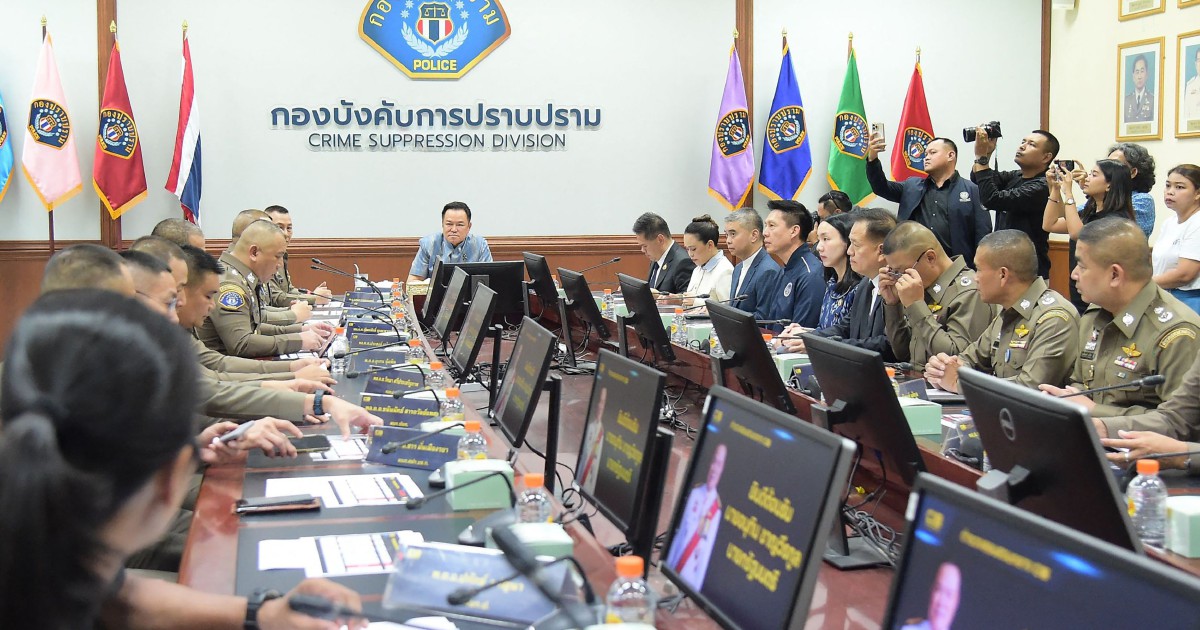
Thailand's civil service faces an unprecedented reckoning after authorities revealed plans to suspend nearly 6,000 officials caught up in a massive examination fraud scheme. The announcement, made Thursday by government officials in Bangkok, underscores the scale of the misconduct that has shaken public confidence in the integrity of the country's bureaucratic recruitment process. The scandal represents one of the most significant integrity crises affecting Thailand's administration in recent years, with investigators signalling they will pursue the matter with considerable vigour.
Three individuals have already been arrested in connection with the fraud, according to statements from authorities overseeing the investigation. These preliminary arrests represent just the opening phase of what officials have indicated will be a methodical examination of the entire scheme. The identities and roles of those arrested have not been disclosed in detail, though sources suggest the investigation is examining how the examination system was compromised and identifying the networks through which cheating occurred.
The sheer scale of the potential suspensions—affecting approximately one in ten civil servants in certain categories—points to a systemic breakdown in examination oversight. This magnitude suggests the fraud was not confined to isolated incidents but rather represents a coordinated operation involving multiple parties across different administrative levels. The breadth of the investigation underscores how deeply the problem may have penetrated Thailand's bureaucratic ranks, raising serious questions about how such extensive wrongdoing remained undetected for what authorities indicate was an extended period.
Investigators have steadily expanded their inquiry beyond initial findings, examining interconnected elements of the cheating network. This expanding scope indicates authorities are tracing how candidates gained unauthorized access to examination materials, which officials may have facilitated such access, and whether commercial operations were involved in orchestrating the fraud. The methodical approach suggests investigators believe they are uncovering a complex operation rather than random, isolated cheating incidents.
For Malaysia and other Southeast Asian nations observing Thailand's handling of the crisis, the scandal carries important lessons about civil service integrity. Many ASEAN countries operate under similar merit-based examination systems for government recruitment, and Thailand's experience highlights the critical importance of robust administrative controls and oversight mechanisms. The weakness in Thailand's system raises the question of whether neighbouring nations face comparable vulnerabilities in their own civil service examination processes.
The suspension of thousands of officials will create significant operational challenges for Thai government ministries and agencies already struggling with staffing constraints. While the suspensions are meant to restore public trust by removing those implicated in the fraud, they will simultaneously reduce the administrative capacity available to deliver public services. This tension between accountability and operational necessity represents a difficult balance that Thailand's authorities must navigate carefully in coming months.
The scandal has broader implications for public sector morale and institutional legitimacy. Civil servants who advanced through legitimate examination channels will likely feel aggrieved that their qualifications were devalued by the presence of unqualified colleagues who cheated their way into positions. Simultaneously, public trust in the entire civil service recruitment apparatus has been fundamentally undermined, requiring comprehensive reforms to restore confidence that the system genuinely selects the most capable candidates.
Thailand's government faces pressure to demonstrate it takes the matter seriously through concrete measures beyond suspensions. Authorities have indicated the investigation will continue methodically, with the commitment to pursue accountability throughout the examination system. The government's response will be closely watched by citizens and international observers as an indicator of whether it possesses genuine commitment to institutional reform or whether the scandal represents symptomatic of deeper governance challenges.
The examination fraud scandal intersects with broader debates about civil service quality and institutional effectiveness across Southeast Asia. While Thailand has long maintained relatively sophisticated bureaucratic structures compared to some regional neighbours, this episode reveals how concentrated networks of corruption can undermine entire systems regardless of formal institutional design. The incident serves as a cautionary reminder that administrative competence requires not merely well-designed processes but also sustained vigilance and strong enforcement mechanisms.
Looking ahead, Thailand's handling of the suspensions and the ongoing investigation will significantly influence how the nation rebuilds institutional credibility. Authorities must move with decisiveness in processing cases while ensuring due process protections for the accused. The government has an opportunity to demonstrate that accountability extends to all levels of the civil service, regardless of rank or political connections. How effectively Thailand manages this delicate balance will determine whether the scandal becomes a catalyst for meaningful reform or merely another incident of bureaucratic malfeasance that ultimately changes little.

