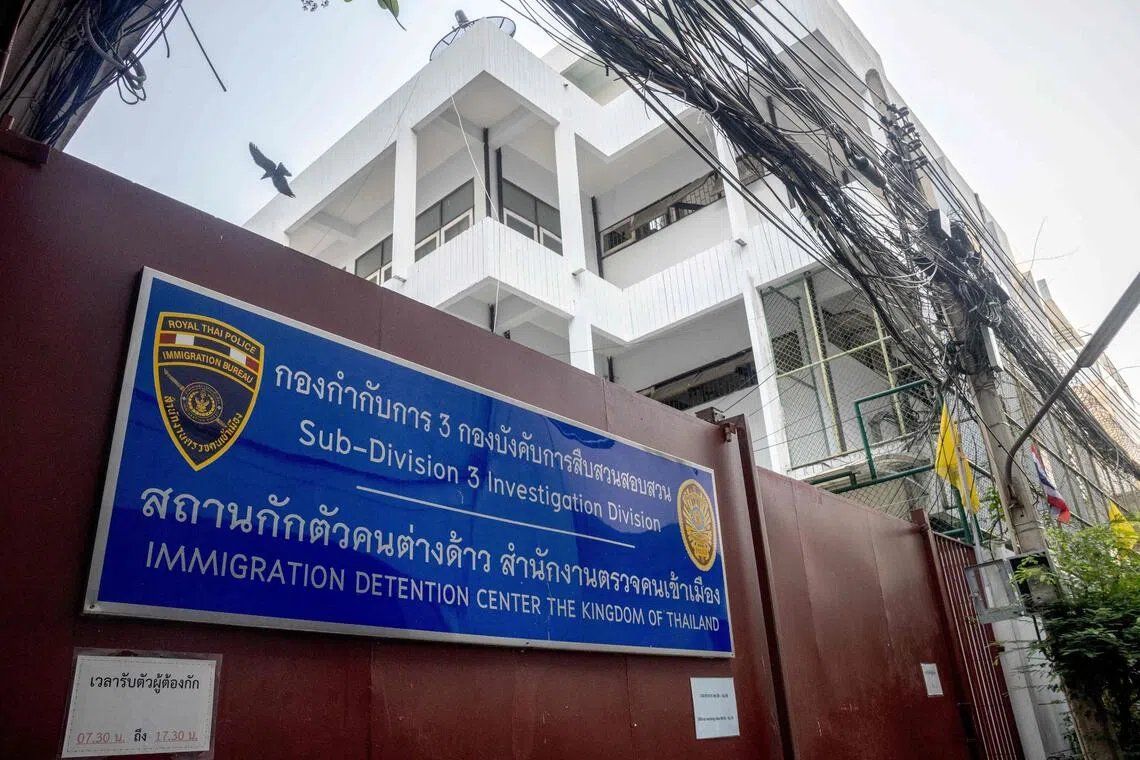
Thailand has introduced a streamlined deportation framework designed to accelerate the removal of foreign nationals found to be in violation of local laws or engaging in behaviour deemed harmful to the kingdom's public order and welfare. Prime Minister Anutin Charnvirakul signed the Prime Minister's Office Regulation on Deportation B.E. 2569 on August 26, with the regulation taking effect two days later on August 28 following its publication in the Royal Gazette on August 27. The new rules represent Bangkok's effort to strengthen its immigration enforcement mechanisms while maintaining formal oversight and inter-agency coordination.
According to the regulation's preamble, Thailand maintains an open-door stance toward visitors and foreign residents who enter the kingdom through lawful channels for tourism, employment, residence or business purposes. However, the government acknowledges a growing problem of foreigners who circumvent immigration procedures, breach Thai law, damage the social fabric, or exploit the kingdom for illicit personal gain. The new deportation framework seeks to address these concerns by establishing clearer protocols that reduce bureaucratic delays and enable faster decision-making across government agencies involved in immigration enforcement.
The regulation invests primary authority over deportation decisions in Thailand's Interior Minister, who acts upon recommendations submitted by the permanent secretary of the Interior Ministry or their designated representatives. These officials trigger the deportation consideration process when they assess that a foreign national's conduct runs contrary to public order, morality or public welfare, encompassing scenarios where the foreigner functions as a principal actor, instigator or accomplice in prohibited activities. This approach centralises authority while establishing clear accountability channels for identifying candidates for deportation.
The regulation identifies six categories of offences that may trigger deportation orders once a foreign national has completed serving a sentence imposed by final court judgment. These encompass illegal entry or unauthorised residence under immigration statutes, unlawful employment in violation of Thailand's foreign labour regulations, illicit business operation under the Foreign Business Act, forgery or use of forged official documents, commission of crimes carrying minimum five-year prison sentences, and participation as a principal, instigator or supporter in any of the aforementioned categories. This structure ensures that deportation authority extends beyond single violations to encompass deliberate assistance in or encouragement of illegal conduct.
The framework establishes specific protocols for notification and coordination between the corrections system and immigration authorities. The Department of Corrections must furnish the Interior Ministry permanent secretary with comprehensive information including names, nationalities and case records of foreign prisoners subject to the regulation no fewer than fifteen days before scheduled release. This advance notification window permits sufficient time for ministerial review and consideration of deportation orders prior to the individual's discharge from detention, preventing potential gaps where deportees might evade removal procedures. Similar expedited procedures apply when courts suspend sentences or impose fines rather than imprisonment, with the Judiciary required to immediately notify the Interior Ministry permanent secretary.
Repatriation procedures incorporate safeguards reflecting Thailand's international legal obligations, particularly regarding non-refoulement principles that prohibit returning individuals to nations where they face persecution, torture or other serious harm. The regulation mandates that deportation decisions account for applicable domestic laws, Cabinet resolutions and Thailand's international commitments. Deportees are normally returned to their country of nationality, though individuals whose nationality cannot be verified may be transferred to the nation where they last reported residence before entering Thailand. This approach balances enforcement interests with recognition of humanitarian concerns.
The regulation creates space for third countries or international organisations to request custody of deportees through diplomatic channels, though such requests must be submitted within seven days of the deportation order's issuance. Requesting parties must address legitimate safety concerns that the individual could experience torture, cruel treatment, degrading punishment, violations of human dignity or enforced disappearance upon return to their country of origin. Any accepting nation or international body assumes full financial responsibility for the deportee's care and transfer, and the individual must provide written consent. Thailand imposes a thirty-day completion deadline for such transfers, renewable twice at the minister's discretion for periods not exceeding thirty days each. Should transfer arrangements collapse within the permitted timeframe, standard repatriation procedures commence.
For Malaysian readers and Southeast Asian observers, Thailand's new deportation regulation carries several implications. The framework signals Bangkok's determination to strengthen border management and internal security by expediting the removal of problematic foreign nationals, a priority shared across the region. The emphasis on inter-agency coordination and timeline-driven decision-making reflects lessons learned from previous enforcement shortcomings and administrative delays. However, the regulation's effectiveness depends on resources allocated to implementation and consistency in application across different regions and offence categories. For Malaysian citizens and businesses operating in Thailand, understanding these regulations becomes increasingly important, particularly provisions addressing employment violations and business law breaches that might trigger deportation rather than fines or other penalties.
The regulation also illustrates Thailand's broader approach to balancing immigration liberalisation with law enforcement. Rather than restricting legitimate foreign entry, the framework targets individuals whose conduct falls demonstrably outside accepted boundaries. The humanitarian safeguards regarding non-refoulement suggest Bangkok recognises potential criticism from international human rights bodies while maintaining sovereignty over enforcement decisions. For regional governments contemplating similar measures, Thailand's approach offers a model that emphasises both administrative efficiency and procedural fairness, though questions remain about training, resource allocation and actual implementation consistency across Thailand's Interior Ministry apparatus.
Implementation challenges will likely emerge as the regulation enters its operational phase. The requirement for courts to immediately notify the Interior Ministry of suspended sentences and fines depends on functional coordination between judicial and executive branches not always seamless in practice. The determination of nationality and verification of prior residence for individuals lacking documentation could prove administratively complex and time-consuming. Additionally, the regulation's effectiveness in achieving stated goals of faster deportations depends partly on whether Thailand allocates sufficient personnel to process cases within prescribed timelines and whether transport arrangements with other nations function smoothly. Success will require sustained commitment and resource investment beyond the regulation's formal promulgation.
Regionally, Thailand's move contributes to a broader Southeast Asian pattern of tightening immigration enforcement while maintaining official welcomes for legitimate foreign visitors and workers. Countries from Vietnam to Indonesia have pursued similar reforms, reflecting shared concerns about irregular migration, transnational crime and security threats. Thailand's regulation, by establishing transparent procedures and humanitarian safeguards, attempts to distinguish itself from purely restrictive approaches that might deter legitimate business and tourism. Whether this calibration succeeds depends on consistent, fair implementation and clear communication to foreign residents and governments about actual enforcement patterns. The coming months will reveal whether the new regulation meaningfully accelerates deportation while maintaining Thailand's reputation as a relatively welcoming destination for legitimate foreign engagement.

