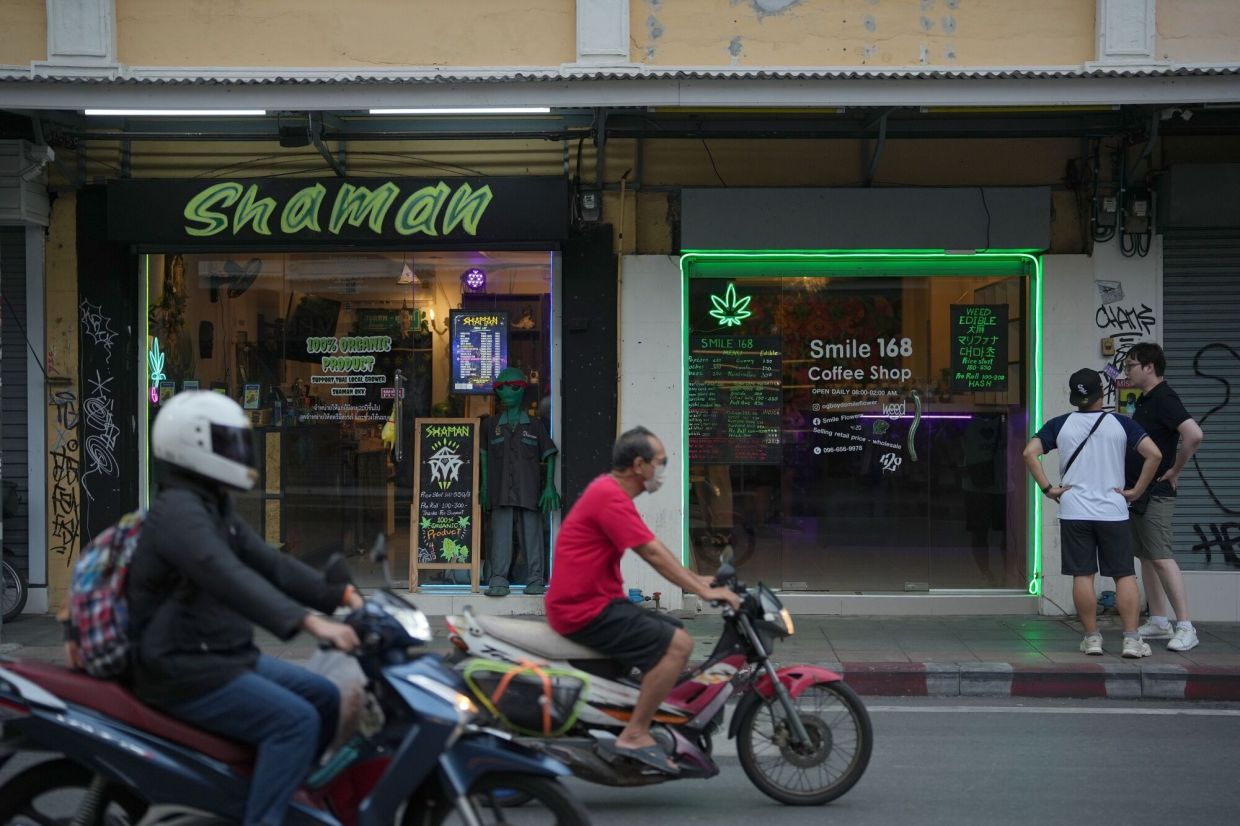
Thailand's push to establish firmer control over cannabis production and distribution took a significant step forward when Public Health Minister Pattana Promphat advanced a revised Cannabis and Hemp Act designed to confine the drug's legal use to the medical sector. The move represents an effort to address mounting complications arising from the current regulatory vacuum, where cannabis outlets have proliferated without adequate supervision and the country has become a transit point for illegal cannabis trafficking to neighbouring jurisdictions where the substance remains classified as a narcotic.
The minister's directive reflects growing concern about enforcement gaps in the existing system. Problems have surfaced involving unauthorised transport across borders and the exploitation of counterfeit licences to legitimise illegal operations. These enforcement challenges have prompted the Thai government to adopt a more restrictive stance on the substance, moving away from the previous approach that inadvertently enabled the emergence of a quasi-recreational market despite official policy statements limiting cannabis to therapeutic applications.
Central to Thailand's strategy is a crackdown targeting an estimated 6,000 unlicensed or expired cannabis retail outlets currently operating nationwide. The ministry aims to accelerate identification and closure of these establishments while simultaneously registering legitimate medical operations through an innovative GPS-based tracking system. This technological infrastructure will enable real-time monitoring of authorised locations and licence expiration dates, making it considerably harder for illegal operations to masquerade as regulated businesses.
The Bhumjaithai Party, a coalition partner in the Thai government, has championed cannabis legalisation in recent years but has now reaffirmed its commitment to a strictly medical framework rather than recreational access. This recalibration appears driven by the unintended consequences of earlier permissive regulations, which created administrative chaos and transnational complications. The Cannabis and Hemp Control Act completed public consultation in the preceding month and is positioned to advance to parliamentary consideration, though it did not secure debate slots during the most recent legislative session.
A critical distinction between the proposed legislation and current regulatory arrangements lies in cultivation oversight. The existing framework, comprising the Act on the protection and promotion of herbs supplemented by ministerial regulations, addresses distribution and processing but leaves cultivation largely unmonitored. The new bill would extend governmental authority over the entire production chain from initial growing operations through final dispensing, imposing substantial penalties for non-compliance throughout the supply chain.
Thailand's role as a transit hub for cannabis destined for regional markets presents complications for bilateral relations, as the substance remains classified as a controlled narcotic in most neighbouring countries and beyond. This discrepancy creates opportunities for smugglers to exploit Thailand's more permissive legal environment as a sourcing point. To address this vulnerability, the Department of Thai Traditional and Alternative Medicine has coordinated with customs authorities and airport management to intercept large-scale shipments. The transition to electronic-only licensing has closed one avenue for fraud, though Pattana acknowledged that large-volume operations occasionally evade detection despite enhanced safeguards.
The scale of regulatory drift is evident in licensing data. Since 2023, approximately 18,000 outlets have received authorisation to sell cannabis products in Thailand. However, roughly one-third of these licences—some 6,000 establishments—expired at the end of 2023. Only approximately 1,500 outlets had renewed their credentials, indicating substantial non-compliance within the sector. Licences expire on a rolling basis across three-year terms, meaning roughly 6,000 additional businesses will face expiration deadlines during 2026 and 2027, compounding the administrative challenge facing regulators.
To address this enforcement burden, the Ministry of Public Health has substantially expanded its inspection capacity by training and authorising tens of thousands of enforcement officers drawn from police forces and local administrative bodies. This distributed model enables rapid response across Thailand's diverse geography. The Department of Thai Traditional and Alternative Medicine has simultaneously maintained an online registry of properly registered outlets with GPS coordinates and licence expiration information, creating transparency that enables the public and enforcement personnel to distinguish legitimate businesses from illegal operators.
Properly licensed outlets will face new operational requirements under amended ministerial regulations. These establishments must transform into medical facilities with physicians permanently stationed on-site to supervise all cannabis dispensing. This clinical requirement is designed to prevent pattern-based abuse, such as repeated sales to individual customers that suggest diversion toward non-medical purposes. If authorities detect such patterns, the transactions will trigger detailed investigation and potential prosecution. This medical gatekeeping model represents a substantial tightening compared to current practices where many outlets operate with minimal professional oversight.
The enforcement distinction between registered outlets and completely unlicensed operations is stark. Unregistered establishments operating in the recreational cannabis market face immediate arrest and prosecution. Pattana made clear that no transitional period or compliance opportunity exists for businesses that have never sought authorisation. This zero-tolerance posture for unlicensed recreational sales contrasts with the relatively more graduated approach toward expired establishments, suggesting the government recognises the scale of non-renewal but prioritises eliminating never-registered operations as an enforcement priority.
For Malaysia and neighbouring Southeast Asian nations, Thailand's regulatory trajectory carries significant implications. As Thailand refocuses on medical-only frameworks with enhanced enforcement, the risk profile for cannabis trafficking through Thai territory may shift. Malaysian authorities monitoring border security and narcotics interdiction should anticipate potential displacement of trafficking patterns as Thai enforcement intensifies. Additionally, Thailand's experience offers a cautionary case study regarding the administrative challenges of regulating cannabis in jurisdictions without pre-existing legal frameworks—a scenario that other Southeast Asian nations may eventually confront as regional drug policy debates evolve.
The broader regional context matters considerably. Thailand's medical cannabis policy operates within a predominantly prohibitionist Southeast Asian environment, creating structural incentives for cross-border smuggling. The government's revised approach acknowledges that permissive domestic regulation, without corresponding developments in neighbouring countries, generates opportunities for crime rather than legitimate commerce. This recognition may influence future policy discussions across the region as governments weigh the domestic merits of various regulatory models against transnational enforcement realities.

