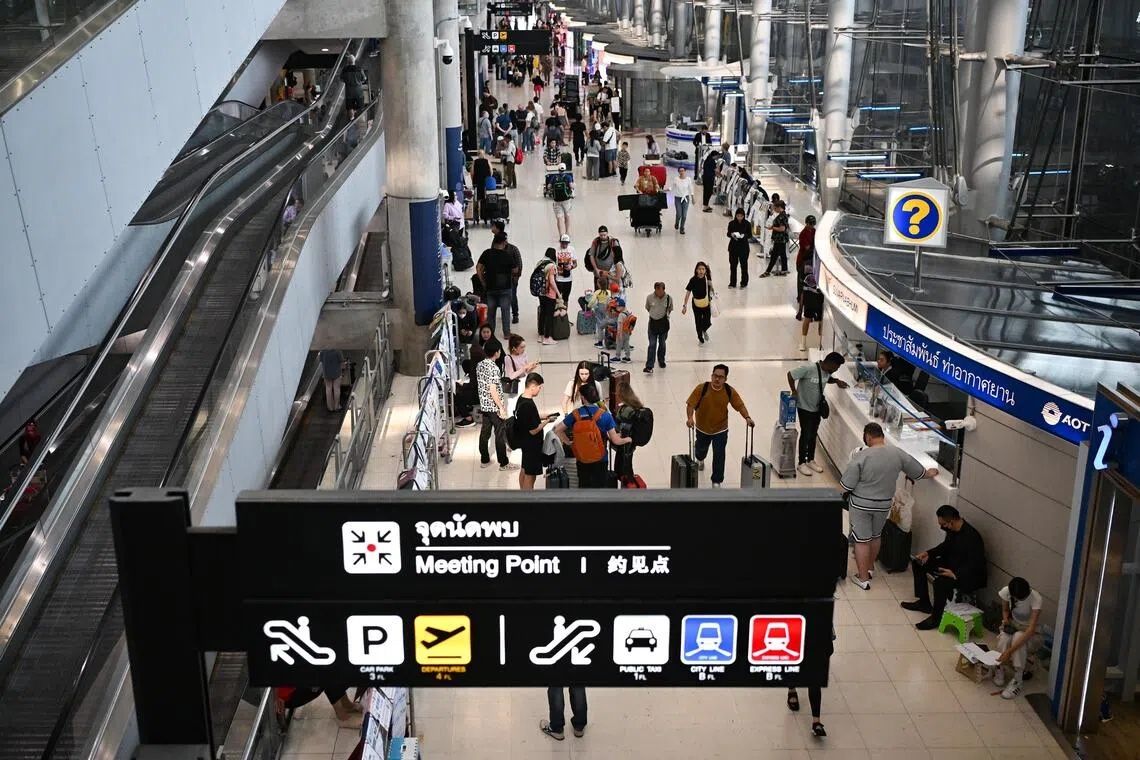
Thailand is moving ahead with plans to significantly expand its automated passport control system at Suvarnabhumi Airport, extending access to travellers from 31 new nationalities by the end of August. According to Deputy Government Spokesperson Lalida Persvivatana, the expansion has received in-principle approval from the Immigration Bureau and awaits final documentation to be formally signed off. Once fully implemented, the initiative could transform the airport experience for a majority of international visitors, potentially allowing more than half of all arriving passengers to bypass conventional immigration queues.
The Bangkok airport currently processes approximately 190,000 passengers daily during peak tourism season, with roughly 70,000 classified as international arrivals. During the busiest hours—between 1pm and 5pm—the immigration area experiences a surge of 5,000 to 6,000 passengers hourly, creating considerable bottlenecks and delays that have become a persistent challenge for airport management and visiting tourists alike. The congestion, while manageable for many, detracts from the visitor experience and represents inefficiency in Thailand's gateway infrastructure at a time when regional competition for tourism is intensifying.
By expanding eligibility for the Auto Gates system, approximately 6.5 million additional annual passengers are expected to gain access, alongside around 900,000 holders of certain long-term visa categories. Lalida highlighted that when the system reaches full operational capacity, the proportion of arriving passengers able to use automated processing should reach about 53 percent—a substantial leap forward that would meaningfully reduce queue times across the terminal. This expansion reflects a broader recognition among Thai authorities that streamlined immigration procedures are not merely a convenience factor but a competitive necessity in attracting and retaining international tourism revenue.
The phased rollout will proceed according to readiness across three critical dimensions: equipment availability, security protocols, and biometric data infrastructure. First-time visitors will still be required to complete biometric registration during their initial entry, though subsequent visits should prove faster. This balanced approach acknowledges both the security imperative of maintaining proper identity verification and the operational reality that most repeat visitors and those from developed nations with established biometric partnerships can be processed more efficiently through automated channels.
The initiative reflects a higher-level policy commitment to enhancing Thailand's tourism competitiveness. Deputy Prime Minister and Commerce Minister Suphajee Suthumpun, along with Tourism and Sports Minister Surasak Phancharoenworakul and Deputy Transport Ministers Siriphong Angkasakulkiat, recently visited Suvarnabhumi to oversee discussions about streamlining immigration procedures and upgrading passenger facilities. These discussions extended beyond the automated gates programme to encompass broader infrastructure enhancements, including expansions of passenger waiting areas, transit facilities, and longer-term airport development projects designed to accommodate growing international visitor volumes.
Lalida underscored that the automation initiative carries significance beyond mere queue reduction. Thailand's strategic objective is to ensure that the entire arrival experience—from the moment tourists disembark until they clear immigration and reach the baggage claim area—feels seamless, expeditious, and secure. This holistic approach recognises that international travellers compare experiences across regional hubs such as Singapore's Changi, Kuala Lumpur International Airport, and Bangkok's own rival Suvarnabhumi, and that immigration efficiency is a tangible differentiator in their overall satisfaction and willingness to return.
The expansion comes at a particularly significant moment for Thailand's tourism sector. Between January 1 and July 18 of this year, the kingdom welcomed approximately 17.36 million foreign tourists, demonstrating robust recovery in international travel following earlier pandemic-related disruptions. This figure underscores the scale and importance of airport operations to the national economy and tourism reputation. With arrivals continuing to climb, the pressure on immigration infrastructure has become increasingly acute, making the timing of the automated gates expansion well-calibrated to real operational demands.
For Southeast Asian readers and businesses, Thailand's investment in airport efficiency holds broader implications. The region's tourism industry is deeply interconnected, with travellers frequently visiting multiple countries within a single trip. Enhanced immigration processing at Suvarnabhumi could position Bangkok as a more attractive hub and entry point for regional travel, potentially diverting visitor flows away from competing centres. Conversely, Malaysian airports such as KLIA may view this development as a signal to accelerate their own automation and efficiency upgrades to maintain competitive parity.
The technical and administrative partnership required to expand the Auto Gates system also reflects Thailand's engagement with advanced biometric technology and international data-sharing agreements. As more nationalities are added to the eligible list, the underlying infrastructure must accommodate varying biometric standards and passport security features from different issuing countries. This represents significant coordination between Thailand's Immigration Bureau, airport authority, and international partners—a complexity that underscores both the technical sophistication and bureaucratic intricacy of modern border management.
Looking forward, the success of this expansion will depend on seamless execution across the phased rollout timeline. Delays in equipment procurement, security protocol finalisation, or biometric database readiness could postpone benefits. However, if completed as scheduled, the initiative should meaningfully improve Suvarnabhumi's operational standing and visitor satisfaction metrics. The project also creates a template that other Thai airports and regional hubs may adapt for their own capacity challenges, potentially catalysing broader regional improvements in border efficiency and traveller experience.

