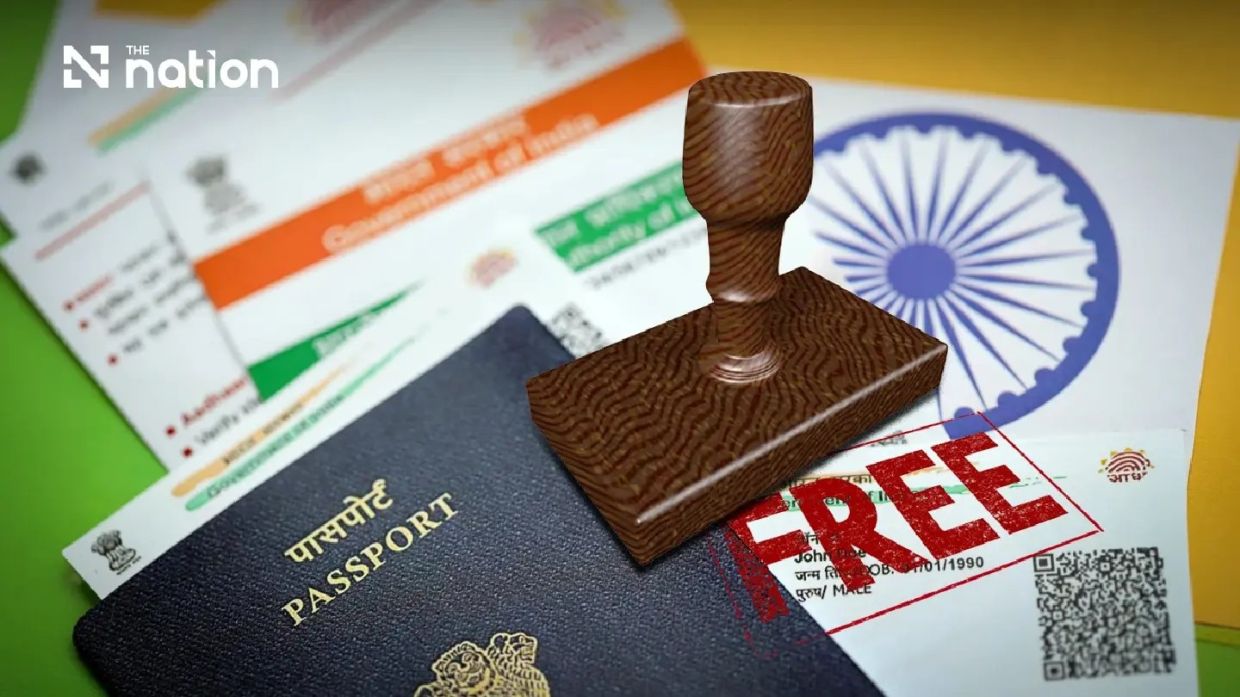
Thailand's government has secured 30-day visa-free entry for Indian nationals as part of a strategic push to capture nearly 2.8 million Indian tourists by 2027, with Tourism and Sports Minister Surasak Phancharoenworakul confirming the exemption as critical to the nation's tourism recovery. The decision reflects recognition that India's wedding and celebration travel market—which often involves multi-week events and preparations—requires extended stay periods to remain competitive in an increasingly crowded Southeast Asian tourism landscape.
The 30-day entitlement replaces earlier proposals that would have restricted Indian visitors to just 15 days, a threshold that industry operators warned would have severely hampered Thailand's attractiveness for destination weddings and large group celebrations. Surasak emphasized that aligning Indian nationals with the same visa-free duration granted to travellers from other countries would strengthen consumer confidence and encourage substantially higher spending patterns throughout their stays. By placing India in the standard 30-day visa-exemption category rather than reverting to the Visa on Arrival system following the withdrawal of the temporary 60-day programme, Thailand avoided a dual-track entry process that would have positioned it less favorably against regional competitors.
India represents Thailand's third-largest source market and a significant pillar of its tourism revenue strategy. The Tourism Authority of Thailand projects Indian arrivals will climb from 2.55 million in 2026 to 2.7 million in 2027, representing a 5.8 percent year-on-year increase and cementing India's position among the kingdom's most valuable visitor demographics. In 2025, the market delivered 2.48 million tourists who generated 90.425 billion baht in direct tourism revenue, up 16.82 percent from the prior year. Already in the first half of 2026, India had contributed approximately 1.3 million arrivals, with visitor numbers continuing to expand at a steady 3.06 percent pace, demonstrating sustained momentum despite regional competition intensifying.
The revised visa framework, approved by Thailand's Cabinet on July 14, represents a deliberate recalibration of entry privileges designed to strengthen immigration oversight whilst preserving tourism momentum. Authorities conducted analysis concluding that Indian visitors typically remain for approximately 7.17 days per trip, meaning a 30-day allowance accommodates both conventional leisure itineraries and extended multi-week celebrations with substantial buffer capacity. The government framed the restructured system as balancing economic interests with enhanced security screening, whilst eliminating overlapping categories that could obscure traveller intentions. All arrivals, regardless of nationality, must complete a Thailand Digital Arrival Card within three days preceding their scheduled entry, a streamlined process that maintains border integrity without creating friction in the arrival experience.
Thailand's competitive position in the Indian market has intensified considerably as neighbouring destinations aggressively court the same demographic. Vietnam has deployed competitive pricing and targeted incentives, Malaysia has prominently marketed its visa-free access advantages, and Singapore has carved out dominance in the family travel segment. Thailand ranks third among overseas destinations for Indian travellers, behind only the United Arab Emirates and Saudi Arabia, yet this ranking masks vulnerability to fast-moving regional competitors who recognise India's substantial middle-class expansion and rising disposable incomes. The 30-day visa policy directly addresses operator concerns that emerged when Thailand initially withdrew its temporary 60-day exemption covering 93 countries and territories, a move that threatened to push Indian visitors back into higher-friction Visa on Arrival processing.
Indian tourists exhibit spending behaviours that align precisely with Thailand's strategic shift toward higher-value, lower-volume tourism models. Individual daily expenditure averages 6,203 baht per person, translating to approximately 36,354 baht across a typical trip, with this spending supporting food, hospitality, wellness and cultural experiences. Approximately 68.63 percent travel as independent tourists, whilst 31.37 percent utilise organised tour groups, creating diverse revenue streams across multiple hospitality and service sectors. First-time visitors constitute nearly 60 percent of the Indian market, suggesting substantial room for repeat visitation growth and word-of-mouth expansion as satisfied travellers encourage peers to experience Thailand's offerings. Thai cuisine ranks as the primary attraction, followed closely by beach experiences and spa and wellness services, highlighting the market's alignment with Thailand's premium positioning.
Air connectivity forms the bedrock of Thailand's ability to transform its India strategy into sustained visitor growth. Routes originating from TAT's New Delhi office connect nine Indian cities directly to Bangkok, Krabi and Phuket, providing 144 weekly flights and accommodating over 32,000 passengers. The Mumbai region overseen by another TAT office generates approximately 160 flights weekly with roughly 33,000 available seats, bringing the combined India-Thailand capacity to approximately 66,000 weekly seats. Some carriers had temporarily withdrawn services due to Middle East tensions and elevated fuel costs, though the TAT expects capacity restoration during peak travel seasons. Indian-based airlines have begun expanding service from secondary and tertiary cities, recognising the market opportunity and positioning themselves to capture growth from emerging source markets beyond the traditional metropolitan hubs.
Thailand's long-term India strategy encompasses deliberate geographic diversification beyond the traditional power bases of New Delhi, Kolkata and Mumbai. The TAT has identified rapid urbanisation and rising affluence in Tier 2 and Tier 3 cities including Lucknow, Chandigarh, Guwahati, Ahmedabad, Surat and Pune as sources of high-value travellers whose spending capacity rivals or exceeds that of metropolitan residents. Surat's prominence in India's diamond industry creates a customer base distinguished by above-average discretionary income, whilst Pune's automotive and industrial sectors provide access to upper-middle-income professionals and entrepreneurs. This geographic expansion strategy extends beyond India into the neighbouring markets of Bhutan, Nepal and Bangladesh, creating a regional hub approach that leverages Thailand's positioning as a natural regional tourism epicentre.
The evolving profile of Indian travellers increasingly emphasises experiential depth over conventional tourism activities, a shift that plays advantageously to Thailand's cultural and culinary richness. Rather than concentrating on sightseeing and photography, younger Indian visitors actively seek engagement with local food cultures, community lifestyles, wellness practices and everyday experiences that provide meaningful cultural immersion. Thailand's promotional strategy explicitly positions food, local culture, wellness experiences and community tourism as differentiation points against regional competitors offering similar beach and resort experiences. This experiential focus aligns with Thailand's ability to offer authentic cultural encounters in urban environments like Bangkok and Chiang Mai, alongside wellness retreats in provincial locations, creating layered itineraries that accommodate the seven-to-15 day stays the TAT has identified as increasingly common among Indian family groups and larger social celebrations.

