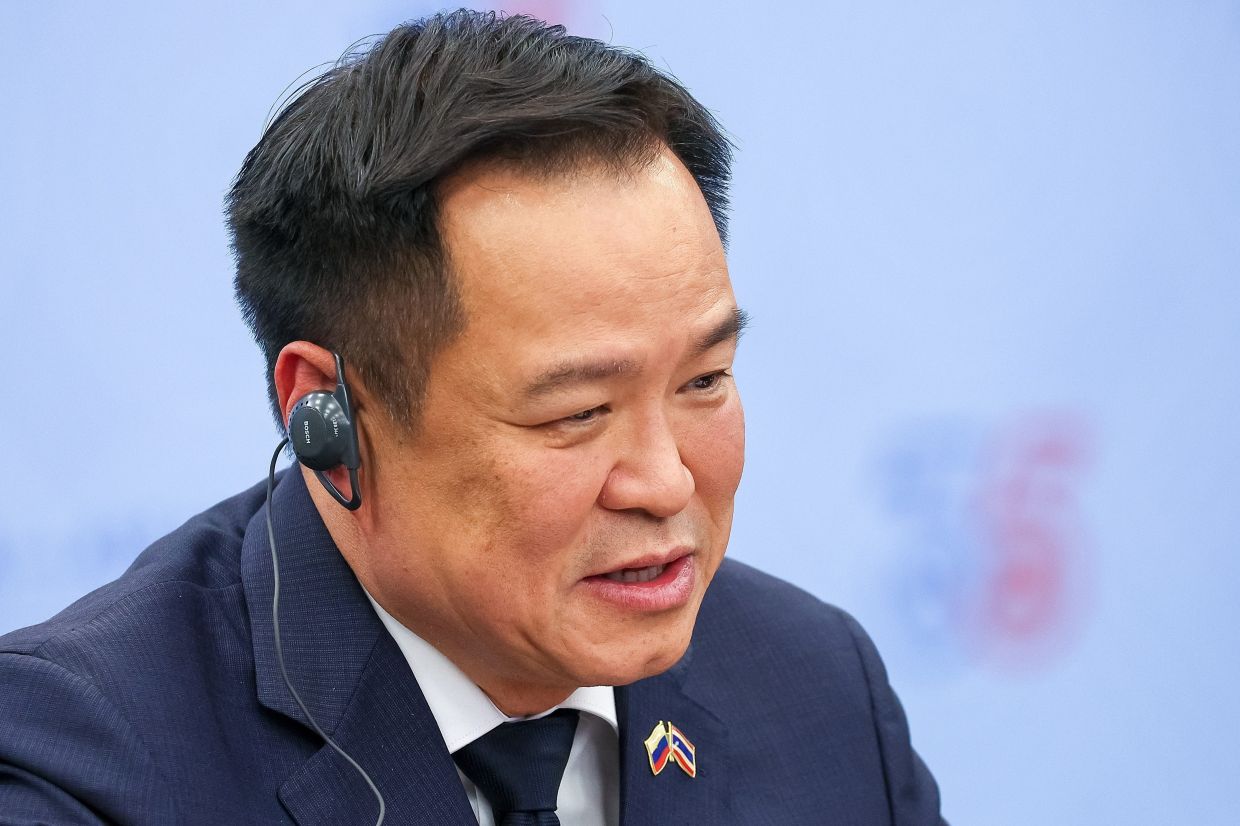
Thai Prime Minister Anutin Charnvirakul marked a hundred days in office on June 27, having been sworn in on March 20 following his re-election victory. Since taking the helm as Thailand's 32nd premier, the 59-year-old has demonstrated an ability to navigate immediate political and economic challenges, yet observers increasingly question whether his administration possesses the appetite or capacity to tackle the country's deeper structural problems that have accumulated over decades of political instability.
The government's early focus has been on crisis management rather than reform. Within weeks of taking office, Anutin confronted a severe energy shock when attacks on Iran by the US and Israel on February 28 triggered worldwide oil market volatility and disrupted shipping routes critical to regional trade. Thailand, which depends heavily on imported petroleum and faces regular constraints on energy supply, experienced panic buying at petrol stations and sustained pressure on fuel prices as crude oil climbed above US$100 per barrel for extended periods. The disruption exposed the fundamental vulnerability of Southeast Asian economies to external geopolitical shocks beyond their control, particularly when those shocks affect maritime corridors like the Strait of Hormuz.
To counter the immediate fallout, the Thai government deployed its Oil Fuel Fund to subsidize petrol and diesel prices while also reducing borrowing costs for farmers and industrial operators struggling with higher energy expenses. Simultaneously, the administration ramped up coal-fired power generation to maximum capacity and pursued supply diversification by increasing energy imports from the United States, Malaysia, and Brunei. Political science researcher Mathis Lohatepanont from the University of Michigan assessed that Anutin had "weathered the initial storm" and "managed to avoid further instability," a conclusion supported by the absence of mass street protests despite widespread public complaints about elevated fuel costs. This represents a modest success in a country accustomed to periodic social upheaval.
Beyond energy management, Anutin secured early political wins by delivering on campaign pledges, particularly on the Cambodia border dispute and household relief programmes. His party won the February 2026 general election partly through appeals to nationalism and promises of a harder stance against Cambodia over disputed maritime boundaries. As prime minister, Anutin followed through by maintaining military leadership of border protection operations and unilaterally terminating a 2001 bilateral maritime boundary agreement with Phnom Penh, escalating the dispute to United Nations arbitration. This approach resonated with his Bhumjaithai Party's core constituency and satisfied nationalist sentiment among Thai voters.
Anutin also moved swiftly to implement the "Thais Help Thais Plus" subsidy scheme, launched on June 1, which allows approximately 30 million eligible citizens aged eighteen and above to purchase selected goods from participating merchants at forty percent of the normal price, with government covering the remainder. The initiative, backed by a 176 billion baht (US$5.27 billion) allocation, has proven popular as an immediate relief measure for household budgets and consumption. However, academics from Thailand's leading universities have cautioned that such schemes, while politically valuable, represent temporary palliatives rather than solutions to structural economic fragility.
Puangthong Pawakapan from Chulalongkorn University's political science faculty emphasized that while Thais recognize the subsidy programme provides short-term relief, it "absolutely nothing to solve the underlying economic crisis." This observation encapsulates the central concern animating recent analytical commentary on the Anutin administration: the government's energy appears directed toward routine administration and day-to-day management rather than toward initiating meaningful economic transformation or political reform. Thailand's economy has grown at an anaemic pace, averaging below three percent annually over the past five years, a performance that contrasts sharply with regional competitors. The International Monetary Fund projects just 1.5 percent growth for Thailand this year, the slowest expansion in Southeast Asia, compared with Vietnam's anticipated 7.1 percent, Cambodia's four percent, and even Myanmar's three percent despite ongoing internal conflict.
The government has articulated ambitions to develop new economic drivers in digital technology, artificial intelligence, and renewable energy, yet analysts detect no clear strategic roadmap translating these aspirations into concrete policy or investment frameworks. Stithorn Thananithichot from Chulalongkorn University's political science faculty contends that the absence of substantive structural commitments in the administration's early months suggests a deliberate choice rather than merely a matter of timing. This assessment carries particular weight given Thailand's historical pattern of military interventions disrupting long-term economic planning and allowing structural problems to fester without resolution.
Constitutional reform presents perhaps the starkest illustration of the administration's reform hesitation. In a referendum held alongside the February general election, nearly sixty percent of voters—approximately twenty million Thai citizens—indicated support for changing the 2017 Constitution, which critics and many Thais regard as undemocratic because it was drafted under military supervision following the 2014 coup that brought Prayut Chan-o-cha to power until 2023. Despite this substantial popular mandate, constitutional reform has made negligible progress under Anutin's watch. Stithorn argues that governments genuinely committed to constitutional change would have signaled "at least one substantive structural commitment at the outset," with their absence indicating deliberate strategy rather than mere procrastination.
The composition of Anutin's cabinet has also invited scrutiny regarding his reform commitments. Observers have noted that ministerial selections do not obviously reflect a priority for transformative institutional change or overhaul of existing power structures that might threaten coalition stability. The Anutin government appears to have calculated that preserving political cohesion, managing immediate crises, and delivering popular but ephemeral relief measures constitute the optimal strategy for consolidation of power, even if such an approach leaves Thailand's deeper challenges untouched.
For Malaysia and other Southeast Asian nations, Thailand's experience offers instructive lessons about the political economy of delayed reform. A large regional economy that fails to achieve sustained robust growth and remains vulnerable to external shocks while carrying high household debt and an aging population eventually constrains regional trade, investment, and development. Thailand's inability to maintain policy continuity over decades has allowed competitors to overtake it in manufacturing competitiveness and digital integration. As ASEAN economies navigate intensifying global competition and shifting geopolitical alignments, Thailand's apparent preference for stability without transformation may increasingly prove insufficient.

