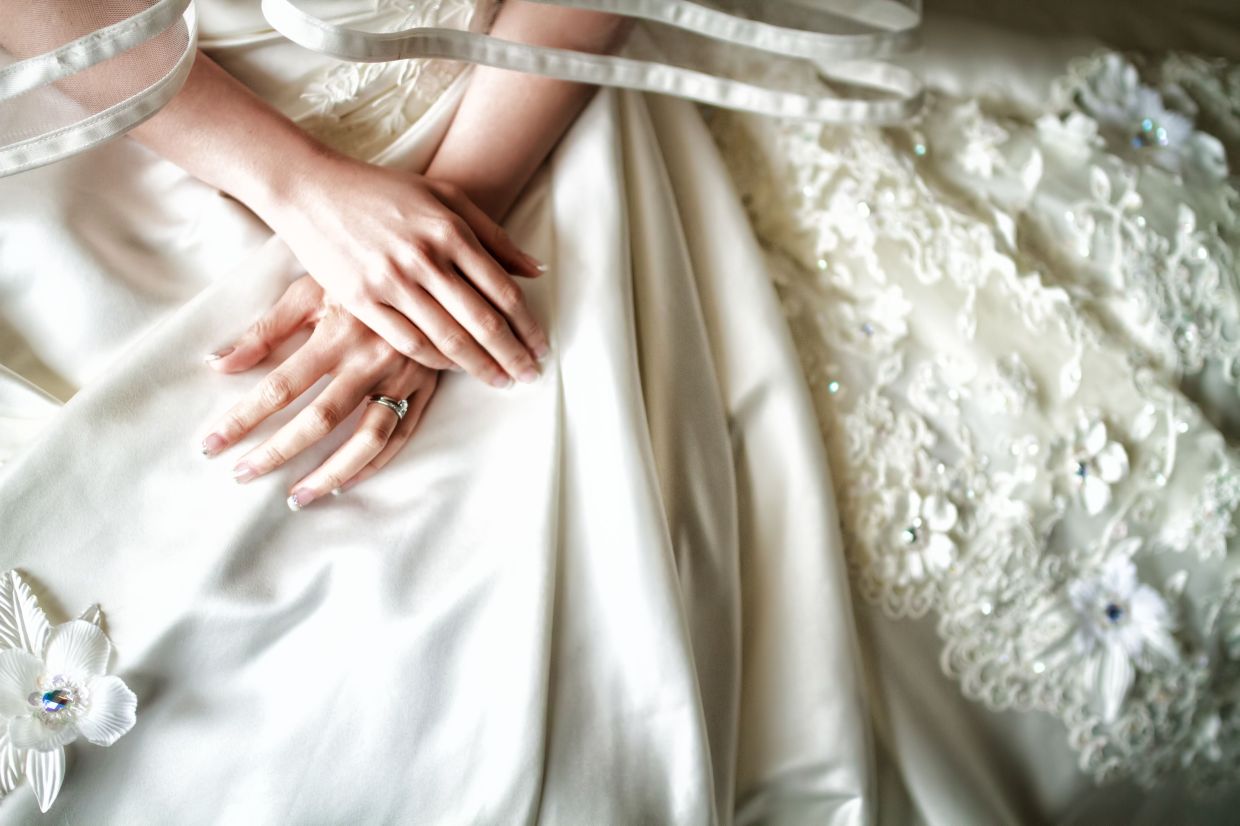
The decision to part with a wedding dress—particularly one that has been passed down through generations—touches something deeper than mere wardrobe management. These garments function as tangible connections to our most significant life moments and to the women who came before us, embodying not just fabric and stitching but entire chapters of family history. For many people, especially those who have worn their mother's gown or inherited a grandmother's wedding ensemble, the prospect of disposal can feel almost like a betrayal, raising uncomfortable questions about what we owe to the past and what we can realistically preserve in our lives.
Clothing, particularly pieces laden with personal significance, operates as a form of time travel. Fashion historians and psychology experts have long recognized that garments serve as repositories for joy, grief, and memory—physical anchors to moments we fear will otherwise fade completely. This is particularly acute with wedding dresses, which represent not only a single ceremonial moment but often symbolize the dreams, hopes, and circumstances of an entire era. A mother's dress from the 1960s, for instance, carries within it the fashion sensibilities, available materials, and social conventions of that decade, making it a dual artifact of both personal and cultural history.
The difficulty intensifies when dealing with inherited pieces that have already journeyed through multiple hands. Each generation's decision to wear or preserve the dress adds new layers of meaning and obligation. Parents who discover their children's outgrown clothing experience a similar melancholy—these small garments represent entire chapters of childhood that have already vanished, and the clothes are often the last physical evidence of those irretrievable years. The prospect of discarding them can feel like erasing history itself, even when storage space has become genuinely impossible.
Cameron Silver, a luxury brand consultant and founder of Decades, one of North America's pioneering high-end vintage retailers, frames the challenge differently. Rather than viewing the decision as simply sentimental versus practical, Silver approaches closet decisions as deeply personal psychological exercises. He suggests that those wrestling with cherished items should ask themselves fundamental questions: Does it still fit? Will I genuinely wear it again? Most tellingly, how would I feel if it simply disappeared? These questions cut through emotional attachment to uncover whether the garment still serves an actual purpose in someone's life, or whether keeping it represents loyalty to a past self rather than the present one.
For those determined to preserve rather than discard, transformation offers one compelling path forward. Converting a wedding dress into a christening gown, formal blouse, or cushion cover creates a bridge between its original significance and a new functional life. This approach allows the wearer to maintain an intimate connection with the garment while liberating it from the constraints of its original purpose. However, such alterations inevitably change the dress's essential character—something intangible may be lost in the translation from ceremonial gown to everyday garment, a trade-off that requires careful consideration.
Donation provides another option that allows the dress to continue its ceremonial function. Organizations like Brides Across America exist specifically to match pre-owned wedding gowns with engaged military service members and emergency medical workers who might otherwise lack the financial means for a formal wedding dress. This pathway transforms the garment into a gift that creates joy for someone who genuinely needs it, extending its life while honoring its original purpose. Emily Spivack, a garment and memory preservation specialist, recommends that donors write a brief account of the dress's provenance and attach it to the garment, allowing the next owner to inherit not just the dress but its story as well.
For those who find neither alteration nor donation emotionally satisfying, memory documentation offers a middle path. Spivack facilitates workshops where participants bring significant family garments to be photographed, recorded, and memorialized in writing. Participants report that completing this documentation process—creating a permanent written and visual record—allows them to feel they have adequately honored the garment's significance before releasing it. The documented story can then circulate among family members, preserving the narrative even if the physical object moves on.
Academic institutions have increasingly recognized the value of such garments as teaching tools rather than artistic artifacts. Universities including Smith College, Drexel University, Ohio State University, and Cornell University now actively collect wedding dresses and related items, viewing them through an educational lens. Denise Green, director of Cornell University's Fashion + Textile Collection, notes that the institution holds nearly 350 wedding gowns among its 11,000 objects. These pieces serve pedagogical purposes distinct from traditional museum costume collections, illustrating the lived experiences and constraints of specific historical moments. A 1942 wedding gown created by British dressmaker Cylka Berke during wartime, for example, documents wartime rationing principles through its ingenious design that maximized yardage while minimizing waste. Because Berke used rayon rather than silk—which the military requisitioned for parachutes and escape equipment—the dress retains a remarkably pristine white color despite its age, embodying a single garment the intersection of fashion, military necessity, and historical circumstance.
These academic collections explicitly prioritize garments for their historical and social significance rather than their aesthetic or design canon status. A donated dress need not be extraordinarily beautiful or crafted by a famous designer to merit preservation; rather, its value lies in what it reveals about how ordinary people navigated the constraints and possibilities of their time. For donors, this academic route offers the knowledge that their family heirloom will contribute to educational understanding, helping future students comprehend women's lives and choices in past decades.
The tension between preservation and liberation remains fundamentally irresolvable—we cannot simultaneously hold and release, memorialize and move forward. Yet the proliferation of options suggests that this false binary has been overcome. A dress need not be stored indefinitely to be honored, nor must it be thrown away for its story to be preserved. The real challenge lies in acknowledging that our relationship to these objects must evolve, and that letting them go—whether through transformation, donation, documentation, or institutional collection—can be as loving an act as keeping them.

